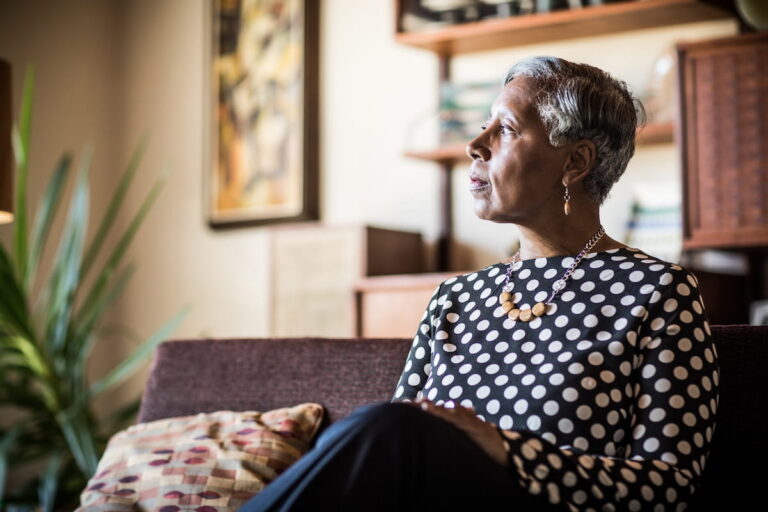
Here’s eye-opening news: Currently, 4.2 million Americans ages 40 and older are visually impaired. Of these, 3 million have low vision. By 2030, when the last baby boomers turn 65, the number of Americans who have visual impairments is projected to reach 7.2 million, with 5 million having low vision.
Approximately, 188,000 African Americans have low vision and 366,000 may have it by 2030.
For the millions of people who currently live or will live with low vision, the good news is there is help.
READ: The 4 Stages Of Diabetic Eye Disease
But first, what is low vision? Low vision is when even with regular glasses, contact lenses, medicine, or surgery, people have difficulty seeing, which makes everyday tasks difficult to do. Activities that used to be simple like reading the mail, shopping, cooking, and writing can become challenging.
Most people with low vision are age 65 or older. The leading causes of vision loss in older adults are age-related macular degeneration, diabetic retinopathy, cataract, and glaucoma. Among younger people, vision loss is most often caused by inherited eye conditions, infectious and autoimmune eye diseases, or trauma. For people with low vision, maximizing their remaining sight is key to helping them continue to live safe, productive, and rewarding lives.
The first step is to seek help.
READ: You Could Have Glaucoma & Not Know It: 3 Reasons To Have Your Eyes Checked
“I encourage anyone with low vision to seek guidance about vision rehabilitation from a low vision specialist,” advises Paul A. Sieving, M.D., Ph.D., director of the National Eye Institute (NEI), one of the National Institutes of Health (NIH) and the federal government’s principal agency for vision research.
What is a low vision specialist? A low vision specialist is an ophthalmologist or optometrist who works with people who have low vision. A low vision specialist can develop a vision rehabilitation plan that identifies strategies and assistive devices appropriate for the person’s particular needs.
READ: Contact Solutions: 10 Tips To Care For Your Lenses (And Eyes!)
“A vision rehabilitation plan helps people reach their true visual potential when nothing more can be done from a medical or surgical standpoint,” explains Mark Wilkinson, O.D., a low vision specialist at the University of Iowa Hospitals and Clinics and chair of the low vision subcommittee for the National Eye Health Education Program (NEHEP).
Vision rehabilitation can include the following:
There are also many resources available to help people with low vision. The NEI offers a 20-page, large-print booklet, titled What You Should Know About Low Vision, and companion DVD, featuring inspiring stories of people living with low vision, available here.
Find this article helpful? Read more here and share!


By subscribing, you consent to receive emails from BlackDoctor.com. You may unsubscribe at any time. Privacy Policy & Terms of Service.