If you’ve lived any amount of time on this earth, you’ve probably experienced a broken heart of some kind. Whether you got your heartbroken by a romantic relationship or even in a loss from a precious love one, getting your heart broken can be devastating.
While there are physical ramifications to the emotional feelings you experience during a broken heart, there are some serious health issues that can come from a broken heart.
But how? Contrary to what many may believe to be an over-dramatic phase or a façade actually holds a whole heap of truth to it. Have you gotten your heart broken lately from a love lost? Or maybe you’ve recently lost someone close to you by a sudden death. You may want to read on to learn about the early signs and symptoms of what is known in the medical field as the broken heart syndrome.
The technical term is takotsubo cardiomyopathy (TC), a weakening of the heart brought on by physical or emotional stress. A new study from researchers at the University of Arizona looked at data on 199,890 patients in the US between 2016 and 2020.
Incidence of TC rose slightly over the study period for both males and females, but overall incidence was generally higher for females. Fatalities and complications caused by the condition were relatively high. This fits in with previous research suggesting this ‘broken heart syndrome’ is becoming more common in the US.
Although the condition was more common in women, deaths were more than twice as likely in men.
Using a large national hospital database, researchers identified nearly 200,000 people diagnosed with broken heart syndrome from 2016 to 2020.
Their analysis of trends, death rates, and complications found:
Physical stress TC is also more common in men, which may explain the higher numbers of deaths brought on by the condition. The researchers also think differences in hormone balances between the sexes could play a role.
Complications resulting from TC included congestive heart failure (35.9 percent of patients), atrial fibrillation (20.7 percent), cardiogenic shock (6.6 percent), stroke (5.3 percent) and cardiac arrest (3.4 percent).
TC is often marked down as a heart attack or chest pain, because of the similarity of the symptoms. But the researchers behind the new study are hoping to raise awareness of the condition, so that it can be better diagnosed and treated more effectively.
“Some complications, such as embolic stroke, may be preventable with an early initiation of anti-clotting medications in patients with a substantially weakened heart muscle or with an irregular heart rhythm called atrial fibrillation that increases the risk of stroke,” says Stanford cardiologist, Dr. Asia Masiaki.
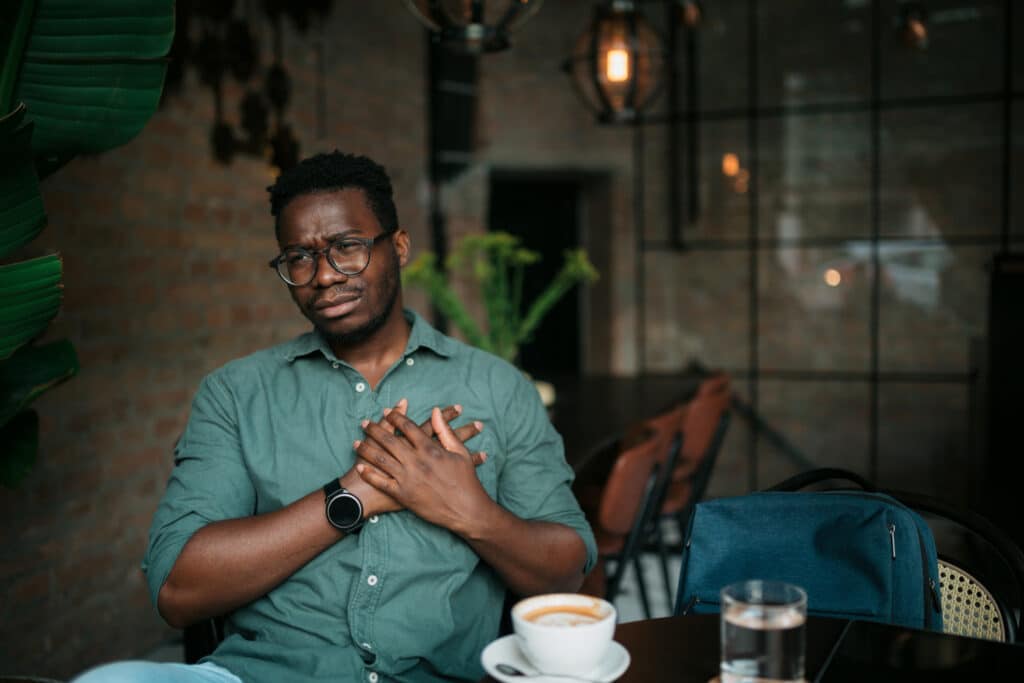
The most common signs are chest pain, irregular heartbeats and shortness of breath. If you experience these three things even if you have no history of heart disease, you may want to go to the emergency room immediately.
According to the American Heart Association, broken heart syndrome is also called stress-induced cardiomyopathy or takotsubo cardiomyopathy, and it can strike even if you’re healthy.
Studies have shown that women are more likely than men to experience the sudden, intense chest pain which is the reaction to a surge of stress hormones that can be caused by an emotionally stressful event.
It could be the end of a marriage, a breakup or physical separation, betrayal or romantic rejection, the death of a loved one or even a loss in income. It could even happen after a “good shock”, like a surprise birthday party.
As you can only imagine, broken heart syndrome may often be misdiagnosed as a heart attack because the symptoms and test results are very much so similar. In fact, tests show dramatic changes in rhythm and blood substances that are parallel to that of a heart attack. But unlike a heart attack, there’s no evidence of blocked heart arteries in broken heart syndrome.
In broken heart syndrome, a part of your heart temporarily enlarges and doesn’t pump well, while the rest of your heart functions normally or with even more forceful contractions. It is usually treatable as most people who experience it make a full recovery within weeks, and they’re at low risk for it happening again but in rare cases in can be fatal.
Dealing with a sudden loss? Make sure to talk about it with your healthcare provider, they may be able to guide you in the right direction and cope with the loss with a healthy strategy. Learn more about matters of the heart on our Health Conditions page on BlackDoctor.org.

Tia Muhammad, BS, is an award-winning freelance content & media creative, copywriter, blogger, digital designer, and marketing consultant. She owns the boutique content and digital media company, jackieGLDN|studio.


By subscribing, you consent to receive emails from BlackDoctor.com. You may unsubscribe at any time. Privacy Policy & Terms of Service.