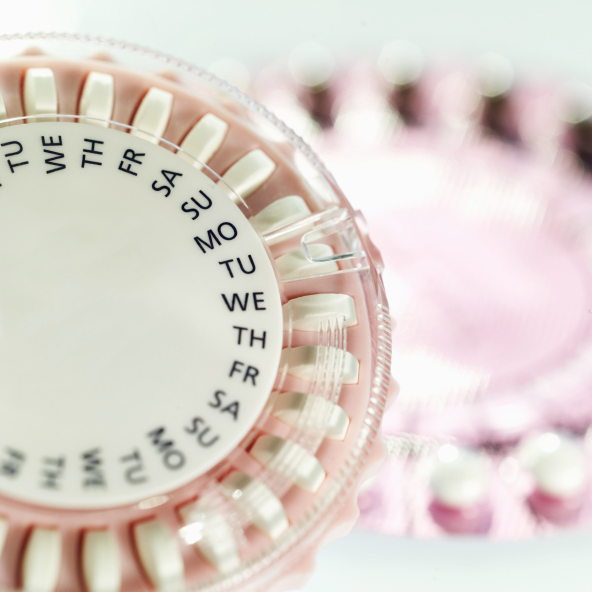
The birth control pill was created in 1960 as a way for women to control their menstrual cycle, help alleviate hormonal imbalance symptoms and, of course, to prevent pregnancy.
These small pills, loaded with progesterone and/or estrogen, work together to prevent ovulation (the monthly release of an egg from the ovaries to the uterus where it prepares for fertilization). The pill also makes the lining of the uterus unreceptive to the implantation of a fertilized egg (necessary to get pregnant).
RELATED: Getting Pregnant After Birth Control
Generally, taking the pill is simple, safe, and convenient. It does not interfere with having sex. Many women say it improves their sex lives because it helps them feel more spontaneous.
Women who do not need birth control often choose to take the pill for the other benefits it offers. In particular, combination and progestin-only pills can:
The combination pill offers many additional benefits, including some protection against:
Women take the pill by mouth to prevent pregnancy, and when taken correctly, is up to 99.9% effective. However, the pill does not protect against sexually transmitted diseases, including HIV (the virus that causes AIDS). The latex male condom provides the best protection from most STDs.
Normally a woman becomes pregnant when an egg released from her ovary (the organ that holds her eggs) is fertilized by a man’s sperm. The fertilized egg attaches to the woman’s womb (uterus), where it receives nourishment and develops into a baby. Hormones in the woman’s body control the release of the egg from the ovary and prepare the body to accept the fertilized egg.
Hormonal contraceptives (the pill, the patch, and the vaginal ring) all contain a small amount of synthetic estrogen and progestin hormones. These hormones work to inhibit the body’s natural cyclical hormones to prevent pregnancy. Pregnancy is prevented by a combination of factors. The hormonal contraceptive usually stops the body from releasing an egg from the ovary. Hormonal contraceptives also change the cervical mucus to make it difficult for the sperm to find an egg. Hormonal contraceptives can also prevent pregnancy by making the lining of the womb inhospitable for implantation.
Extended-cycle pills contain the same hormones as other birth control pills, but they are taken in a longer cycle to
reduce the number of yearly menstrual periods from 13 periods a year to only four periods a year. Therefore, women menstruate only once each season.
You will receive a set of pills packaged in a thin case. Pill packs contain either 21 or 28 pills. Twenty-one-day pill packs contain 21 active pills. Twenty-eight-day pill packs contain 21 active pills and seven inactive pills. The pill packs are marked with the days of the week to remind you to take a pill every day. The seven inactive pills in the 28-day pill pack are added so that you are reminded to start a new pill pack after 28 days.
Extended-cycle pills contain 84 active pink tablets and seven inactive white pills.
Ask your doctor when you should start birth control pills. If you still have your period on the day that you have been told to start your pill pack, go ahead and start the pill pack. You will get your next period about 25 days after starting the pill pack.
It’s best to take the pills at the same time every day. Take the pill each day either before breakfast or at bedtime.
Extended-cycle pills work similarly. You begin taking it the first Sunday after your period. If your period starts on a Sunday, start the pill that day. Then you take one of the active tablets a day for 84 consecutive days. This is followed by seven days of placebo (inactive) pills.
You will start each new birth control pill pack on the same day of the week that you initially started it. If you are on the 21-day pill pack, start the new pill pack seven days after you finished the old pill pack. If you are on the 28-day pill pack, begin the new pack after taking the last pill in the old pack.
Start your new pill pack as scheduled above, whether or not you get your period or are still having your period.
When taken as directed, birth control pills are usually effective the first month you begin taking them. To be safe, some doctors recommend
the use of another form of birth control, such as condoms and foam, during the first month. After the first month, you can just use the pill for birth control.
If you forget to take a birth control pill, take it as soon as you remember. If you don’t remember until the next day, go ahead and take two pills that day. If you forget to take your pills for two days, take two pills the day you remember and two pills the next day. You will then be back on schedule. If you miss more than two pills, call your doctor. You may be told to take one pill daily until Sunday and then start a new pill pack or to discard the rest of the pill pack and start over with a new pack that same day.
Any time you forget to take a pill, you must use another form of birth control until you finish the pill pack. When you forget to take a pill, you increase the chance of releasing an egg from your ovary. However, if you forget to take any of the last seven out of the 28-day pills, you will not raise your chance of pregnancy since these pills contain only inactive ingredients. If you miss your period and have forgotten to take one or more active pills, get a pregnancy test. If you miss two periods even though you have taken all your pills on schedule, you should get a pregnancy test.
RELATED: Is It Safe? Birth Control Dangers Every Woman Should Know
Yes, there are side effects of birth control pills, and the majority of them, including the ones below, aren’t serious:
Some birth control pill side effects, however, are much more serious. If you experience any of these, contact your doctor immediately. If you cannot reach your doctor, go to an emergency room or urgent care center for evaluation. These symptoms may indicate a serious disorder, such as liver disease, gallbladder disease, stroke, blood clots, high blood pressure, or heart disease, including:
Birth control pills can be taken safely by most women, but are not recommended for women who are over the age of 35 and smoke. If you don’t smoke, you can use hormonal contraceptives until menopause. In addition, you should not take hormonal contraceptives if you have had:
If you are not sure if you are affected by one of these conditions, ask your doctor. Also, inform your doctor if you have a first-degree relative (parent, brother, sister, child) who has had blood clots in the legs or lungs.
Some drugs can reduce the effectiveness of birth control pills. Tell your doctor about all of the medicines and over-the-counter agents (including herbs) that you are taking.


By subscribing, you consent to receive emails from BlackDoctor.com. You may unsubscribe at any time. Privacy Policy & Terms of Service.