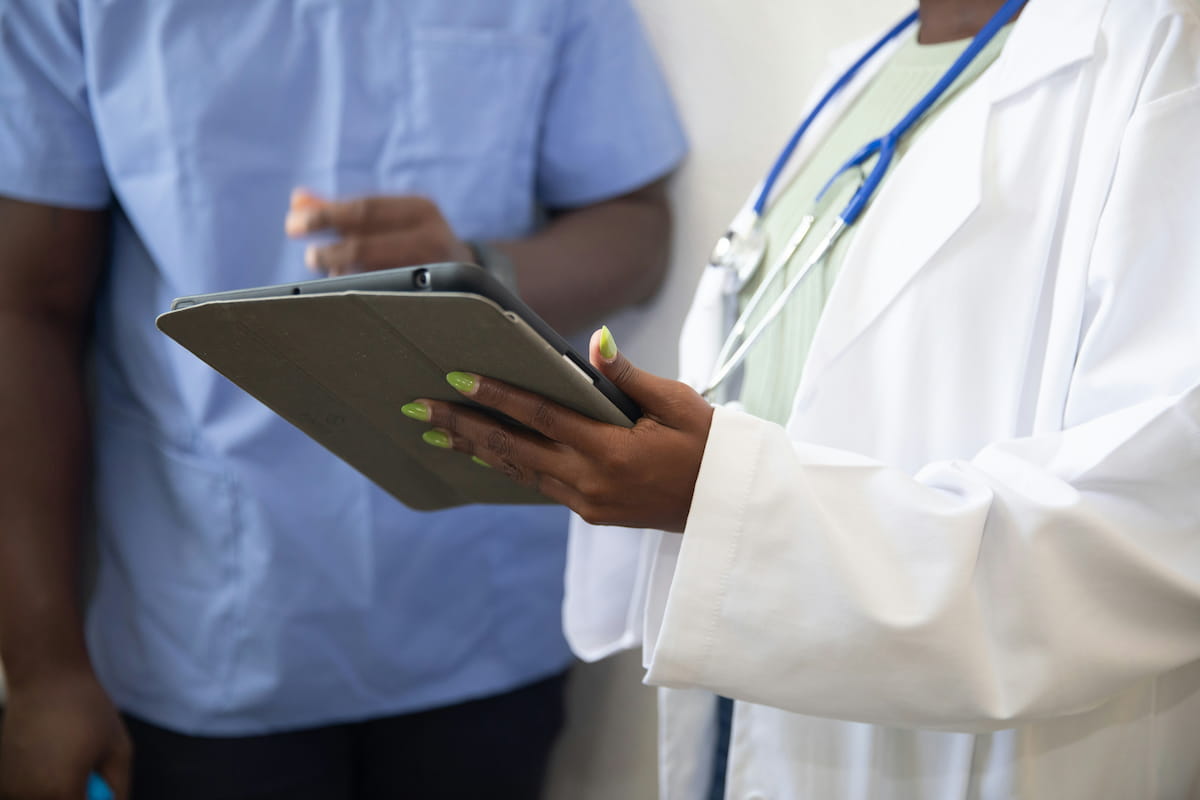
Artificial intelligence (AI) has its proponents and critics. Some believe it’s the path forward; others feel it’s taking away our humanity. Many, however, walk the line between the two and recognize that AI has benefits in modern society. One such use of AI comes from a collaboration between Dyania Health and the Cleveland Clinic.
Dyania Health, a New Jersey–based healthcare AI research company, has developed the Synapsis AI platform to support clinical research. In partnership with the Cleveland Clinic, the platform is being used to identify and recruit patients for enrollment in cardiology and oncology trials. There are plans to expand into neurology in the near future.
Clinical trial recruitment has largely been challenging for many sites due to staff, time, and financial constraints. Eighty percent of clinical trials do not meet their enrollment timelines, while 50 percent of sites fail to enroll patients. The use of AI to accelerate recruitment involves incorporating large language models (LLMs) to help speed up patient identification for research studies. It opens the door for more patients to receive the treatments they need, leading to better health outcomes in the long run.
Historically, Black patients have faced significant barriers to clinical trial enrollment. Apart from economic, social, and systemic factors, there are gaps in communication and awareness among enrollment sites. Economic and logistical barriers make it harder for many Black patients to join clinical trials. Factors like lack of insurance, transportation issues, or lack of clinical trials in certain areas all play a role. These hurdles leave Black patients underrepresented, which can throw off the data and lead to incomplete research.
RELATED: How Clinical Trials Can Help Reduce Black Disease
Addressing the challenge of clinical trial enrollment for Black patients, Synapsis AI quickly sifts through medical data to identify eligible patients who meet specific parameters — a task that could take human researchers considerable time and effort. For example, in a pilot study for a melanoma trial, Synapsis AI identified a suitable patient in just 2.5 minutes, with 96 percent accuracy. The same task took one specialized nurse 427 minutes, with 95 percent accuracy, and an oncology research nurse 540 minutes, with 88 percent accuracy. Compared to traditional methods, the AI model delivers greater accuracy in less time.
In the Phase 3 DepleTTR-CM trial, which focuses on a serious, life-threatening heart muscle disease, the Dyania Health system scanned 1.2 million patient records. In just one week, it reviewed 1,476 records and accurately identified 30 eligible patients across multiple clinical sites. By comparison, traditional recruitment methods found only 14 patients over three months. The system further identified reasons for inclusion and countered with exclusion criteria, which assist trial coordinators as they’re required to include this information in their screenings.
Not only does AI accelerate enrollment, but it can also help ensure a more diverse group of participants by pulling them from a variety of clinical trial sites. Integrating Synapsis AI into existing electronic medical record systems is the way forward in diverse patient enrollment.

Movement disorders like Parkinson’s disease are diagnosed less frequently in Black patients as opposed to their white counterparts. Dyania Health and the Cleveland Clinic have begun the process of creating new applications within the AI technology in neurology. The goal is to speed up access to care and trials for neurodegenerative conditions.
“Academic medical centers like Cleveland Clinic are home to some of the most advanced clinical research in the world, yet they often face significant challenges when trying to connect patients to trials – challenges rooted in complexity, time, and fragmented data,” said Eirini Schlosser, founder and CEO of Dyania Health.
“Through our collaboration with Cleveland Clinic, we are creating a new standard where AI enables faster connections between patients and potentially life-changing trials. This work is deeply personal. It is about ensuring that no opportunity for progress is lost in the complexity of data, and that innovation reaches people when it matters most.”Integrating AI in clinical trial recruitment is an important step toward addressing the historical and systemic barriers Black patients face in healthcare. A collaboration between healthcare providers, researchers, and communities is imperative to ensure diverse patient enrollment.
Patients who are interested in learning more about clinical trial opportunities can visit BlackDoctor.com’s Clinical Trial Resource Center.

By subscribing, you consent to receive emails from BlackDoctor.com. You may unsubscribe at any time. Privacy Policy & Terms of Service.