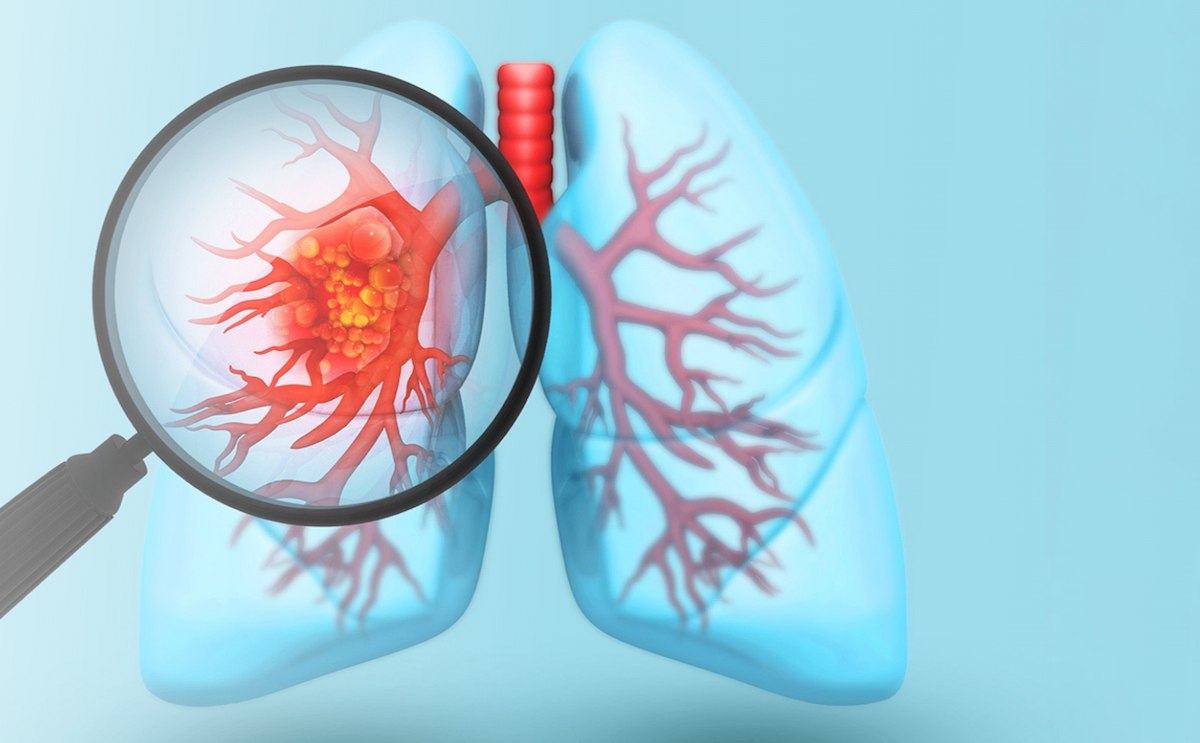
Cancer is something we can all relate to.
Even if we haven’t experienced it ourselves, we probably know someone who did. And even if we don’t know somebody who did, we’ve certainly seen the commercials, heard of the charities, and heard of the “Big C” in more ways than one.
But what if there are new ways to address cancer, better than ever before?
In the relentless fight against cancer, few advancements offer as much promise as the fusion of artificial intelligence (AI) with immunotherapy. Now, you’re probably thinking, AI, what does AI have to do with this?
Turns out, a lot. The implementation of AI is helping to get more results, more quickly, with more accuracy. For patients battling lung cancer, particularly non-small cell lung cancer (NSCLC), recent trials offer more than a glimmer of hope.
By leveraging AI to predict treatment responses, breakthroughs are occurring at the personalized level. In other words, what you need. What works for your body, your chemistry, your genetics, and your personal history.
And the results have been amazing for some. Some patients have even doubled their survival rates, enjoying multi-year remissions that used to be so rare.
Let’s break it all down…
At the forefront of this revolution are AI models trained on vast datasets. Some of the most trusted come from the MD Anderson Cancer Center. Simply put, these models are incredible. They can analyze complex biomarkers, imaging, and genomic data – all of which allow them to basically forecast how patients will respond to treatments.
Pretty remarkable, right?
For instance, take pembrolizumab, a PD-1 inhibitor that unleashes the immune system against cancer cells. With non-small cell lung cancer, traditional chemotherapy often falls short. But pembrolizumab (Keytruda) can be different. In fact, AI has proven instrumental in identifying responders.
In one machine learning model developed by MD Anderson researchers, over 2,300 cases from multiple centers were factored. The model accurately predicted treatment responses to pembrolizumab with high accuracy. Known as A-STEP, the model integrated clinicogenomic data to guide decisions. Thanks to its success, it potentially spared non-responders from ineffective therapies and their side effects.
In another trial known as the KEYNOTE-024 trial, pembrolizumab outperformed chemotherapy in a group of patients, allowing them to live without disease progression!
RELATED: Recognizing the Signs: Early Symptoms of SCLC You Shouldn’t Ignore
In one of MD Anderson’s AI models, patients who were poor responders to typical immunotherapies were included. The AI accurately predicted that additions such as CTLA4 inhibitors – a class of drugs – helped them respond when they otherwise wouldn’t. In fact, the survival rates were doubled, providing great hope to those who normally wouldn’t see significant results.
Other therapeutic combinations have been guided by AI as well. For instance, trials like the CROWN study for people with ALK-positive non-small cell lung cancer (NSCLC) report a median survival exceeding five years when lorlatinib is used alone, but when paired with immunotherapies like pembrolizumab, significantly greater survival rates are reported.
AI has even identified high-risk nodules, showing that pembrolizumab can prevent recurrence in early-stage NSCLC when used promptly. With the help of therapeutic combinations guided by AI, patients are tackling aggressive cancers, turning them into manageable conditions.
Of course, using AI is not always easy-peasy.
RELATED: Life After Diagnosis: Navigating SCLC Treatment Options

To this day, accessibility remains a hurdle. AI’s reliance on large datasets raises concerns about generalizability across populations. Subset populations, minority patients, and other unique demographics could make it more difficult to determine how, for instance, inner-city lung cancer patients may compare to rural patients.
In low- and middle-income countries, where cancer cases are rising, many barriers also exist. These include things like data privacy, workflow integration, and high costs. As a result, the adoption of AI-guided treatment approaches has been slow.
Then you have the fact that clinical trials often underrepresent minorities. This can lead to skewed AI models, with 80 percent of trials facing recruitment delays due to these issues. Given that access to advanced imaging and genomic testing varies widely, personalized AI-driven care isn’t yet universal.
As a result, survival gaps in prognoses continue to persist, despite overall gains in AI use.
Fortunately, AI can address many of its own shortcomings. By automating patient matching, AI can slash recruitment times and costs, which exceed $200 billion annually. Natural language processing can prescreen candidates in real-time as well, helping with inclusivity.
Not to mention the flexibility of AI. Thanks to adaptive designs, mid-trial adjustments can now be made based on emerging data, which then accelerates the approval process. Take, for instance, the often complicated and lengthy process of drug approval. In 2025, AI sped drug discovery and enabled rapid data analysis, cutting hours to mere seconds.
Of course, it should be remembered that AI is a tool, not an outright replacement. There will always be a critical place for humans in medicine, with doctors, nurses, and other specialists playing a key role in the process – especially with cancer treatment.
That said, AI advancements can certainly make them better at their job. Given AI’s role in predicting responses and optimizing therapies, individuals can discuss trial participation with confidence. Trials like those at MD Anderson are not only extending life, they’re restoring quality. They’re promising quality-of-life improvements at a scale that we simply haven’t seen before.
For people who are nervous or unsure about the future role of AI, consider the outcomes. If AI models are guiding better treatments, improving outcomes, and even catching cancer early, what’s not to love?
Again, AI isn’t about removing the role of traditional doctors and medicine. It’s about supplementing these established practices, opening up new avenues of care, and optimizing medical approaches in a way that is truly revolutionary.
Overall, AI immunotherapies are more than speeding up care. They’re providing new options that never even existed.
For patients facing uncertainty, exploring these options is vital. Speak with your healthcare team, discuss accessibility issues, and see if you can’t get the futuristic, potentially life-saving care you deserve!
The leading institutions and cancer centers are embracing AI like never before. So, what are you waiting for? Are you ready to jumpstart your journey?
You may just be surprised how bright the future really is…


By subscribing, you consent to receive emails from BlackDoctor.com. You may unsubscribe at any time. Privacy Policy & Terms of Service.