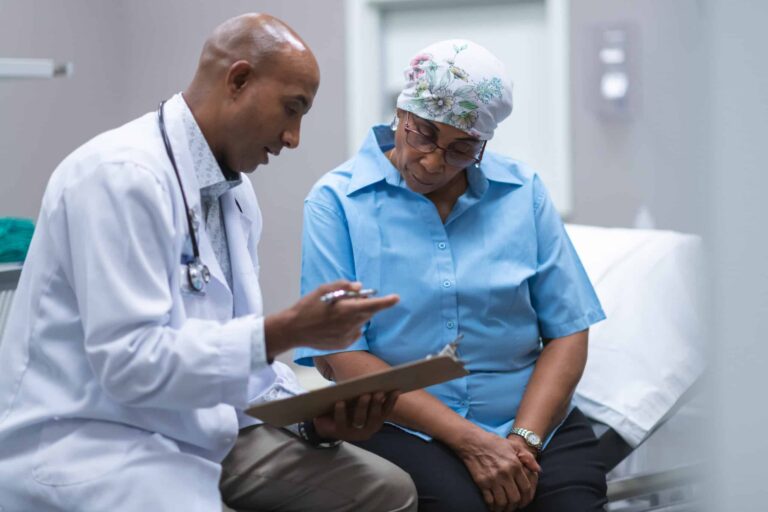
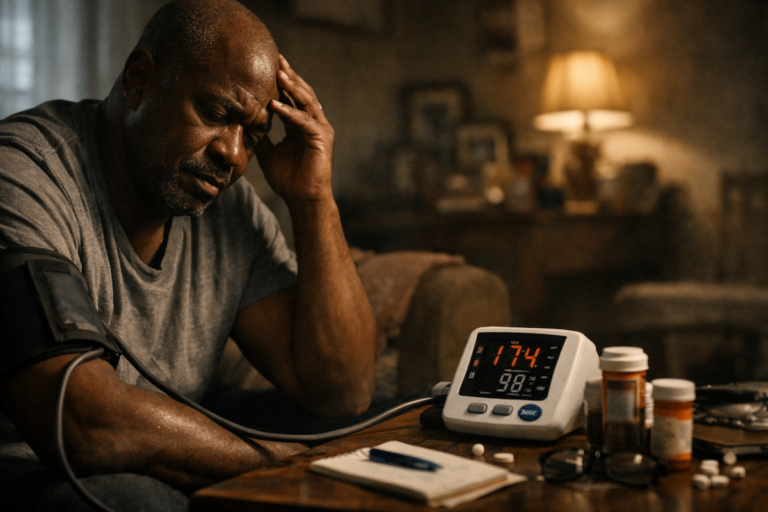
When it comes to managing our health, receiving the proper diagnosis is the first step. More often than not, Black patients receive a misdiagnosis that could either prevent them from receiving proper treatment or even stop a procedure from progressing. Nonetheless, it’s important more than ever that the Black community makes their voices heard in the healthcare system.
At 31 years old, North Carolina resident Phyllisa Deroze realized that she needed to make her voice heard after receiving a misdiagnosis. The Literature professor led a healthy lifestyle, keeping herself in shape and dieting properly. However, her health took a nosedive after doctors informed her she’d been living with Type 2 Diabetes for 8 years.
According to the American Diabetes Association (ADA), Black Americans are at a higher risk of developing diabetes than white and Hispanics. While most cases derive from contributing factors like a poor diet and obesity, the others are based on genetics. Neither statistic is good.
Oftentimes, healthcare providers mistake a diabetes diagnosis simply due to a person’s race. The same happened to Deroze who found herself in and out of the hospital room, constantly trying to manage her type 2 diabetes. Eventually, the mother of one discovered that she had type 1.5 diabetes and received a misdiagnosis. In the end, Phyllisa Deroze realized that speaking out and voicing her concerns was the only way to change her outcome. In 30 seconds, she would have received the proper diagnosis and saved so much time.
RELATED: Diabetes: Questions to Ask Your Doctor
Phyllisa Deroze thought she was living her best life at 31 years old. She worked out five times a week and lost 50 pounds. While her personal life was great, so was her work. She’d just completed her Ph.D. and secured a teaching position in North Carolina as a Literature Professor. There wasn’t a dark cloud in sight for Deroze.
However, in February 2010, things started downhill for her. Deroze started feeling exhausted and thirsty all the time. She went to visit a primary care doctor in the area and was told that she didn’t have enough electrolytes. Furthermore, the doctor advised her to drink Gatorade. During an interview, Deroze revealed that the primary care doctor didn’t even check her vitals. “My blood sugar was never checked. Thirty seconds could have changed it all,” she says.
It wouldn’t be long before Deroze would realize just how right she was. A week later, her symptoms worsened. Deroze’s thirst increased, she urinated constantly and her vision blurred at times. Even during lectures, she caught herself speaking incoherently. Even worse, she passed out just from taking a bath. At that point, she felt as though she were dying.
The North Carolina woman checked herself into the ER. Her blood sugar was off the charts, and her glucose levels were measured at 597. A nurse practitioner informed her that she had type 2 diabetes. Not only that, but she was going into a “diabetic coma.” After being informed of her condition, Phyllisa Deroze stayed in the hospital for 6 days.
However, the diagnosis wasn’t the last of her problems. In fact, it was only the beginning.
For the next 8 years, the Literature professor lived with the notion that she had diabetes. She started doing more research on her condition, learning everything she could. Deroze even read Patti LaBelle’s cookbook and started on a low-carb diet. She kept with her workout routine and even became a runner, participating in forty 5K races. Additionally, Deroze started a blog, writing about the day and life of a Black woman living with diabetes. Even by taking all the necessary steps to manage her diabetes, Deroze still didn’t feel like she was back to her old self. In fact, she felt worse than before.

Her blood sugar levels and insulin intake kept increasing. She couldn’t understand what was happening. Finally, Deroze received her answer after attending one of her diabetes advocacy events. She recalled meeting a man who’d originally been diagnosed with type 2 diabetes but soon discovered that he had a latent autoimmune form of the disease known as LADA or type 1.5 diabetes.
Studies show that this form of diabetes is slow-progressing. Additionally, “patients with LADA have some insulin production, but eventually, the body starts attacking insulin-producing beta cells. This causes a patient to become insulin-dependent.” Deroze realized that many of the symptoms the man had matched hers.
During a visit to her Endocrinologist, Phyllisa asked for a type 1 antibody test, believing she fit the profile for LADA. After all, she was under 30 years old during the time of diagnosis, had an early onset, and had no family history of diabetes. Unfortunately, her Endocrinologist turned down her request. Though it wasn’t until her OBGYN ordered the test for her, that Deroze found the answers she needed. Her hunch had been correct, she’d become insulin-dependent and suffered from type 1.5 diabetes.
RELATED: 11 Tips To Be Healthy For Life & Not Just A Moment
After jumping through so many hoops just to find the proper diagnosis, Deroze tells other Black women the time is now to speak up. More importantly, she wants to make sure that what happened to her, never happens to anyone else ever again. She even created a website called Black Diabetes Info, hoping to help others struggling with their condition.
“I have a Ph.D., and I couldn’t get doctors to listen to me. People project onto my brown skin. So when I try to explain my condition, I’m not heard,” she said during an interview. For the Literature professor, it meant demanding one test just to get the proper diagnosis.
In the end, speaking out and making her concerns known, made all the difference for Deroze. While she wishes it didn’t take as long as it did for her to find the right diagnosis, she’s grateful for being properly treated. Now living in Florida with her husband and her six-year-old daughter, Phyllisa Deroze is back on track to living her best life.


By subscribing, you consent to receive emails from BlackDoctor.com. You may unsubscribe at any time. Privacy Policy & Terms of Service.