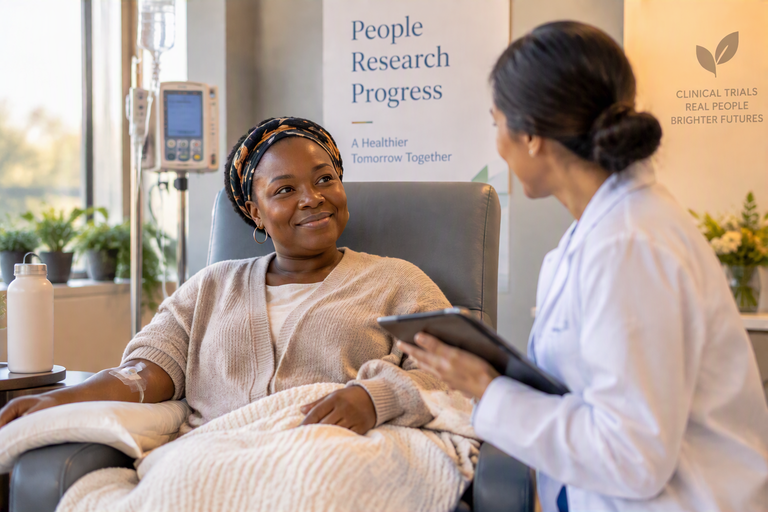
A new study suggests that greater participation in ovarian cancer clinical trials could play a key role in improving outcomes for Black women. Currently, Black women are more likely to die from ovarian cancer than their white counterparts, yet they make up only about 6 percent of participants in clinical trials.
The study, published in JAMA Network Open, analyzed data from 1,903 patients, of whom only 121 were Black. Researchers examined four clinical trials conducted between 1996 and 2006 that evaluated treatments for stage III and IV epithelial ovarian cancer.
According to study author Alex Francoeur, MD, an oncology fellow at the University of California, Irvine, the findings reinforce a long-standing issue in cancer research.
“This highlights what many studies over the past few decades have shown: patients who are nonwhite tend to be significantly underrepresented in clinical trials,” Dr. Francoeur said.
Researchers also noted that many trials conducted during that period failed to collect demographic information in ways that provide a complete picture of patients’ diagnoses and treatment experiences.
The COVID-19 pandemic exposed longstanding inequities in the U.S. healthcare system and drew renewed attention to disparities in clinical trial participation. When studies lack diversity in race, ethnicity, income, and other social factors, researchers may miss important differences in how diseases present and how treatments work across populations.
Dr. Francoeur noted that the trials included in the analysis did not collect information on ethnicity, meaning researchers could not determine how many Hispanic patients were represented.
“It is also important to note that when these trials were conducted, they did not collect information on ethnicity,” Dr. Francoeur said. “As a result, we are not able to report how many Hispanic patients were included. This reflects another issue that many studies have examined — the lack of consistent reporting on race and ethnicity in clinical trials, which limits our ability to fully understand the patient populations being studied.”
Disparities can occur at multiple points along the cancer care journey. Limited representation in research may contribute to gaps in understanding how ovarian cancer develops and progresses in different populations. In real-world settings, these inequities can translate into delayed diagnoses, when cancers are already advanced and harder to treat.
Even after diagnosis, patients from minority groups may face barriers such as delayed treatment, limited access to specialists, or difficulty reaching high-quality cancer centers. Researchers say improving diversity in ovarian cancer clinical trials is one step toward addressing these systemic gaps and ensuring that new therapies are effective for all patients.

Understanding social determinants of health (SDOH) is vital for care teams. The SDOH are the non-medical, environmental factors where people are born, work, and live that influence their health outcomes.
Many factors contribute to someone’s health history and even their ability to comply with treatment plans. Factors include their local environment, access to reliable transportation, and ability to pay for prescriptions. These determinants interact with the healthcare system, often magnifying disparities for already disadvantaged communities.
Despite the challenges, the article emphasizes that growing research and awareness are bringing the issue to the forefront of public health and policy discussions. Government agencies, health systems, insurers, and advocacy groups are increasingly focused on identifying the causes of inequities and implementing interventions to improve access and outcomes for underserved populations.
Despite Black women being more likely to die from ovarian cancer, white women still make up the majority of diagnoses. Ultimately, more inclusive research may lead to treatments that better reflect the needs of all patients. By ensuring Black women and other minority groups are adequately represented in ovarian cancer clinical trials, scientists can gain a clearer understanding of how the disease progresses and which therapies are most effective, which is an essential step toward reducing long-standing survival disparities.
Expanding outreach, improving demographic reporting, and addressing barriers such as transportation, cost, and mistrust of the medical system could help increase participation among underrepresented groups.


By subscribing, you consent to receive emails from BlackDoctor.com. You may unsubscribe at any time. Privacy Policy & Terms of Service.
Enter your name and email to receive the download link.