
Face masks used to be reserved for healthcare professionals, construction workers and a select few who were cautious of germs and bacteria. After the outbreak of COVID-19, they’ve become an integral part of everyday life and likely will remain so for the foreseeable future. Experts claim that people will likely have to wear them until there’s a vaccine, which may take up to a year.
The shift from the world we knew to one where we have to stand six feet apart in line at the grocery store was sudden. So it’s perfectly understandable if you don’t know everything there is about how to navigate in our new normal.
With wearing face masks becoming more of a requirement than a suggestion, we’re here to tell you everything you need to know about doing so in the most effective way.
Here’s a guide on wearing face masks during the COVID-19 outbreak.
The most common way the coronavirus is spread is through respiratory droplets that are produced through coughing, sneezing or other acts in person-to-person contact.
The primary reason that wearing masks is so effective against spreading the disease is that they prevent these droplets from escaping and coming into contact with anyone else. This is the case for medical masks, cloth masks or anything else that covers the mouth and nose.
This is especially important because a significant number of people who are positive carriers of the coronavirus are asymptomatic—meaning they show none of the listed symptoms—and totally unaware of their status.
A recent study from the University of Hong Kong and the University of Maryland found that people infected with a viral illness leave droplets in the air 30 percent of the time after breathing while not wearing masks. On the other hand, all participants who wore masks blocked nearly 100 percent of the droplets.
Face masks are being recommended (or required) as a way to keep the wearer from infecting anyone they come into contact with. This doesn’t mean that wearing a mask makes you invulnerable to being infected by someone who isn’t. So it’s essential that everyone still practices social distancing and other measures, mask or no mask.
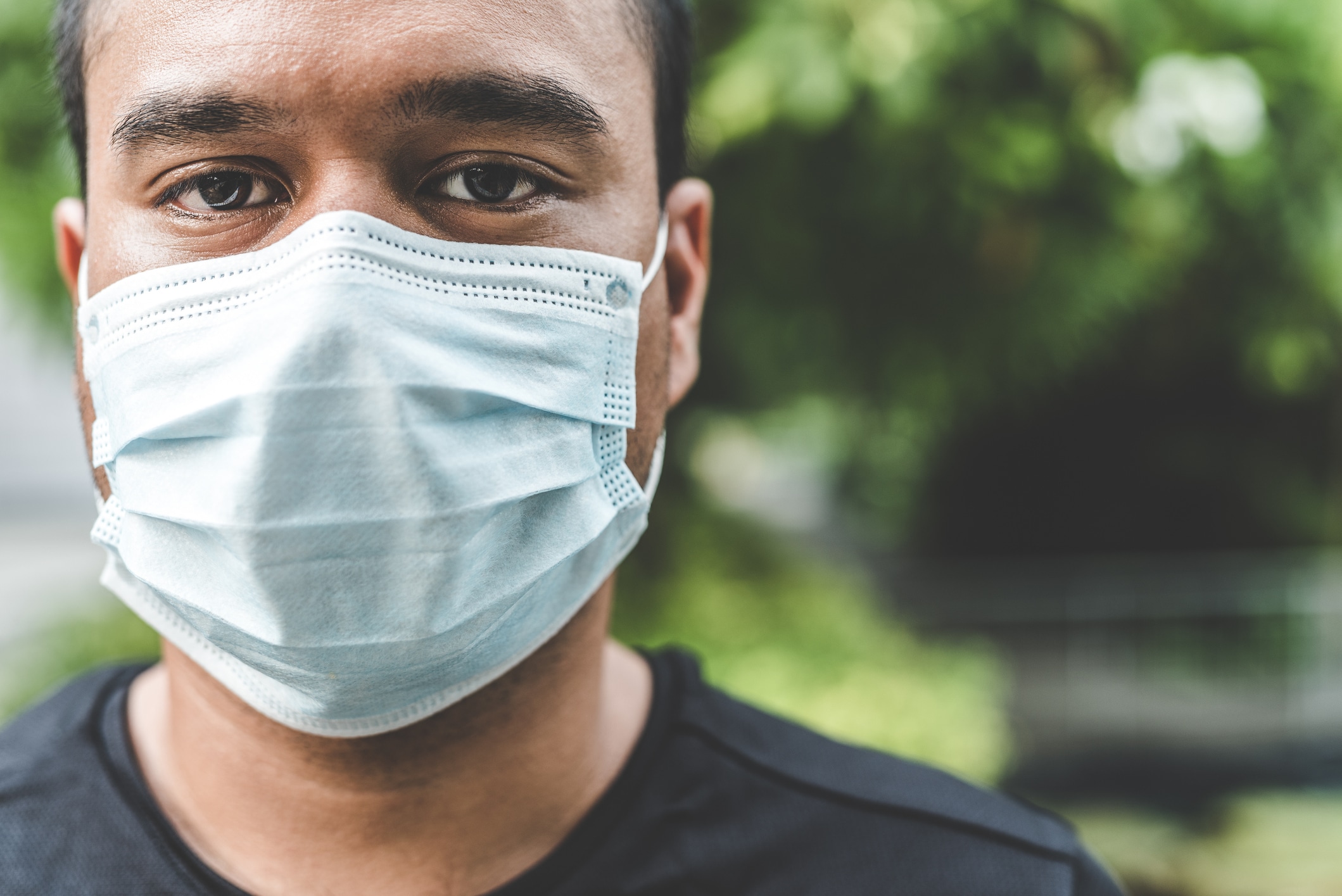
Researchers found that a sheet of tightly woven cotton — of 600 threads per inch — plus two sheets of chiffon, made from polyester and spandex, seemed to make the most effective combination, filtering out 80–99% of the particles, depending on their size.
To be used effectively, face masks should be worn so that they cover both your mouth and nose. If either of them are exposed, that largely defeats the purpose of wearing one in the first place.
Tip: You should always wash your hands before applying or removing a mask to avoid the spread of germs.
Because face masks are new and can sometimes feel inconvenient—for example, when they fog up glasses—people tend to try and find shortcuts. You may have seen—or done—these yourself.
Peter Hessler, a writer for The New Yorker, came up with names for the most common ways people try to cheat with masks:
The Holster: When someone pulls their mask down below their mouth or chin.
The Flapjack: When someone has their mask hanging off of one ear.
The Low Rider: When someone has their mask covering their mouth but under their nostrils.
As tempting as they may be, do your best to avoid using these methods. And, whatever you do, don’t cut a hole in your mask because it’s “hard to breathe.”
You may be wondering where everyone’s been getting face masks to begin with. After all, if buying one is something you never thought about before no one can blame you.
When the COVID-19 outbreak first made national news, there was an immediate rush to buy face masks. Which led to a shortage that even impacted people on the front lines who are coming into contact with infected people on a daily basis.
Fortunately, enough time has passed where numerous companies are producing enough masks to meet demand, including local department and convenience stores. As a matter of fact, many of them are even coming out with new designs that allow customers to show off more personality. (See this list of GQ-approved providers.)
However, if you need a more accessible solution, you’re in luck. The Center for Disease Control (CDC) has come out with a detailed guide on how to make effective masks out of other items you can find easily, such as t-shirts and bandanas.
Wearing masks will likely become the norm as governments work to lower the number of COVID-19 infections and could even become a mandatory part of everyday life as people get back to work in the future. Hopefully, this guide taught you more about how effective masks are and how to access them so that we can all work together towards a healthier, safer future.


By subscribing, you consent to receive emails from BlackDoctor.com. You may unsubscribe at any time. Privacy Policy & Terms of Service.