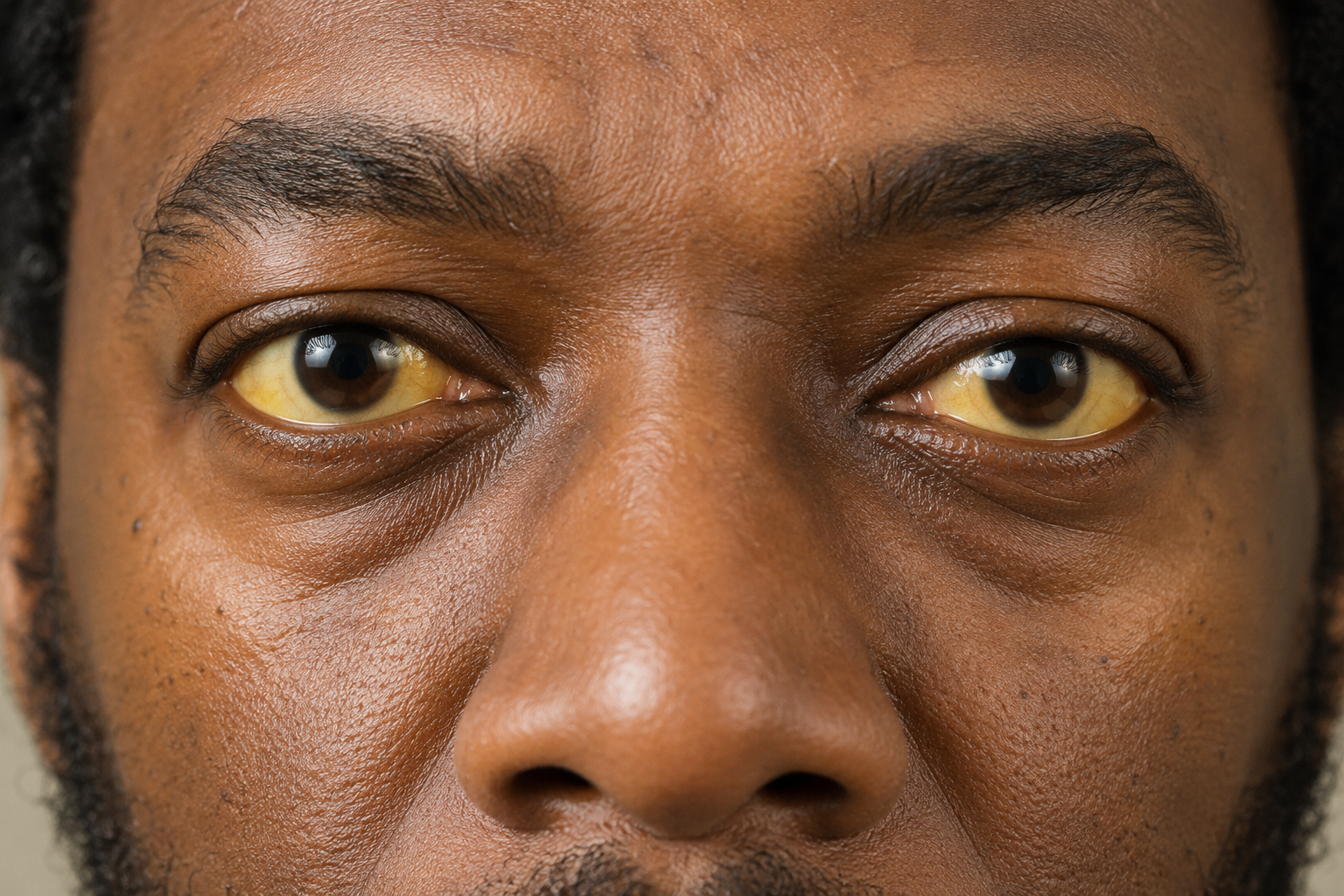
We usually pay more attention to the color of the inside of someone’s eyes. They may be a light brown color or a blue-ish gray. Some of us even swoon over someone who has green eyes. But what about the whites of your eyes? Your eyes can reveal more about your health than you think. In some cases, a noticeable change in the color of the whites of your eyes can be an important clue that something is happening elsewhere in your body.
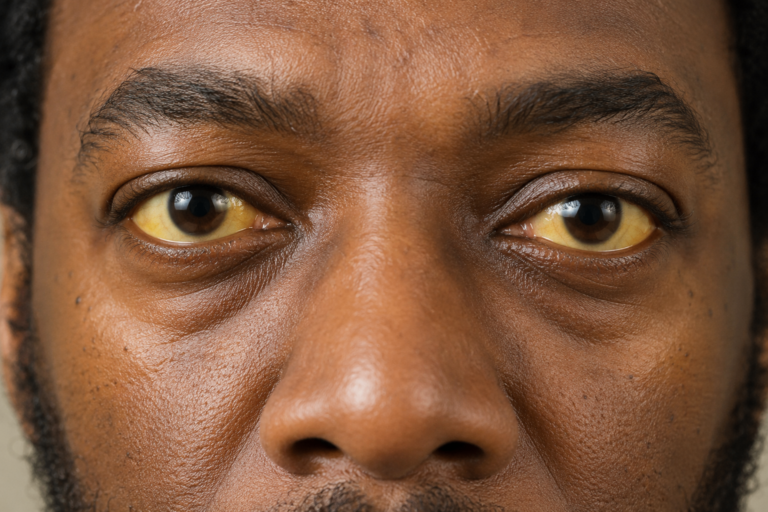
When the normally white portion of the eye begins looking yellow, the condition is often associated with jaundice. Jaundice occurs when too much bilirubin builds up in the bloodstream. Bilirubin is a yellow pigment produced when the body breaks down old red blood cells. Normally, the liver processes bilirubin so it can leave the body through bile and stool.
When that process is interrupted, bilirubin can accumulate and cause the skin and whites of the eyes to turn yellow.
Yellow eyes aren’t a disease themselves. Instead, they can be a warning sign of an underlying condition involving the liver, gallbladder, pancreas, blood or bile ducts.
The liver is one of the first organs doctors consider when someone develops jaundice because it plays a central role in processing bilirubin.
A variety of liver conditions can cause yellowing of the eyes, including:
The challenge is that liver disease can progress for years without producing obvious symptoms. Yellowing of the eyes may not occur until bilirubin levels become elevated.
Other clues: Look for unusual fatigue, dark urine, pale or clay-colored stools, nausea, decreased appetite, itching, swelling of the abdomen or legs, pain or discomfort in the upper-right abdomen, unexplained weight loss or easy bruising.
Hepatitis simply means inflammation of the liver. It can result from viruses—including hepatitis A, B and C—as well as alcohol, certain medications, toxins and autoimmune diseases.
When inflammation interferes with the liver’s ability to process bilirubin, jaundice can develop.
Hepatitis C is particularly important because people can live with the infection for years without knowing they have it. CDC surveillance data for 2023 recorded a rate of 27.5 newly reported chronic hepatitis C cases per 100,000 among non-Hispanic Black Americans.
Other clues: Fatigue, nausea, vomiting, abdominal pain, loss of appetite, fever, joint pain, dark urine and light-colored stool can occur. Some people, however, have few or no symptoms.
The liver produces bile, which travels through small tubes called bile ducts before reaching the gallbladder and intestines.
A gallstone can sometimes become lodged in a bile duct. When bile cannot drain properly, bilirubin can back up into the bloodstream and cause jaundice.
Unlike some forms of chronic liver disease, symptoms from a blocked bile duct can appear relatively suddenly.
Other clues: Watch for intense pain in the upper-right or upper-middle abdomen, nausea, vomiting, dark urine, pale stools, itching, fever or chills.
The combination of jaundice, significant abdominal pain and fever requires prompt medical attention because it can indicate a serious infection or obstruction.
The pancreas sits near the liver, gallbladder and bile ducts. Problems affecting the pancreas can sometimes interfere with the normal flow of bile.
Pancreatitis, for example, causes inflammation of the pancreas. In some circumstances, swelling or associated gallstones can affect bile drainage.
More rarely, a pancreatic tumor can obstruct the common bile duct and lead to jaundice. Yellow eyes therefore shouldn’t automatically be interpreted as liver disease.
Other clues: Upper abdominal pain that may travel to the back, nausea, vomiting, unexplained weight loss, decreased appetite, unusually light or greasy stools and changes in blood sugar can provide additional clues.
Gallstones aren’t the only gallbladder problem associated with jaundice. Inflammation, infection and, less commonly, tumors involving the gallbladder or biliary system can interfere with bile flow.
Other clues: Upper-right abdominal tenderness, nausea, vomiting, fever, chills and pain after eating—particularly after a heavy or fatty meal—can occur.
Not every case of yellow eyes begins with the liver.
With hemolytic anemia, red blood cells are destroyed faster than the body can replace them. Because bilirubin is created during the breakdown of red blood cells, rapid destruction can produce more bilirubin than the liver can process efficiently.
The result can be yellowing of the skin and eyes.
Other clues: Unusual tiredness, weakness, shortness of breath, dizziness, rapid heartbeat, pale skin and dark urine may accompany hemolytic anemia.
Sometimes yellow eyes are caused by a condition that is considerably less dangerous.
Gilbert syndrome is an inherited condition that affects how the liver processes bilirubin. People with Gilbert syndrome can experience mild, intermittent elevations in bilirubin without having significant liver damage.
A person may notice slightly yellow eyes during periods of illness, dehydration, fasting, lack of sleep or significant physical stress.
Many people don’t know they have Gilbert syndrome until elevated bilirubin is discovered on a routine blood test.
Prescription medications, over-the-counter drugs and some herbal or dietary supplements can affect the liver. In severe cases, medication-induced liver injury can result in jaundice.
Acetaminophen is one well-known example of a medication capable of causing serious liver injury when taken in excessive amounts.
That doesn’t mean someone should automatically stop a prescribed medication after noticing a change in their eyes. Instead, contact a healthcare professional promptly and provide a complete list of medications, vitamins and supplements being taken.
Cancer isn’t the most common explanation for yellow eyes, but persistent or unexplained jaundice can sometimes be associated with cancers affecting the liver, pancreas, gallbladder or bile ducts.
A tumor may interfere with liver function or physically block the movement of bile.
Other clues: Unintentional weight loss, decreased appetite, persistent abdominal or back pain, fatigue, itching, dark urine, pale stools and new digestive problems deserve medical attention, particularly when accompanied by jaundice.
Liver disease is an important health issue in the Black community, but the numbers require some context.
One of the most common forms of chronic liver disease today is metabolic dysfunction-associated steatotic liver disease (MASLD), in which excess fat accumulates in the liver in association with metabolic risk factors.
Interestingly, research consistently finds that Black Americans have a lower average prevalence of MASLD than several other racial and ethnic groups—but that does not mean liver disease is uncommon among Black adults.
An analysis of U.S. NHANES data from 2017–2023 estimated MASLD prevalence at approximately 25.9% among non-Hispanic Black adults, compared with 31.0% among non-Hispanic White adults, 32.7% among non-Hispanic Asian adults and 38.7% among Hispanic adults.
Another recent analysis using somewhat different criteria and NHANES data estimated MASLD prevalence among Black adults at about 27.4%. Differences between estimates reflect, among other things, the definitions and liver-fat thresholds researchers use.
In other words, even though prevalence is comparatively lower among Black Americans, roughly one in four Black adults may meet criteria for MASLD according to recent population estimates.
Risk is especially important for people with conditions such as type 2 diabetes, obesity, high blood pressure and other metabolic abnormalities. Recent national research has found diabetes, higher BMI, larger waist-to-hip ratio and elevated blood pressure to be associated with MASLD and liver fibrosis.
Hepatitis is another concern. CDC data show that thousands of newly reported chronic hepatitis C cases occur among Black Americans each year.
The larger message is that being in a demographic group with a statistically lower prevalence of one particular type of liver disease doesn’t eliminate an individual’s risk. Family history, metabolic health, alcohol consumption, medications, viral infections and access to screening and treatment all matter.
Yellow eyes should be considered alongside what’s happening throughout the rest of the body.
For example:
Yellow eyes + dark urine + pale stools:
This combination strongly suggests a problem involving bilirubin or bile flow and should be evaluated.
Yellow eyes + upper-right abdominal pain:
Liver, gallbladder or bile-duct problems become important possibilities.
Yellow eyes + severe abdominal pain + fever:
This could indicate a potentially serious obstruction or infection and requires urgent medical attention.
Yellow eyes + swollen abdomen or legs:
Advanced liver dysfunction is one possible cause and needs medical evaluation.
Yellow eyes + itching:
Bile acids accumulating in the bloodstream can cause significant itching in some liver and bile-duct disorders.
Yellow eyes + unexplained weight loss:
Pancreatic, liver, gallbladder and other serious diseases should be ruled out.
Yellow eyes + extreme fatigue:
Hepatitis, anemia and liver disease are among the possibilities.
Yellow eyes + dark urine + fatigue:
Hepatitis, hemolysis and other disorders affecting bilirubin should be considered.
No.
There’s an important difference between the entire white portion of both eyes becoming yellowish and having one small yellow spot or bump on an eye.
A condition called a pinguecula, for example, can cause a small yellowish raised area on the white of the eye, usually near the cornea. This isn’t the same thing as jaundice and doesn’t mean the liver is failing.
Eye irritation, environmental exposure and other eye conditions can also change the appearance of the sclera.
True jaundice typically creates a more widespread yellow discoloration rather than one tiny isolated spot.
Don’t ignore newly yellow eyes.
Mayo Clinic recommends that yellow discoloration of the skin or eyes in an adult be evaluated by a healthcare professional.
A healthcare provider may order blood tests to measure bilirubin, liver enzymes and blood-cell counts, as well as tests for hepatitis. Depending on the results, an ultrasound, CT scan or other imaging may be needed to examine the liver, gallbladder, pancreas and bile ducts.
Seek more urgent medical attention when yellow eyes occur with severe abdominal pain, high fever, persistent vomiting, confusion, unusual sleepiness, significant bleeding or rapidly worsening symptoms.
Yellow eyes are something you can see, but the underlying problem may be somewhere you can’t.
They can be associated with conditions ranging from relatively harmless Gilbert syndrome to hepatitis, gallstones, blood disorders and serious liver or pancreatic disease. That’s why treating yellow eyes as simply a cosmetic change—or attempting a home “liver detox”—can be a mistake.
The eyes may be providing an early warning that bilirubin isn’t being processed normally.
When the whites of your eyes suddenly aren’t white anymore, it’s worth finding out why.


By subscribing, you consent to receive emails from BlackDoctor.com. You may unsubscribe at any time. Privacy Policy & Terms of Service.