
A cancer diagnosis is life-changing. Beyond the physical treatment, it brings a heavy load of stress, anxiety, and new daily challenges. A recent study presented at the 2026 American Society of Clinical Oncology (ASCO) Annual Meeting found that when patients get mental health support integrated directly into their cancer care, they don’t just feel better—they are better able to follow their treatment plans.
The research, titled “Advancing health equity in oncology: Virtual collaborative behavioral health engagement and outcomes among Medicaid-insured and BIPOC patients,” was led by an expert team dedicated to making behavioral health a standard part of cancer care:
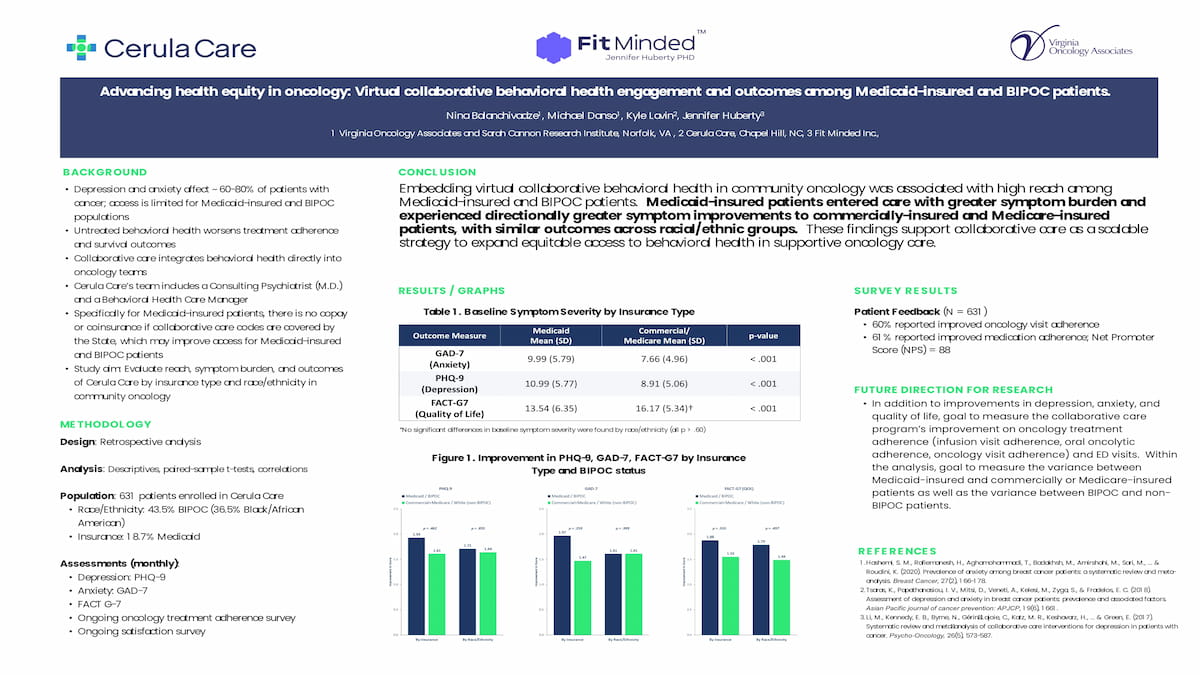
The study followed 1,400 patients referred to a virtual behavioral health program (Cerula Care) between 2024 and 2026. Of those, 631 patients successfully started care. The results confirm that this model effectively reaches historically underserved populations:
“Cancer, it’s life-changing. So it affects people not just physically but significantly on a mental health level … [the stress] can lead to missed appointments, poor adherence to treatment recommendations, and subsequently higher levels of anxiety and depression,” Dr. Balanchivadze told BlackDoctor.
One of the biggest hurdles to getting care is simply getting to another appointment. This model uses virtual collaborative care, which brings the support to you.
“The virtual component is very important because you can access this service from anywhere … I find that that has possibly removed access barriers, so it’s more available to those who are less fortunate,” Dr. Balanchivadze added.
Even for those without advanced technology, the support remains accessible.
“The evidence actually shows that even if it’s just a telephone call, you don’t need to have internet speed. You don’t need to be able to do a video visit. Just being able to engage with our care managers by phone, patients get the same great outcomes,” Dr. Lavin noted.
The study’s outcomes demonstrate that when mental health is treated as a core pillar of cancer care, patient adherence improves across the board:
“Historically, it’s been the three pillars of medical oncology, surgical oncology, and radiation oncology, but if we can really make psycho-oncology that fourth pillar of oncology care … then that helps dispel the stigma,” Dr. Lavin explained.
Dr. Balanchuz emphasizes her role as the bridge to these services.
“I’m not being asked to be a therapist, I’m asked to really do my job and screen patients and ask them about depression … I bring this problem, I talk to the patients about it, I gauge it, and then find the best solution for them,” Dr. Balanchivadze said.
The study proves that mental health support is a standard right for every cancer patient. High satisfaction scores (a Net Promoter Score of 88) highlight how much patients value this support.
If you are feeling overwhelmed, don’t wait. Ask your oncology team:
If you or a loved one is in crisis, please reach out to local support resources, a member of your care team, or national helplines immediately.


By subscribing, you consent to receive emails from BlackDoctor.com. You may unsubscribe at any time. Privacy Policy & Terms of Service.