When Aleta was first diagnosed with lupus, she wasn’t ready to share her diagnosis with anyone beyond her closest family and friends. She wasn’t ashamed—far from it—but the idea of being treated differently made her uneasy. She didn’t want pity, nor did she want people to look at her and only see her illness.
“I was diagnosed with lupus 10 years ago, and my process to diagnosis was not an easy one. I was losing my hair, and I went to a dermatologist to see about the hair loss. At that time, I was told I was potentially stressed and the stress was causing my hair loss. So I was given something to help with that,” Aleta tells BlackDoctor.org.
The treatment worked temporarily. However, a couple of months later, she went back because the hair loss started happening again.
“They gave me something else,” Aleta recalls. “But then one day, I was starting to feel sick, like I thought I had the flu. So I went to urgent care because I had a temperature. They couldn’t really figure out what was wrong. They ran some tests, and the doctor then told me that I had a bladder infection. So they gave me an antibiotic.”
After a day or two, Aleta began to experience what she thought was an allergic reaction to the antibiotic.
“I had to end up going to the hospital again. I was having a flare — but at the time, I didn’t know that was a flare. I ended up developing the Malar rash on my face and my skin became discolored,” Aleta shares adding that she was given a steroid shot.
After seeing a new doctor, Aleta was once again given pain medication and told to get an allergy test.
“I had to go back to work. I was traveling to Washington, D.C., for work, and at a conference, I couldn’t eat dinner or anything. I stayed in my room, and overnight, I tried to get up, but I collapsed. I had to go to the emergency room,” Aleta shares.
Luckily, Aleta had friends in the area who helped her. She spent an entire week in the hospital as doctors drew blood and ran tests before officially being diagnosed with lupus.
“They kept drawing blood, doing tests. My white blood cell counts were low. I was seen by every department: infectious disease, oncology, hematology,” Aleta shares. “They were about to give me a bone marrow biopsy, but before they did, the last doctor they sent in was a rheumatologist. She just looked at me and said, ‘I think you have lupus.'”
Labs confirmed that Aleta had lupus, a condition that she knew nothing about.
“I didn’t know anything about the disease. They started explaining it to me. I was in such bad condition by the time I got diagnosed.

They said, ‘There’s no cure. You’ll be on medication for the rest of your life,'” Aleta says.
Adjusting to a new reality was daunting for Aleta. For a while, the single mother kept her diagnosis private. But as her condition improved, she faced new frustrations. At her worst, her physical symptoms were visible—swelling, stiffness, and fatigue that others could recognize. People sympathized because they could see she wasn’t “okay.” However, as her symptoms became less outwardly obvious, the reactions shifted.
“As my condition improved, it became frustrating in a different way. When I had visible symptoms, people were sympathetic,” Aleta notes. “But once those symptoms weren’t as visible, people would say things like, ‘Why are you so tired?’ or ‘Why can’t you walk long distances?'”
RELATED: Living with Lupus: “It May Look Different, But Life Goes On”
At a low point, Aleta decided to try something new: joining a support group for women living with lupus. What she found there changed everything. Hearing from women who had lived with lupus for 15 or 20 years—and were not just surviving but thriving—gave her a renewed sense of hope.

Advocacy became a natural next step for Aleta. She wanted to shine a light on the realities of living with lupus, particularly the gaps in treatment and the lack of medications specifically designed for the disease. Most lupus treatments, Aleta learned, were created for other conditions and had harsh side effects.
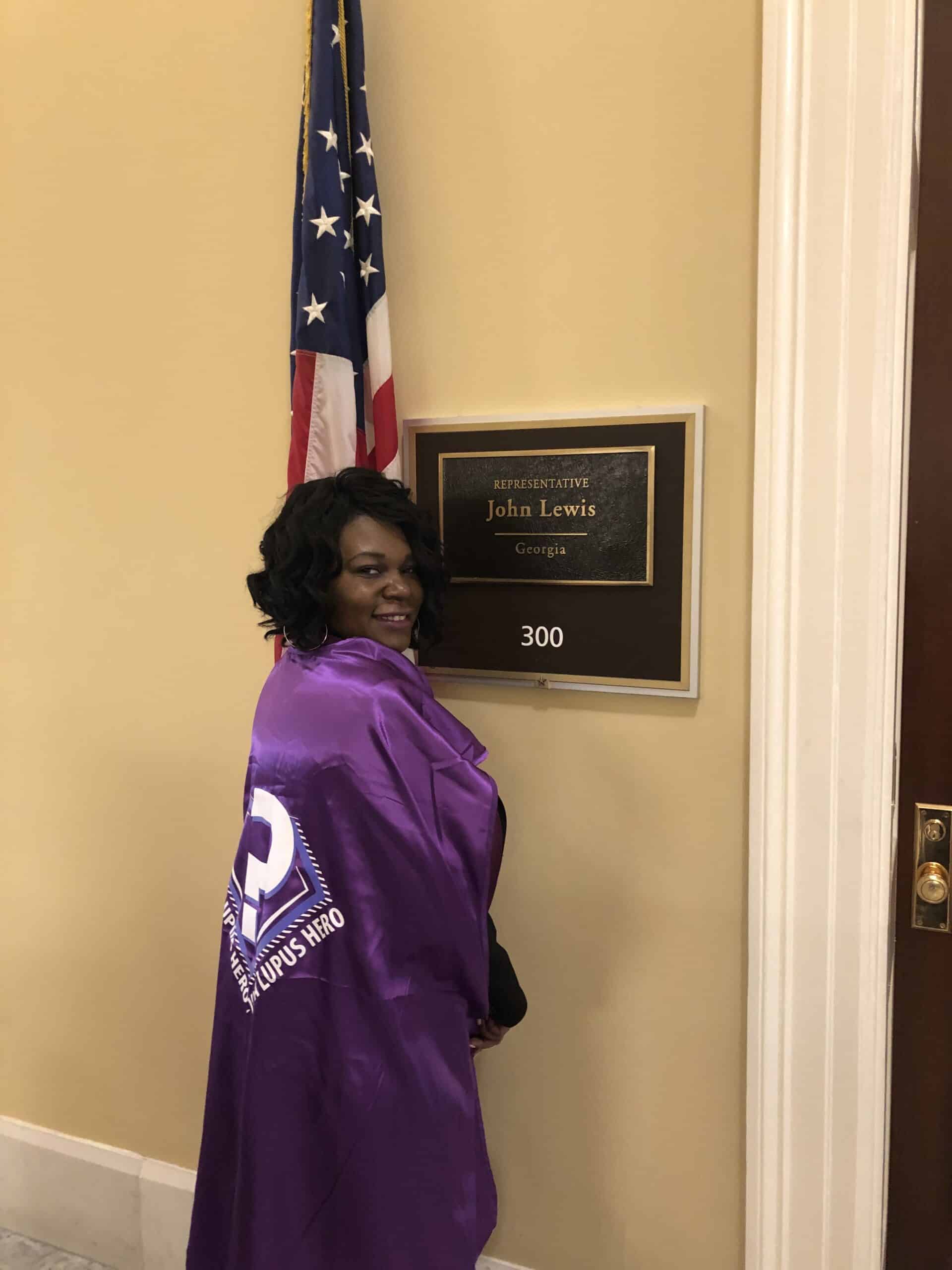
Aleta dreams of a world without lupus, but until that day comes, she’s focused on improvements that can be achieved now. She hopes for faster diagnostic tests to shorten the time it takes to identify lupus, which is often delayed.
Today, Aleta continues her work as an advocate, helping to educate and empower others while raising awareness about lupus and the importance of diversity in research. Her story is one of resilience, determination, and the belief that every voice matters.
“Lupus doesn’t define me,” Aleta says. “It’s just one part of my story. And by sharing that story, I hope I can help others find their strength, too.”
Drawing from her own experiences, Aleta offers the following advice for others navigating lupus:

By subscribing, you consent to receive emails from BlackDoctor.com. You may unsubscribe at any time. Privacy Policy & Terms of Service.