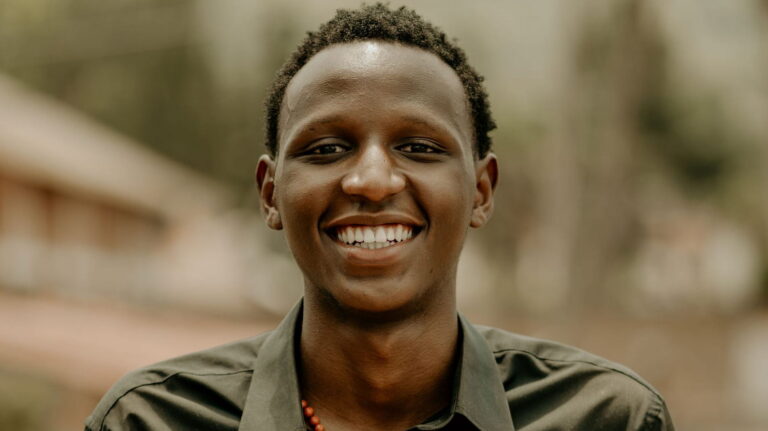
He knows cigarettes are bad for him. He knows years of smoking cause the pain in his lungs when he runs up and down the basketball court. But Terrence Raper said he’s not quitting any time soon.
“My health is not really a major concern of my own,” said the 29-year-old father of two from Arlington, Texas. The veteran of Iraq and Afghanistan started smoking in the Army about 10 years ago.
Researcher Wendy White, Ph.D., hopes the work she does changes Raper’s mind. The scientist at Mississippi’s Tougaloo College has spent close to 15 years studying how smoking affects the health of Black Americans. Results from a recent study she led suggest heavy smoking increases the risk of diabetes in Blacks, who have higher rates of the disease compared to U.S. whites and Hispanics.
For the study, the investigators selected nearly 3,000 people, mostly women, who did not have diabetes when they enrolled in the Jackson Heart Study, a large study of cardiovascular disease in African-Americans. The researchers looked at data from more than half of the people in the Jackson sample.
The majority of subjects had never smoked when they signed up. Only 361 people smoked, and 119 of them were heavy smokers, meaning they smoked at least 20 cigarettes — or a pack — daily.
White said the No. 1 finding is that smoking at least a pack a day may cause diabetes in Blacks. Both diabetes and smoking are tied to cardiovascular disease.
“We hear all the time about smoking and lung cancer and other lung disease, but the risk with smoking and diabetes is there,” said White, the deputy director of the Jackson Heart Study’s Undergraduate Training and Education Center.
The findings were presented in November at the American Heart Association’s Scientific Sessions.
The link between smoking and diabetes is important, she said, because it is very damaging to the body and diabetics can lose limbs or have other complications.
It’s also expensive to treat: The estimated medical costs of treating diabetes were $245 billion in 2012.
The study statistics show 466 participants were diagnosed with new cases of diabetes between 2000 and 2012. Among past smokers and those who smoked less than a pack a day, the rate of new diabetes diagnoses was similar to those who never smoked. But the rate of new cases among smokers who consumed at least a pack a day was 62 percent higher compared to those who never smoked.
A recent report from the Centers for Disease Control and Prevention shows that American Indians and Alaska Natives are much more likely to smoke cigarettes than other race and ethnic groups. Hispanics and Asians have the lowest smoking rates.
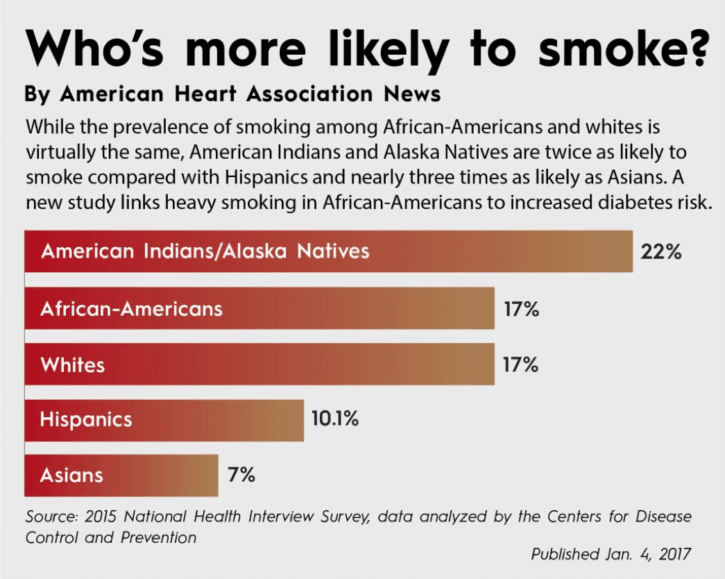
According to the CDC’s statistics, about 17 percent of whites and Blacks smoke cigarettes. Black men are more likely to smoke than their white peers, but black women are less likely to smoke than white women. A diabetes diagnosis is more common among Black adults than white and Hispanic adults.
“One of the interesting things that we saw was that smoking was associated with increased amounts of fat within the abdomen,” said Michael E. Hall, M.D., a study co-author and an assistant professor of medicine in the division of cardiology at the University of Mississippi Medical Center in Jackson. “Visceral fat was higher in current smokers, and this is what we think is one of the potential mechanisms by which smoking may increase the risk of diabetes.”
Hall, a co-investigator on a project under the AHA’s Tobacco Regulation and Addiction Center, added: “Fat within the abdomen has several potential adverse effects which affect glucose. This fat causes alterations in hormones that regulate blood glucose and it may cause more inflammation.”
Cardiovascular disease researcher Neha Pagidipati, M.D., said the study is helpful because there’s little information about the link between smoking and diabetes in blacks.
“I think this study was important because it looked at a very important and modifiable risk factor in a population that has generally been understudied in terms of cardiovascular risk factors,” said Pagidipati, a cardiology fellow at Duke University’s School of Medicine who was not involved in the study.
The findings, however, don’t definitively show heavy cigarette smoking causes diabetes, she said, and scientists should look deeper into that relationship. “This is an important issue.”
White said she would like to see health advocacy groups and federal agencies address the link between smoking and diabetes in education campaigns. She thinks aggressive messages that show the ugly side of smoking are effective.
Hall, who has patients who smoke, said doctors should talk to their patients about the smoking-diabetes connection. He said many smokers don’t quit until faced with a major health problem.
Raper, a graduate film student, said he’s not worried about the damage smoking has done to his body.
“I can’t control when I’m not going to be around. And whether I’m smoking or not smoking,” he said, “I don’t think really it makes much of a difference.”
He’s tried quitting, and wants to before his 30th birthday — mainly because he wants to stop spending the $80 to $100 month on his cigarettes. Smoking campaigns generally don’t speak to him because he said scare tactics don’t work on adults.
“You can stop kids from starting to smoke,” Raper said. “But getting somebody to quit at an older age is a completely different story.”



By subscribing, you consent to receive emails from BlackDoctor.com. You may unsubscribe at any time. Privacy Policy & Terms of Service.
Enter your name and email to receive the download link.