✦ Psoriasis manifests differently in darker skin, often appearing as purple, brown, or silvery patches, highlighting the need for tailored treatment approaches for Black patients compared to those with lighter skin.

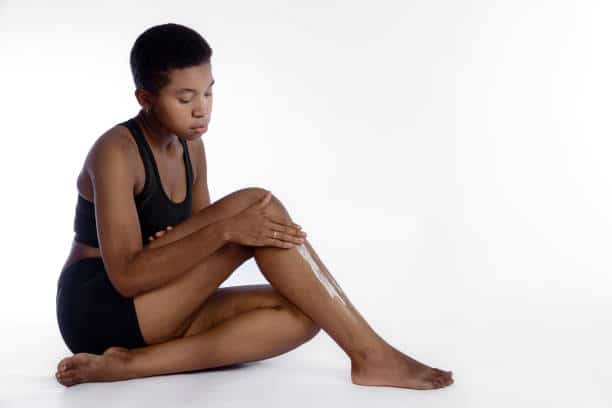
A chronic autoimmune condition impacting the skin, psoriasis can be quite an unsightly eyesore. But did you know that psoriasis may present much differently in darker skin? While red scaly patches are the typical manifestation, these scales may actually look purple, brown, or silvery in Black patients.
Science doesn’t lie. The physiology of Black skin — from its structural characteristics to its biochemistry — requires a unique approach to treatment. Lighter-skinned individuals face different symptoms, presentations, and clinical outcomes than many darker-skinned patients.
Given these unique challenges, Black psoriasis sufferers should know exactly which treatments work and which don’t.
Let’s cover five psoriasis treatments that all Black individuals with psoriasis should avoid, based on the research.
A common ingredient in skin-lightening creams, hydroquinone is applied to treat all kinds of skin conditions. Whether it’s used to fade age spots, treat melasma, or address post-inflammatory hyperpigmentation (PIH), hydroquinone has many applications.
However, this broad-spectrum ingredient has a drawback. While it is useful for lightening skin, this can cause pronounced issues in darker skin. Many Black psoriasis sufferers struggle with post-inflammatory hyperpigmentation — dark spots remaining after lesions heal.
Unfortunately, hydroquinone may worsen this condition.
In darker skin, the ingredient can lead to something called ochronosis, which is when the skin becomes discolored in blue-black shades. Not to mention, hydroquinone can lead to skin irritation, thereby worsening flare-ups.
Using hydroquinone on affected areas can also delay your body’s natural healing process, leading to uneven pigmentation. Rather than use hydroquinone, Black psoriasis patients should focus on moisturizing and soothing inflammation.
RELATED: 3 Natural Remedies For Hyperpigmentation
Prescribed to treat psoriasis flare-ups, corticosteroids use powerful anti-inflammatory processes. While useful in reducing redness, swelling, and itching, these drugs can easily be overused. For Black individuals, caution is especially important.
Merely consider the negative consequences of corticosteroids. In the more potent forms, these drugs can contribute to skin thinning, stretch marks, and the development of telangiectasias (visible blood vessels). While these effects can happen in lighter skin too, they’re significantly more pronounced in Black psoriasis sufferers. With prolonged use, hypopigmentation is a serious concern in darker skin.
Instead of corticosteroids, opt for less harsh substances and treatments. For instance, topical creams that are ‘vitamin D analogs’ can be particularly helpful in reducing excess skin production. Calcipotriol is one option that has great anti-inflammatory capabilities.

Benzoyl peroxide is a common ingredient in acne treatments, known for its antibacterial abilities. However, acne and psoriasis are very different. Because benzoyl peroxide is a strong oxidizing agent, it can lead to dryness, irritation, and in rarer cases, chemical burns. When these side effects occur, they can worsen psoriasis flare-ups.
Benzoyl peroxide is also problematic for Black individuals because of its effects on pigmentation. Given that Black skin is more prone to post-inflammatory hyperpigmentation, topical bleaching agents may be particularly troublesome. The worst part is that the resulting hyperpigmented spots may remain long after skin irritation has gone away.
In cases where benzoyl peroxide dries out and irritates psoriatic plaques, the problems only compound. This may make sufferers more susceptible to infections as well. As a rule of thumb, Black psoriasis patients should use products designed for sensitive, inflamed skin.
Skip the acne products, especially those containing benzoyl peroxide.
RELATED: How To Deal With Your Eczema & Post-Inflammatory Hyperpigmentation
In psoriasis, skin cells turn over very quickly, causing itching and irritation. While the temptation to just keep itching can be intense, it’s important to resist aggressive scratching or exfoliation. Black folks, especially those with darker skin, may be more likely to scar from these practices.
Simply consider the process. When lesions are scratched or heavily exfoliated, the protective barrier of the skin becomes compromised. This can contribute to keloid scarring, which presents as thick, raised scars that persist long after a skin injury. Even when the lesion is long gone, the keloid may remain.
Rather than scratch or exfoliate aggressively, Black psoriasis patients must focus on managing the itch through topical treatments. These include products such as emollients, antihistamines, and cooling gels. Consider gentle moisturizing or applying hydrocortisone or other prescribed anti-inflammatory creams. In some cases, a good wet dressing can help provide the relief you need without all that dangerous abrasion.
Whatever you do, avoid harsh scrubbing or chemical exfoliants that may damage your skin further.

RELATED: 6 Psoriasis Self-Assessment Tools Black People Need to Know About
We’d all love to save money on medications and find easy-to-make home remedies. While there are certainly herbal tinctures and other remedies that show efficacy, you should always be cautious. From natural oils to DIY creams, social media is jam-packed with supposed miracle cures for psoriasis.
But how do you know what works and what’s snake oil? In some cases, these remedies may do absolutely nothing, and in worse cases, actually cause serious health issues. The first thing you should do before trying any remedy is to discuss it with a healthcare professional.
Consider treatments such as coconut oil, tea tree oil, or aloe vera. While these may provide short-term relief, they fail to treat the underlying causes of psoriasis. Depending on your skin and unique immune system, these treatments may actually worsen your condition.
Some essential oils or herbal treatments may even lead to severe allergic reactions, especially in more sensitive Black skin. Pigmentation changes are also a possibility, as darker skin is more sensitive due to its higher melanin production.
So, before you try anything, speak with your healthcare provider. Consult a dermatologist, learn about your particular treatment needs, and get on a plan that works for you. Although Black individuals may be prone to worse outcomes, this doesn’t have to be.
Remember: there is no one-size-fits-all. If one treatment works for somebody else but not for you, that’s completely okay! Speak with your doctor and never hesitate to note new or changing symptoms with new or changing treatments.
At the end of the day, you are your best advocate. You know your body as well as anyone – so love the skin you’re in! With a personalized treatment approach, the worst of your psoriasis struggles can be a thing of the past.


By subscribing, you consent to receive emails from BlackDoctor.com. You may unsubscribe at any time. Privacy Policy & Terms of Service.