
You don’t have to be old or disabled to struggle with joint pain.
As the seasons shift and warm days give way to cold snaps, many people experience these issues. For some, it’s all too familiar. You’ve got nagging aches, random stiffness, and even unsightly swelling – all of it intensifying as the temperatures plummet.
In many cases, simple movements feel like trying to move a mountain.
So what do you do? If you’re one of the millions dealing with arthritis or weather-sensitive joint pain, you’re not out of luck. Believe it or not, many well-known herbs and spices, as well as easy, gentle treatments, can do wonders for your issues.
Thanks to these approaches, you can support your body’s natural responses and get back the comfort you need and deserve!
RELATED: Daily Exercises to Relieve Joint Pain
Ever hear somebody tell you that they know when the rain is coming because they feel it in their joints and bones?
Well, turns out, this isn’t just some old wives’ tale. It’s grounded in very real science and reflects a significant link between environmental shifts and physiological changes. For somebody with osteoarthritis (OA) or rheumatoid arthritis, it’s especially true.
The main reason is barometric pressure, which is just the atmospheric weight pressing on all of us. When this pressure drops, usually before storms and cold fronts, the tissues around joints slightly expand. This, in turn, creates additional stress on areas that may already be inflamed, bothering your nerves, and increasing pain.
And many studies prove it. The research repeatedly shows positive correlations between lower barometric pressure and higher relative humidity, and greater osteoarthritis issues.
Then we have the problem of cooler temperatures. When the temperature drops, this can thicken something called the synovial fluid, the lubricant in your joints, which can then lead to stiffness and reduced mobility. Your muscles and ligaments also tighten in response to cold, which increases discomfort.
It’s a compounding effect. When people feel stiff and achy, they tend to move around less because it hurts. However, by moving less, this lower activity level actually further weakens the supporting muscles, making the joints even more vulnerable!
Fortunately, by anticipating changes through tracking forecasts, you can prepare proactively and lessen the impacts.
Of course, tracking forecasts alone isn’t enough. You definitely need to give your body a little tender love and care…
RELATED: 12 Foods That Reduce Swelling & Joint Pain

For all the issues that Mother Nature can cause through season and pressure changes, she can also provide the remedies. Turns out, we have many powerful allies in the form of herbs, including turmeric and ginger. This has been known for thousands of years, and is now formally backed by the latest science.
Turmeric works mostly through its main compound, curcumin, which helps by blocking pathways that drive swelling and discomfort. Studies have indicated that regular curcumin supplementation can actually ease OA symptoms. In fact, curcumin supplementation has been shown to have similar levels of efficacy as over-the-counter nonsteroidal anti-inflammatory drugs (NSAIDs).
That’s pretty impressive.
Then, when you complement turmeric with ginger, you enjoy further anti-inflammatory effects. Why? Because ginger contains what are called gingerols, which also help to alleviate pain. When you combine these with black pepper for absorption, you really get the full spectrum of benefits.
Believe it or not, research has shown that piperine in black pepper can boost curcumin absorption by up to 2000 percent. Talk about a boost!
So, how do you incorporate? For starters, you can try a delicious turmeric latte known as ‘golden milk.’ And it’s easy to make. All you need to do is simmer 1 cup of milk (whole milk preferably) with ½–1 tsp of ground turmeric, ½ tsp of grated fresh ginger, ½ tsp of cinnamon, a pinch of black pepper, and a little honey or maple syrup for sweetness.
From there, heat it gently for five to 10 minutes, and strain the fresh ginger before enjoying it warm. If you drink this daily, you’ll definitely notice some benefits. Alternatively, you can try these herbs in tea form. Simply steep fresh ginger slices with a pinch of turmeric and black pepper, and you’re good to go.
Last but not least are the supplements. In fact, supplementation is the most powerful route you can take, but it should only be taken after you have consulted your doctor. If you’re on blood thinners, it’s especially important to discuss with your doctor beforehand.
For the best supplements, you want formulations that include turmeric/curcumin, black pepper, and ginger all in one. Naturewise and NutriFlaire are the best options to consider.
But natural treatments for joint problems don’t stop there…
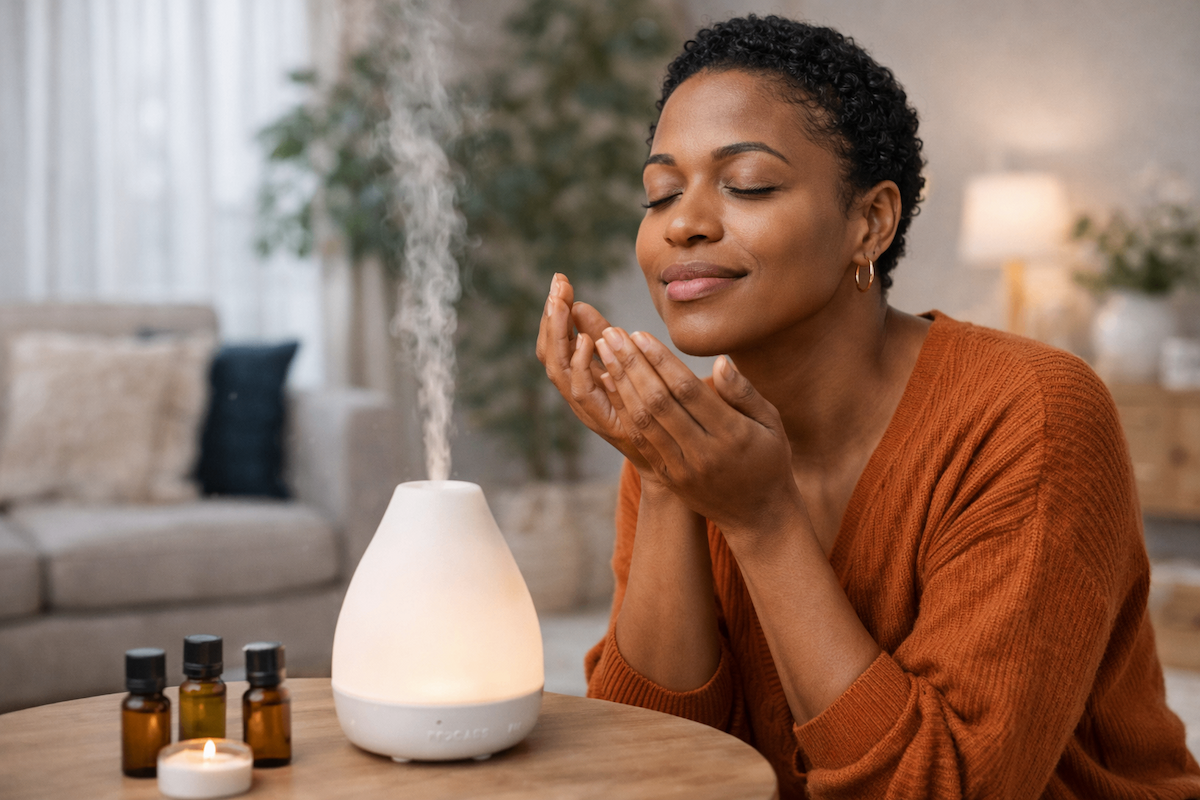
The reason aromatherapy is so useful is that it engages your senses to promote relaxation, mood lift, and pain reduction. By merely inhaling or applying diluted oils, you’re actually stimulating critical brain areas that lessen discomfort. For instance, the amygdala, which releases feel-good hormones, is an important brain region to target for easing pain.
In numerous studies, arthritis patients inhaling a lavender-eucalyptus-rosemary blend report less pain and better moods. Of course, this isn’t a surprise. The science behind each essential oil is pretty well established.
Here’s the breakdown:
Just remember to use them safely. Always dilute – never apply undiluted. To do that, mix 10–15 drops of essential oil in a 1 oz carrier, such as jojoba, almond, or coconut oil. Ensure you test a small amount through a “patch test” on your skin before going bigger.
Your options are numerous. You can diffuse blends, you can add to baths, or you can even inhale from a tissue or wrist for a quick impact.
If you’re unsure, consult a naturopath beforehand, or speak to a medical doctor for good resources on aromatherapy.
The beauty of aromatherapy is how well it complements other holistic treatments and practices. For example, while you diffuse your room, you can do some gentle stretching or yoga poses to target affected joints. Or, you can put a warm towel over the affected area while you sip your golden milk or ginger-turmeric tea.
Struggling at night in particular? Before you hit the sack, perform a gentle self-massage. First, warm the tender area of your body, then use a diluted oil, such as a ginger or lavender blend, and in a circular motion, massage your knees, hands, or shoulders. For your feet or legs, stroke firmly from your toes or ankles upwards.
While seasonal joint pain is certainly frustrating, and for some people, debilitating, don’t lose hope. You don’t have to allow this to dominate your daily life, especially when the seasons change. By using the complementary therapies outlined in this article, you have a high likelihood of not only improving your pain, stiffness, and mood but also your overall quality of health.
After all, a healthier and happier body means a healthier and happier mind. It’s cyclical; one follows the other. So take your time, explore your options, and let Mother Nature guide you toward the wellness you deserve.


By subscribing, you consent to receive emails from BlackDoctor.com. You may unsubscribe at any time. Privacy Policy & Terms of Service.