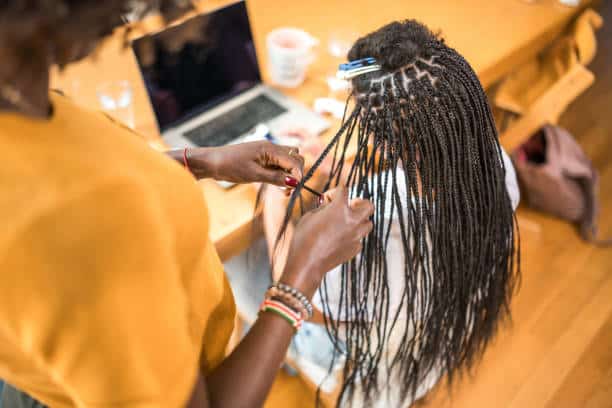
Synthetic braiding hair is widely used by Black people, especially women and children. However, many synthetic braiding hair products contain little to no ingredient disclosure, raising concerns about potential health risks. The chemicals in these products are not regulated by the FDA, leaving consumers without clear safety protections.
New testing from Consumer Reports, a nonprofit research, testing, and advocacy organization, reveals that all ten synthetic braiding hair products they tested contained harmful chemicals—including carcinogens, lead, and other toxins that could pose serious health risks.
Key Findings:
RELATED: WARNING: Cancer-Causing Toxins Found in Popular Hair Braids
Despite the presence of harmful chemicals in all tested samples, Consumer Reports emphasizes that safer alternatives are possible. James E. Rogers, Ph.D., Director and Head of Product Safety Testing at Consumer Reports, stated: “Some products had lower concentrations of VOCs, and at least one tested negative for heavy metals, including lead—a known carcinogen. This demonstrates that healthier products are possible, including products made without lead and with fewer VOCs.”
Consumer Reports is calling on the FDA to limit dangerous chemicals in synthetic braiding hair products, especially known carcinogens, and require companies to disclose all ingredients.
BlackDoctor.org spoke with Rodgers to gain deeper insight into how consumers can protect themselves and what steps manufacturers should take to improve product safety.
James: I’ll freely admit that we only tested 10 different brands out of a possible 4,000. So, we know we’re just scratching the surface. We need more data and information about these products. We focused on dark black and brown hair, but synthetic hair comes in different colors—do they test differently?
In the meantime, we are not advising Black women and children to stop using these products. However, we are saying that we found concerning and disturbing data. In our article, we suggest that since many women and children wear these products for four to six weeks at a time, they consider cutting that time in half to reduce exposure. Perhaps extending the time between braiding sessions can allow the scalp and hair to rest.
We also recommend that if individuals experience negative reactions, they report them to their doctor and seek a dermatologist specializing in Black skin care. Additionally, we urge people to support our petition on our website, calling for the FDA to investigate these products. We need the Black community to petition both the FDA and manufacturers to demand safer products.
James: This aligns with the work we’ve done for nearly 90 years in testing consumer products. Typically, we recommend:
The company that makes Kanekalon fiber has stated that they only produce the base fiber and then ship it to other factories for further processing. These factories add different colors, textures, and finishes—are the dyes they use safe? Are texturizing processes introducing harmful chemicals? Manufacturers need to rigorously test these aspects. The final product being shipped to beauty supply stores must be tested for safety.
James: We’re not clinical researchers, so that type of research would likely fall under the medical community’s responsibility. However, we have noticed that some brands market themselves as safer or non-toxic, including plant-based options. We didn’t test those in this round, but we are interested in evaluating them soon to see if they present a viable alternative for Black consumers. While we don’t endorse specific products, we can publish testing results so consumers can make informed decisions.
Another option is human hair, but we have concerns about ethical sourcing. Are the women providing the hair being exploited? Is the hair chemically treated? Could it introduce contamination? We don’t yet have definitive answers. Again, we tested only 10 out of a possible 4,000 products. More data is needed, and we hope other laboratories, consumer organizations, and HBCU public health departments and medical schools will begin researching these issues as well.
James: The response from the Black community has been tremendous, and we truly appreciate it. I encourage people to stay informed and keep asking questions. If there is a call for information—such as which products people are using, their experiences, and whether they’ve had to remove braids due to scalp irritation or strong odors—please be ready to share and support this effort.
For now, it looks like we must take the lead on this issue until we can get the FDA involved.


By subscribing, you consent to receive emails from BlackDoctor.com. You may unsubscribe at any time. Privacy Policy & Terms of Service.