In a quest to achieve straighter hair at the turn of the century, many African Americans began using the hot comb, which uses thermal heat to temporarily straighten the hair. This method was later chemically replicated by a product that altered the hair’s internal structure…a relaxer.
Today, controversy surrounds the use of excessive heat and chemicals to African American hair causing excessive hair breakage and irreversible hair loss and follicular damage.
It is interesting to note that the hair relaxer dates back to 1910 and is attributed to Garrett Augustus Morgan, who also invented the traffic light. He called his hair product “hair refining cream” which he patented.
Advertised in the newspapers in the 1900’s that it was to positively guaranteed to straighten hair in 15 minutes, he guaranteed it. Many people mistakenly believe Madame CJ Walker invented the hair relaxer technique, but, to her credit, she invented several creams, balms and an improved hot comb.
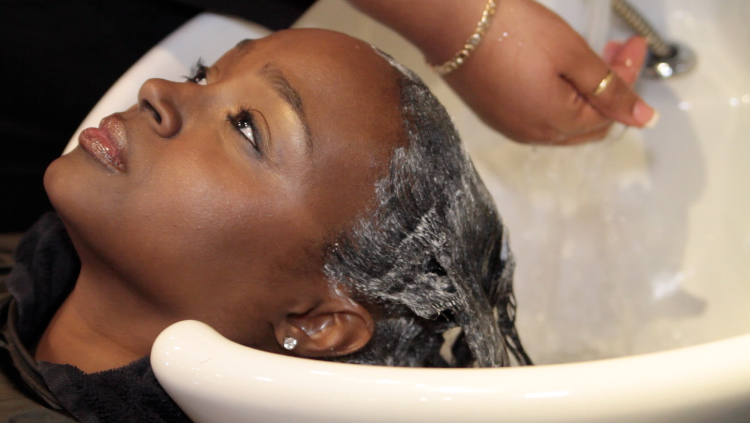
A hair relaxer is a lotion or cream that makes hair easy to straighten and manage. It has become very popular in the African American community because it reduces the curl by altering the chemical structure of the hair, making the hair resistant to returning to its original curly/textured state.
READ: Natural vs Relaxed hair: Pros & Cons
The results will vary depending on the coarseness of your hair, but a relaxer will usually offer a straightened result for 6- 8 weeks.
Relaxers permanently alter the structure of hair whereas hot combs temporarily alter the structure. New hair growth is not affected by either process. Relaxation of the hair changes the chemical bonds of the hair shaft permanently.
Past studies on hair dyes or relaxers and risk for links to cancer have often been inconsistent in their findings. In the past 5 years, several large studies in the United States have investigated the association between cancer and hair products. These studies have focused on cancers such as breast cancer, ovarian cancer, and uterine cancer, which can use the hormones estrogen and/or progesterone to grow.
None of these studies showed definitive proof that hair relaxers or dyes do or do not cause cancer. But, they did show a possible link between frequent use of chemical straighteners and breast, ovarian, and uterine cancers. This could be due to chemicals commonly found in these products, such as formaldehyde, formaldehyde-releasing chemicals, oxidized para-phenylenediamine, and 4-aminobiphenyl, which could potentially lead to cancer.
In a 2020 study in the International Journal of Cancer, researchers found that women who frequently used chemical hair straighteners, defined as more than 6 times a year, had about a 30% higher risk of breast cancer. Similarly, according to a 2021 study in Carcinogenesis and a 2022 study in the Journal of the National Cancer Institute, women who frequently used chemical hair straighteners, defined as more than 4 times a year, were twice as likely to develop ovarian cancer and more than twice as likely to develop uterine cancer as women who did not use chemical hair straighteners.
In these same studies, there was some evidence that permanent hair dye was also associated with increased breast cancer risk, particularly among Black women. However, there was no association found between hair dye and ovarian or uterine cancers.
A separate 2020 study in the British Medical Journal found a higher risk of ovarian and some breast cancers for women who had dyed their hair 100 times or more. That study did not, however, find a connection between permanent hair dye use and most other cancers, such as bladder, brain, colon, kidney, or lung cancers.
New hair growth, is visible at 6-8 weeks. This new hair growth this the only part of the hair that would need to be retreated with a relaxing chemical to maintain the straightened appearance.
In fact, it is critical that further chemical application to the already treated hair shaft is methodically avoided to prevent further damage to already potentially brittle hair.
The hair strand is composed mainly of a protein called keratin. Chemical bonds are the building blocks that give hair its texture and strength. The bonds cross-link the hair’s protein molecules to impart strength and rigidity to the hair.
READ: Can Hair Relaxers Increase Your Risk Of Developing Breast Cancer?
The easiest way to think of this is a ladder. The steps or rungs are the bonds that hold the two side rails or protein together.
The shape and strength of hair is partly controlled by chemical bridges (rungs in the ladder) called disulfide bonds that connect protein fibrils together.
Hair breakage, hair thinning, lack of hair growth, scalp irritation, scalp damage and hair loss are just some of the complaints from those many who experience problems from the misuse of chemical hair relaxers. In fact, the FDA lists hair straighteners and hair dyes as among its top consumer complaint areas.
Excessive use of hair relaxation is also a cause of widespread hair loss called scarring alopecia. Unfortunately scarring alopecia is a permanent hair loss condition that is virtually impossible to correct. Any of these strong chemicals have the potential to burn the scalp causing scarring alopecia.
The age at which hair relaxation is started is controversial. Some believe it should never be done and some believe it should be started at puberty.
A new study by researchers at Boston University’s Black Women’s Health Study (BWHS) has reported that long-term use of chemical hair relaxers by postmenopausal Black women was associated with increased risk of uterine cancer. Compared to women who never or rarely used hair relaxers, those who reported using hair relaxers more than twice a year or for more than five years had a greater than 50% increased risk of uterine cancer.photo of Kimberly Bertrand, ScD
“Our study suggests that moderate and heavy use of chemical hair relaxers may be associated with higher risk of uterine cancer among postmenopausal Black women. In addition, there are major racial disparities in uterine cancer. Compared to non-Hispanic white women, Black women have higher rates of aggressive subtypes of uterine cancer and are nearly twice as likely to die from their disease,” said corresponding author Kimberly Bertrand, ScD, associate professor of medicine at Boston University Chobanian & Avedisian School of Medicine.
The researchers asked nearly 45,000 women in the BWHS who had no prior history of cancer and an intact uterus about their past use of chemical hair relaxers. They then followed the women for up to 22 years and compared rates of uterine cancer among women who reported frequent or long-term use of hair relaxers to rates among women who never or rarely used them. They found that, among postmenopausal women, rates of uterine cancer were statistically significantly higher for those who commonly used hair relaxers even after adjustment for other potential risk factors.
Most experts agree relaxers should never be applied to children’s hair under the age of 13 or until they reach puberty for varying reasons. Children’s skin is more sensitive and susceptible to severe chemical burns. It is also unfair to assume an understanding of the commitment level involved to maintain their hair after beginning this chemical process.
Although the look and manageability of relaxed, silky hair is highly sought after, it certainly is not attained without significant risk and potential damage to an individual’s hair.
This is particularly relevant to children who should not use these chemicals as their skin is more susceptible to severe burns. With the proper education and understanding of the process and the proper application of a treatment, however, one can attain the look desired with minimal damage to the hair.
However, there is also a strong movement to remain natural and avoid any risk of damage to one’s hair by avoiding any chemical treatments whatsoever.


By subscribing, you consent to receive emails from BlackDoctor.com. You may unsubscribe at any time. Privacy Policy & Terms of Service.