(BlackDoctor.org) — It’s no secret that taking a months-long hiatus from the gym or indulging in dessert night after night can cause pounds to creep on. But many other less obvious things — from what time you go to sleep to how often you multitask — can impact your weight too.
“Lots of women think they’re doing everything right for weight loss, but habits that you’ve never even thought of may be unwittingly sabotaging your efforts,” says Karlene Karst, RD, author of Belly Fat Breakthrough. If you’re trying to slim down, pay attention to these shockingly sneaky weight-loss saboteurs.
MUST WATCH: “Biggest Loser” Gets A Post-Weight Loss Makeover
A Love of Late-Night Television
Staying up late may pack on up to two pounds a month, according to new research from Northwestern University. The study found that people who go to bed late eat more food (on average 248 extra calories per day), have worse diets, and are more likely to have a higher body mass index than people who tuck in earlier.
Study researcher Kelly Glazer Baron, PhD, MPH, says both circadian rhythm and environmental factors may be at play. “Eating at night, when you’re supposed to be sleeping, may cause you to process calories differently,” she says. Plus, the foods we often crave at night — Moose Tracks ice cream, anyone? — tends to be high in calories and fat.
To ease into a new routine, inch your bedtime back by 15 minutes a night until you’re snagging seven to eight hours of sleep. When you get post-dinner munchies, opt for healthy snacks, such as frozen grapes or berries, air-popped popcorn, or high-fiber cereal (look for less than 5 grams of sugar per serving and more than 5 grams of fiber).
MUST READ: Show Off Your Beach Body At These Hottest Beaches!
Traveling for Work
The more time you spend away from home, the worse off your waistline, according to a recent Columbia University study. After reviewing the medical records of more than 13,000 employees in a corporate wellness program, researchers found that those who traveled the most for work were more likely to have higher BMIs and a greater risk of obesity. Since 80 percent of business travel in the United States is by car, long stints of inactivity behind the wheel and unhealthy on-the-road food choices are probably to blame.
Karst suggests filling a portable cooler with fresh-cut fruits and vegetables, sandwiches, yogurt, and bottles of water, and stashing some nuts (almonds and walnuts) in your glove compartment as a go-to healthy snack. At rest stops, choose sandwich shops (like Subway or Quiznos) where you can pick your fillings; order a 6-inch size sandwich made with whole-grain or flat bread and lean meats, and load it up with filling veggies. Keep a gym bag and a pair of sneakers in your trunk — you can hit the hotel gym if there is one, or at the very least, take a walk.
MUST READ: Black Girls Run Too! Meet Them Here!
A Cardio Obsession
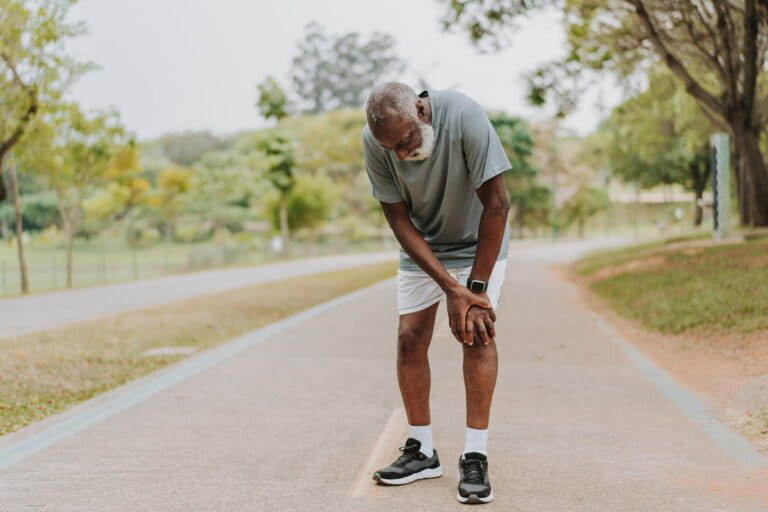
Ramp up cardio, burn calories and fat. Sounds simple enough, but the latest science on exercising for weight loss says otherwise. Classic cardio — walking on the treadmill, running, stepping, spinning, etc. — doesn’t help you lose as much weight as you might think, says Jim Karas, a celebrity trainer based in Chicago and author of The Cardio-Free Diet.
“People tend to do these things for hours, but after 20 minutes you actually start burning muscle, not fat,” he says.
Instead of straight cardio, Karas recommends interval training — alternating one minute of working out at a high intensity followed by a minute at a slower rate — for 20 minutes, which burns more fat than staying at the same level throughout. And don’t forget strength training. Muscle uses more calories to maintain itself than any other body tissue. For every pound of muscle you put on, you automatically burn an extra 22 to 36 calories a day, says Karas. Strength-train every other day to give muscles time to repair.
Blasting the Air Conditioner
A study in the journal Food Science and Nutrition theorizes that modern technologies — such as air conditioning — help keep our bodies in a “thermoneutral zone,” a temperature range in which we don’t have to work to stay comfortable, which decreases the amount of calories we burn.
Also, when you’re hotter you tend to eat less, so keeping your house cool may make you eat more. Study author David Allison, PhD, distinguished professor and head of the section on Statistical Genetics at the University of Alabama at Birmingham, suggests setting your air conditioner to the highest temperature you can tolerate, or turning it off altogether if you can stand it, though he stresses that this specific approach has not yet been scientifically shown to cause weight loss.
A Jam-Packed Fridge
Eating plenty of fruits and vegetables can help you stay trim, but if your fridge is so full that you don’t even know what’s in your produce drawers, your healthy intentions may be falling short. In fact, produce comprises about 25 percent of the food we throw out every day, according to University of Arizona research.
It’s easy to forget about food when it’s not staring you in the face, and then it goes bad before you’ve had the chance to eat it. Wash and cut up fruits and veggies as soon as you get home from the supermarket, then store them in airtight containers on eye-level shelves, suggests Karst. Keep a fruit bowl with apples, pears, bananas, or mangoes on the counter. And don’t buy more than a week’s worth of produce at a time.
A Daily Diet Soda Habit
Reaching for a diet soda or a cup of coffee sprinkled with artificial sweetener instead of the sugary stuff makes you a virtuous dieter, right? Not necessarily.
According to a study in the journal Obesity, over a 17-year period, people who downed drinks made with artificial sweeteners had a 47 percent bigger increase in body mass index (BMI) than those who didn’t drink them. While artificially sweetened drinks certainly pack fewer calories than full-sugar beverages, over-relying on them as a weight-loss tool may backfire. Researchers theorize that artificial sweeteners stoke your sweet tooth and set off cravings that lead you to binge on high-calorie foods later. Craving something sweet to sip? Make ice cubes out of 100 percent fruit juice (try concord grape, pomegranate, or cranberry) and plop them into a glass of seltzer or iced tea. As the ice melts it will sweeten the drink and add healthy vitamins and antioxidants.
Constantly Multitasking
Your rapid-fire, doing five-things-at-once lifestyle has a surprisingly negative effect on your diet. Of course when you’re busy it’s harder to carve out time for exercise or cook healthy meals, but new research suggests that serially switching tasks actually wears out your resolve and makes you more apt to give in to temptation. Emory University researchers conducted five different experiments on about 300 people and found that frequently toggling between different tasks can exhaust the executive function of the brain, which helps us regulate self control.
“When you help your kids with their homework, then respond to a work email on your Blackberry, then go right back to algebra, you’re doing tasks that require very different mindsets, which is what we found saps self-control resources,” says Ryan Hamilton, PhD, assistant professor of marketing and one of the study’s researchers. Minimizing distractions may help you avoid a snack binge.


By subscribing, you consent to receive emails from BlackDoctor.com. You may unsubscribe at any time. Privacy Policy & Terms of Service.