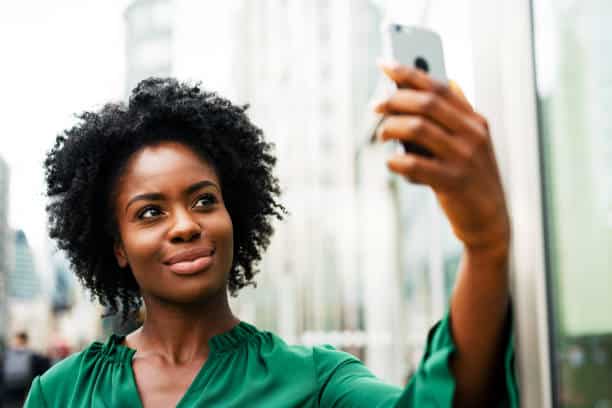
You might be more apt to seek out a face-lift, a new nose, hair implants or a boob job if you’re a fan of posting selfies on social media, a new study reports.
But before going through with the procedure, you should know that selfies aren’t giving you the true picture, according to a study in the April issue of Plastic and Reconstructive Surgery®, the official medical journal of the American Society of Plastic Surgeons (ASPS).
Plastic Surgery: Are Selfies Driving the Trend in Young People?
When compared to standard photos, selfies cause the nose to appear longer and wider. This distortion has led to a spike in the popularity of cosmetic plastic surgery in recent years.
“There is a noted relationship between the increase in selfie photographs and an increase in rhinoplasty requests, particularly among younger patients,” Dr. Amirlak’s team adds.
Nose reshaping surgery (rhinoplasty) is one of the most common varieties of cosmetic plastic surgery. Over 352,000 rhinoplasties were performed in 2020 alone, according to estimates.
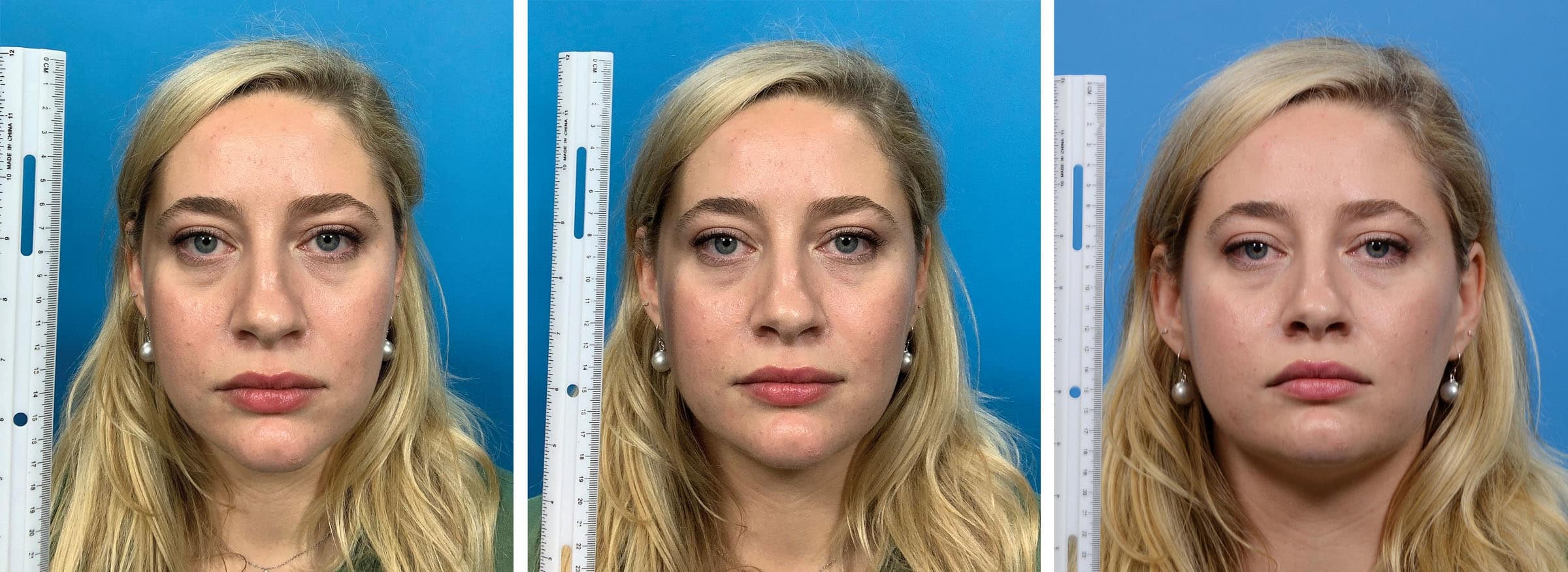
The study included 30 volunteers, who took a series of three standard photographs. The first two were taken with a front-facing smartphone camera 12 and 18 inches away from each volunteer, recreating the act of taking a selfie at different arm angles. While the last photo used a digital single-lens reflex camera at a distance of five feet. The team took all three photos in the same area, under standard lighting conditions.
Next, researchers compared facial landmark measurements (nose, lip, chin, and facial width) between each person’s three photos, looking for distortions in the simulated selfies. Participants were also asked to complete a survey about their personal satisfaction with their appearance in both the selfies and the clinical photographs.
The results revealed significant distortions among the front-facing smartphone photos. The average nose appeared 6.4 percent longer on 12-inch selfies and 4.3 percent longer on 18-inch selfies.
There was also an additional 12 percent reduction in the length of the chin on 12-inch selfies, causing a significant 17 percent increase in the nose-to-chin ratio. Many selfies also made the base of a nose appear wider in relation to the actual width of the person’s face.
When placed side-by-side, the facial distortions were clear.
Participants were 9.1 percent less satisfied with their nose in the 12-inch selfies than the digital camera photo on average, and 5.7 percent less satisfied with their face overall.
“As the popularity of selfie photography increases, it is crucial to understand how they distort facial features and how patients use them to communicate,” study authors conclude. “In addition, our findings provide data for manufacturers to improve the societal impact of smartphone cameras.”
“Our study further supports the concern that selfies can negatively affect perceived facial appearance,” ASPS Member Surgeon Bardia Amirlak, MD says. “We need to increase awareness of how false perceptions on selfies may affect rhinoplasty requests, perceptions of self-image, and subsequent depression and anxiety.”
Another study shows the impact social media plays on users wanting to get plastic surgery. Adults who regularly use social media are more likely to consider getting plastic surgery to improve their online appearance, particularly if they prefer photo-heavy sites and apps, the researchers found.
Plastic surgery becomes a more and more appealing option as adults either become more invested in social media or draw more self-worth from their personal appearance, according to study author Dr. Lisa Ishii, of the division of facial plastic and reconstructive surgery at Johns Hopkins University in Baltimore, and colleagues.
“I see more and more patients coming to my practice showing me their digitally altered selfies asking me to match it with surgery,” Cosmetic surgeon Dr. Daria Hamrah says. “Sometimes their expectations are realistic, but most of the time they are not, which leads to very difficult conversations and disappointments.”
A staggering 650 billion selfies are posted every day on various types of social media, says Dr. Michael Reilly. He’s an associate professor of facial plastic and reconstructive surgery at MedStar Georgetown University Hospital in Washington, D.C.
Selfies have become something of an “epidemic,” Reilly adds.
People also were more likely to see plastic surgery in a good light if they regularly use filters when posting selfies, have removed selfies because they weren’t edited or enhanced to their liking, or if they based their self-worth more on
their appearance, the researchers reported.
“I personally think it’s highly alarming,” Reilly says. “This is not healthy behavior.”
He thinks social media can damage self-esteem if people are constantly comparing themselves to others.
“You can go on Facebook and quickly compare yourself to 50 people in five minutes, and all of them are posting their best selves,” Reilly adds. “That can lead to a lot of insecurity and self-esteem issues.”
Hamrah agrees.
“It is not so much the actual social media usage that motivates patients to seek cosmetic surgery, rather than their low self-esteem and self-worth that is exacerbated by an upward social comparison, referring to a comparison made against those perceived to have superior characteristics,” Hamrah points out.
“Studies have shown that when you post a photo of yourself, your self-esteem drops, regardless of whether you were able to alter that digital photo or not,” Reilly notes.
Social can be great for a lot of things, but it can also lead to low self-esteem. Whether you are taking selfies for social media or your own personal use, it’s important to remember that perfection doesn’t exist. You should never compare yourself to someone else. According to research, 80% of girls have used a filter or an app to edit the way they look in their photos by the time they are 13. Secondly, remember to embrace your uniqueness and what makes you, special. If all else fails, try creating boundaries between yourself and whatever is hurting your self-esteem. Take the time to think about how these sites and apps are making you feel.
“If you find that looking at certain types of media makes you feel worse about yourself, that’s an indication that you need to remove that media input from your repertoire,” Reilly concludes.


By subscribing, you consent to receive emails from BlackDoctor.com. You may unsubscribe at any time. Privacy Policy & Terms of Service.