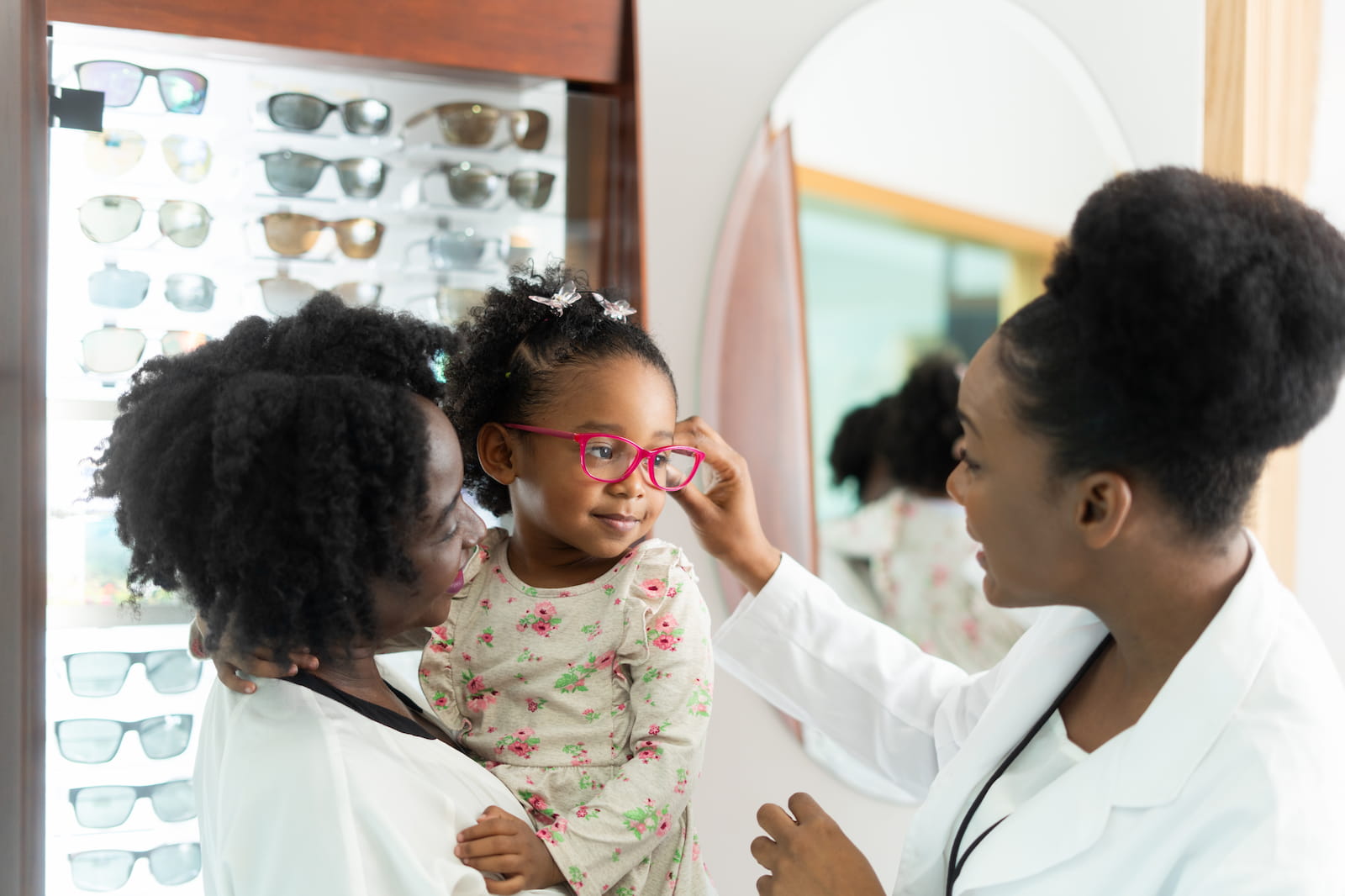
Don’t lose sight of what matters most.
What better time to look ahead with clear eyes and confidence? This is a potentially critical opportunity for parents. It’s a moment to pause and consider one of the most vital aspects of your child’s development: vision.
For Black children, besieged by higher rates of certain eye conditions and uncorrected refractive errors, early detection can make a world of difference. Early intervention can prevent academic struggles, self-esteem issues, and long-term vision problems, and improve quality of life.
But here’s the thing. Many parents are consistently missing subtle signs. Why? Because young children rarely complain about vision difficulties; they simply quietly adapt or assume everyone sees the world the same way.
So, let’s catch it early! Recognizing these signs and taking proactive steps may just improve outcomes…
When it comes to health conditions, particularly their prevalence, there is rarely an easy answer.
Why are Black children affected at elevated rates of vision problems, you ask? According to research, it’s likely a complicated mix of genetic predispositions, higher family diabetes rates, hypertension, and environmental influences, as well as socioeconomic issues such as disparities in access to quality eye care.
As a matter of fact, research indicates that Black children regularly have elevated rates of uncorrected refractive errors and conditions like amblyopia if not caught early.
These issues may also complicate understanding problems in the school setting. Are poor academic performance and behavioral issues related to learning difficulties, or could they be directly or indirectly linked to the inability to see properly?
Being young and unable to fully express vision complications may further exacerbate these challenges.
This is why it’s important to recognize and address any vision issues early.
The following five key signs may indicate your child needs an eye exam.
RELATED: Screen Time: 3 Ways to Protect Your Child’s Eyes in a Digital World
Again, children – especially young children – aren’t exactly the best at articulating vision problems.
Oftentimes, kids may compensate for blurry vision by squinting. If they aren’t squinting, teachers and adults may notice them adopting odd head positions, as if trying to ‘angle’ their line of sight for better perception.
While many people may dismiss this as just childhood idiosyncrasies, it is a classic indicator of refractive errors such as nearsightedness, farsightedness, or astigmatism.
Is your child complaining of headaches?
Not just any headaches, but those that seem to occur only after staring at a screen, reading, or looking at schoolwork? Do you notice that your child is constantly rubbing his or her eyes? If so, these could all be signs of visual strain.
Sometimes, these signs may indicate diet or poor sleep, but if they routinely occur after eye-heavy activities, it’s time to consider a visit to the ophthalmologist.
RELATED: Eight Signs Your Child Needs Glasses
Is your child sitting close to the T.V. because they’re intrigued, or because they simply can’t see?
Sometimes, if a child consistently sits close to the television or holds reading materials very close, this may indicate myopia, or nearsightedness.
So be aware.
Inching close to the T.V. for a favorite show is one thing. But routinely sitting close and holding reading materials close in every or most cases might be a reason for concern.
Don’t dismiss these behaviors. A visit to the eye doctor can at least rule out more serious problems.

Grades don’t always plummet because of learning difficulties or behavioral dysfunction. Sometimes, poor academic performance or significant changes in academic performance may actually be due to vision challenges.
Consider the case of the chalkboard. Reading tasks, especially those requiring distance vision, can become incredibly difficult when uncorrected vision problems continue.
Teachers may also mistakenly attribute these issues to everything but vision conditions.
Don’t rush to judgment. A simple evaluation can help determine if it’s solely due to academic and/or learning factors or something else.
Unlike the other four signs, this may be the most obvious.
If you notice your child continuously making strange eye movements with no rational explanation, it’s definitely time to start asking questions.
For instance, does he or she turn one eye inward or outward? Are the eye movements jerky? Does your child appear cross-eyed or unable to focus normally? If so, it certainly warrants prompt evaluation by a professional.
Behaviors like this may indicate strabismus or other conditions and require early intervention, especially to prevent amblyopia, or “lazy eye.” With amblyopia, the brain and eye stop working together properly, which can reduce vision in the affected eye over time. Although this condition typically develops in infants and young children, it does happen later on too.
Nonetheless, it is the number one cause of decreased vision in one eye among youth.
Treating vision conditions is one thing, but the most powerful thing you can do today is prevent them. Research points to several accessible habits that may help protect and support your child’s eye health.
To start, increase the time spent outdoors. Studies show that children who spend more time outdoors actually have a lower risk of developing myopia. This is because natural light and distance viewing help prevent the eye from stretching, which is a main factor in nearsightedness.
Children should aim for at least one to two hours of outdoor play whenever it’s possible.
Also, practice the 20-20-20 rule. If you haven’t heard of this, it basically means taking a break from close-up work. For every 20 minutes of reading or screen time, a child should look at something at least 20 feet away for 20 seconds. This can help reduce eye strain and strengthen the eyes for various visual activities.
Finally, just be measured.
Whenever doing any kind of activity that requires the eyes, ensure there’s proper lighting and that one’s posture doesn’t put unnecessary strain on the developing eye. Although it may be hard these days, limiting screen time is a must.
Listen to the American Academy of Pediatrics’ guidelines and encourage breaks.
It’s okay to be unfamiliar with all the guidelines and recommendations. After all, you’re not an optometrist or ophthalmologist. Still, there’s no excuse for not at least making an effort to get familiar.
Did you know that many community health centers often offer vision screenings at low or no cost? Did you know that many schools provide basic vision screenings? While these are limited and not substitutes for comprehensive exams, they’re certainly important for potentially detecting early signs.
If you don’t know where to start, use the HRSA “Find a Health Center” tool online.
Also, don’t be hesitant to ask your pediatrician for vision referrals during well-child visits. You can also look for local partnerships in your area, especially with organizations serving Black communities.
It’s all about being a proactive parent.
The American Optometric Association recommends a comprehensive eye exam by age three if not done earlier. If you notice warning signs, sooner is always better. Don’t forget: early correction of vision problems can improve quality of life, including school performance, social confidence, and self-esteem.
For children younger than three and those of school age, the authoritative source is the American Optometric Association (AOA).
These experts recommend vision assessment and eye care based on the following age ranges and conditions:
It’s important to note that these AOA recommendations do not mean that vision screenings – such as in a school or pediatrician practice – are substitutes for optometry visits. Children and infants should always receive a comprehensive eye exam with an eye specialist in addition to those given in school and by pediatricians.
The AOA’s full guidelines emphasize this need, especially as a preventive, early measure for the youngest children.
And if your child fears eye doctors, no sweat. Simply normalize them. Make eye exams a normal part of wellness routines, just like dental check-ups.
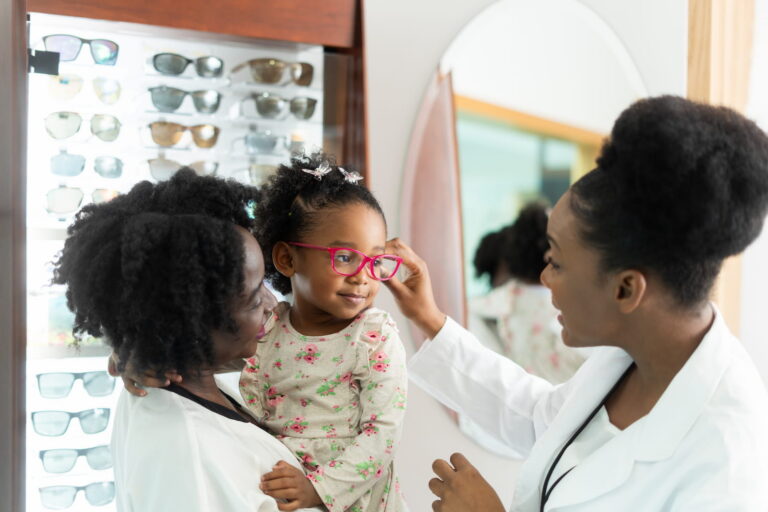
Be sure to model good visual habits yourself, such as taking breaks from screens and spending time outdoors. While many kids may view glasses as ‘nerdy’ or ‘geeky,’ you can always shift these attitudes by talking positively about them. Frame them as sleek tools for success.
After all, there are many styles and types nowadays, and some are quite stylish. Contacts are usually an option too.
Overall, addressing vision care and eye health disparities starts with awareness and improves with action. Don’t think of vision health as a luxury for those with means. It’s not. Rather, it is a foundational need that affects every area of a child’s life.
This August, during Children’s Eye Health and Safety Month, it’s time to turn words into outcomes. Your vigilance as a parent is one of the most powerful tools out there, and in some ways, your child’s success may depend on it.
By prioritizing eye health, you’re taking a crucial first step. Because at the end of the day, before children can reach their potential, they first have to see it…


By subscribing, you consent to receive emails from BlackDoctor.com. You may unsubscribe at any time. Privacy Policy & Terms of Service.