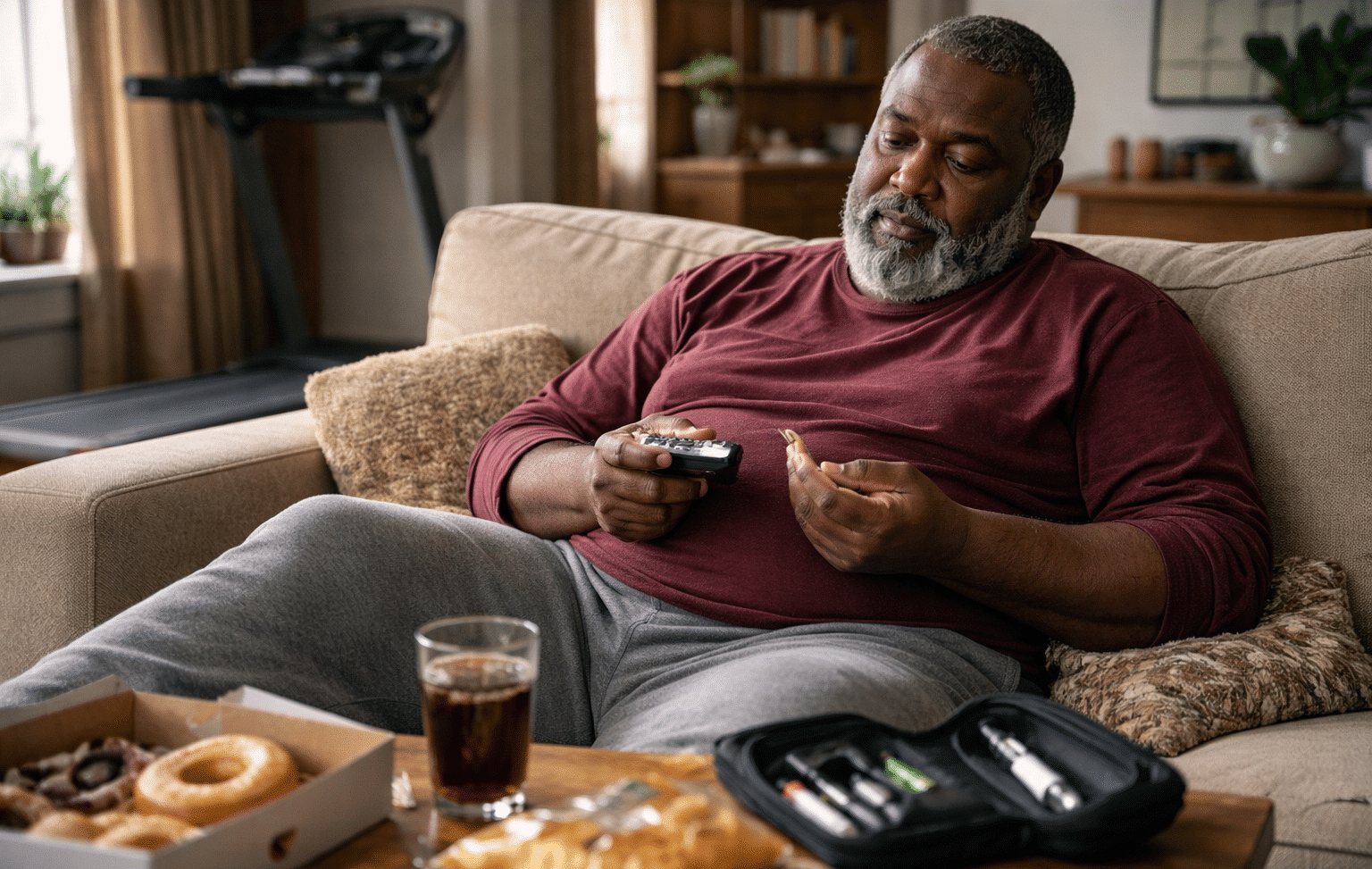
For millions of people living with type 2 diabetes, the daily routine often revolves around blood sugar monitoring, medication schedules, and dietary restrictions. While these are critical pillars of management, a groundbreaking new study suggests that one of the most powerful tools for preventing long-term damage is often the one most overlooked: consistent physical movement. Diabetes is frequently discussed in terms of what you eat, but a new global analysis shifts the spotlight to how you move. Researchers are now quantifying the steep price of a sedentary lifestyle, revealing that many of the most feared complications of the disease aren’t just “part of the package”—they are, in many cases, preventable.
Up to 10 percent of diabetes complications like stroke, heart failure, heart disease and vision loss can be attributed to sedentary behavior, researchers reported in the Journal of Sport and Health Science.
“Diabetes complications are often seen as inevitable consequences of the disease,” said lead researcher Jayne Feter, a medical researcher with the Federal University of Rio Grande do Sol in Brazil.
“Our findings challenge this idea by showing that a meaningful proportion of these complications could be prevented through achievable increases in physical activity among people living with diabetes,” Feter said in a news release.
RELATED: 6 Warning Signs of Diabetes Complications You’re Overlooking
For the study, researchers pooled data on nearly 2.4 million people from 27 prior health studies conducted around the world.
Using the data, researchers tracked physical activity levels among people with diabetes, as well as any diabetes-related complications they developed.
The team defined physical inactivity as not achieving at least 150 minutes per week of moderate-to-vigorous exercise.
Examples of moderate-intensity exercise include brisk walking, slow bicycling, active yoga, line dancing, or general yard or home repair work, according to the U.S. Centers for Disease Control and Prevention (CDC).
Vigorous exercise includes running, swimming laps, aerobic dancing, fast bicycling, jumping rope and heavy yard work like digging or shoveling.
Results showed that physical inactivity among people with diabetes accounted for:
Women and people with less education consistently had higher levels of diabetes complications associated with a lack of exercise, researchers said.

The CDC breaks down the 150-minute goal into two manageable categories. You don’t need to be a marathon runner to see results; “moderate” activity is often enough to change your clinical trajectory.
“This study reframes physical activity as a core component of diabetes complication prevention,” Feter said. “Promoting physical activity among people with diabetes could reduce hospitalizations, disability and health care costs, while improving quality of life.”
However, a one-size-fits-all approach will not work, given differences in how physical activity occurs in different parts of the world, researchers warned.
For example, people in wealthy countries tend to exercise in their leisure time, while in lower-income countries people get their physical activity as part of their work.
“Policies must be tailored to local realities and explicitly address social and gender inequalities,” researcher Natan Feter, a postdoctoral scholar at the University of Southern California, said in a news release.
Starting an exercise routine when managing a chronic illness can feel daunting. Here is how to bridge the gap between sedentary habits and active health:
Ultimately, this research provides a powerful message of agency for those living with type 2 diabetes. While you cannot change your genetics or your diagnosis, you can change your daily movement. By hitting that 150-minute weekly threshold, you aren’t just “working out”—you are actively shielding your heart, your brain, and your vision from the effects of the disease.


By subscribing, you consent to receive emails from BlackDoctor.com. You may unsubscribe at any time. Privacy Policy & Terms of Service.
Enter your name and email to receive the download link.