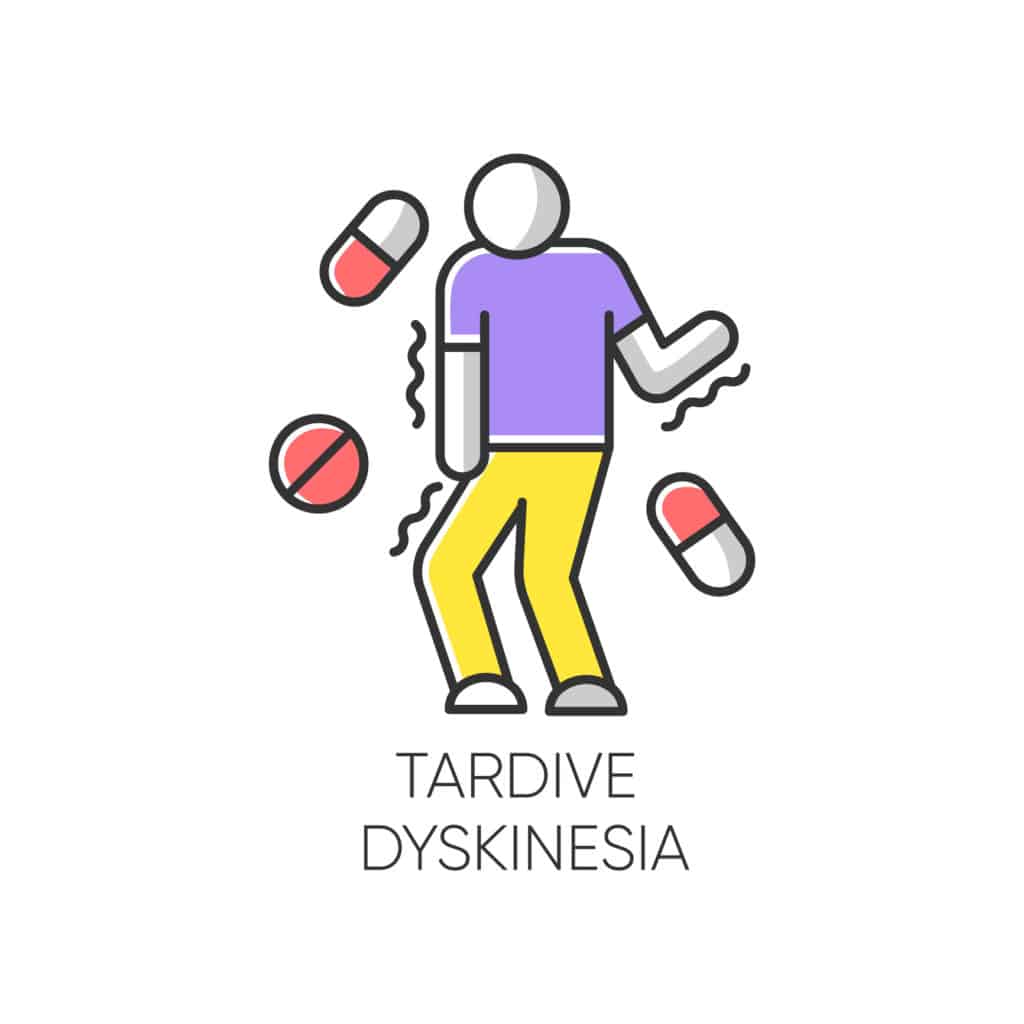
According to the National Institutes of Health, tardive dyskinesia (TD) is “a neurological syndrome caused by the long-term use of neuroleptic drugs” (including antipsychotics) that is “characterized by repetitive, involuntary, purposeless movements.”
For patients with TD, learning to live well is paramount, and this is best achieved by thoroughly understanding the condition.
A 2019 article in Psychiatric Times states that “tardive dyskinesia affects an estimated 500,000 persons in the United States. About 60% to 70% of cases are mild, and about 3% are extremely severe. Particularly at risk are patients who have been treated for schizophrenia, schizoaffective disorder, or bipolar disorder.
Persistent and irreversible tardive dyskinesia is most likely to develop in older persons.” The article calls attention to concerning results of a survey revealing that 58% of respondents who had taken antipsychotics or other medications were not aware of this potential side effect or that TD can be irreversible.
The involuntary movements that are the hallmark of TD are caused by the blocking of dopamine, a neurotransmitter that helps to control muscle movement, by medications like Haldol or Risperdal.
Eye movements, lip-smacking, and flapping of the arms can be disconcerting and embarrassing to the patient, and there can be a social stigma surrounding these symptoms that can be worsened by stress.
One can only imagine
the impact of such symptoms on those who serve the public, such as healthcare workers, police officers, teachers, or other figures of authority and leadership.
Both the young and elderly can be impacted by TD, yet certain risk factors stand out:
What’s even less known is Tardive Dyskinesia is more likely to occur in Africans and African Americans than Caucasians as presented in a paper on psychiatryonline.org.
It describes how a greater number of African Americans are slow to metabolize antipsychotic drugs than Caucasians and, therefore, are prescribed higher doses of these drugs. Because of these increased doses of medication, this may be associated with the increase in Tardive Dyskinesia in Africans and African Americans.
TD is diagnosed by a physical exam, including the Abnormal Involuntary Movement Scale (AIMS). A medical provider will attempt to rule out conditions such as cerebrovascular accidents (strokes), cerebral palsy, Huntington’s Disease, Parkinson’s, or Tourette’s syndrome, which can also be characterized by involuntary facial tics, body movements, or uncontrollable yelling and cursing.
Patients with TD may experience anxiety, depression, isolation, mobility challenges, or difficulty accomplishing activities of daily living (e.g.: brushing teeth or shaving) or independent activities of daily living (e.g.: shopping or driving).
TD is a potential side effect of
certain medications, yet the above-mentioned survey clearly shows that providers aren’t doing well educating patients.
Dosage control, monitoring for signs of TD, and immediate intervention to lower doses or switch medications is imperative.
To live well with TD, it’s crucial that patients and their loved ones fully understand symptoms and levels of severity. Many websites feature patient stories and experiences which may help patients feel less alone.
The drugs Austedo and Ingrezza are currently the only FDA-approved treatments for TD. Various nutritional supplements like melatonin are said to help, and providers should be consulted if the patient wants to try supplements.
Benzodiazepines (e.g.: valium) can be added for symptom management. If patients or their family members have these medications on hand, they should not treat themselves without the guidance of a provider and a legal prescription.
An individual living with TD may choose to see a psychiatrist, psychologist, and/or mental health provider.
A psychiatrist may have a significant understanding of TD, and a psychotherapist can assist with depression, anxiety, or a sense of isolation or stigma. A neurologist may also be worth consulting.
Resources for the management of TD include:
Living well with tardive dyskinesia is possible — thousands do it every day. While the condition can be frightening due to its wide-ranging impact on the quality of life, available resources show us that TD can be overcome whether it’s reversed or not.
No one but those with a movement disorder can fully understand the truth of the TD experience, yet loved ones, friends, colleagues, and others can be a source of strength, support, and encouragement.
TD is not an easy path to walk, but doing so with skilled providers and alongside loving and caring friends and family are powerful steps in the right direction.
Keith Carlson, BSN, RN, NC-BC is a Board-Certified Nurse Coach, career expert, writer, keynote speaker, and award-winning nurse blogger. His podcast, The Nurse Keith Show, offers inspiration for nurses seeking meaning and satisfaction in their lives and careers. Keith lives in Santa Fe, NM with his remarkably adorable cat, George, and can be found at NurseKeith.com.


By subscribing, you consent to receive emails from BlackDoctor.com. You may unsubscribe at any time. Privacy Policy & Terms of Service.
Enter your name and email to receive the download link.