Fear is part of life.
Fear of flying, fear of heights, fear of social settings – fear of death. In many cases, fear isn’t even a bad thing. It prepares us for danger, it steers us from bad situations, and it allows us to live realistically, taking precautions as we should.
Fear is an evolutionary mechanism. But what happens when fear takes on an all-new level? What happens when fear turns into something so powerful that it’s no longer a rational response, but an entirely debilitating condition?
When fear escalates into a phobia, it can hijack your daily life, turning everyday situations into sources of intense dread. Your muscles tighten, your pulse skyrockets, your palms turn sweaty, and the panic comes on so strong, you actually feel like you’re dying.
So what can you do?
Turns out, thanks to new advancements in technology, one answer may lie in a different world entirely. A reality you’ve never even experienced. A virtual reality.
And not only is this possible remedy proving to be highly effective, but it’s also, quite frankly, pretty darn cool.
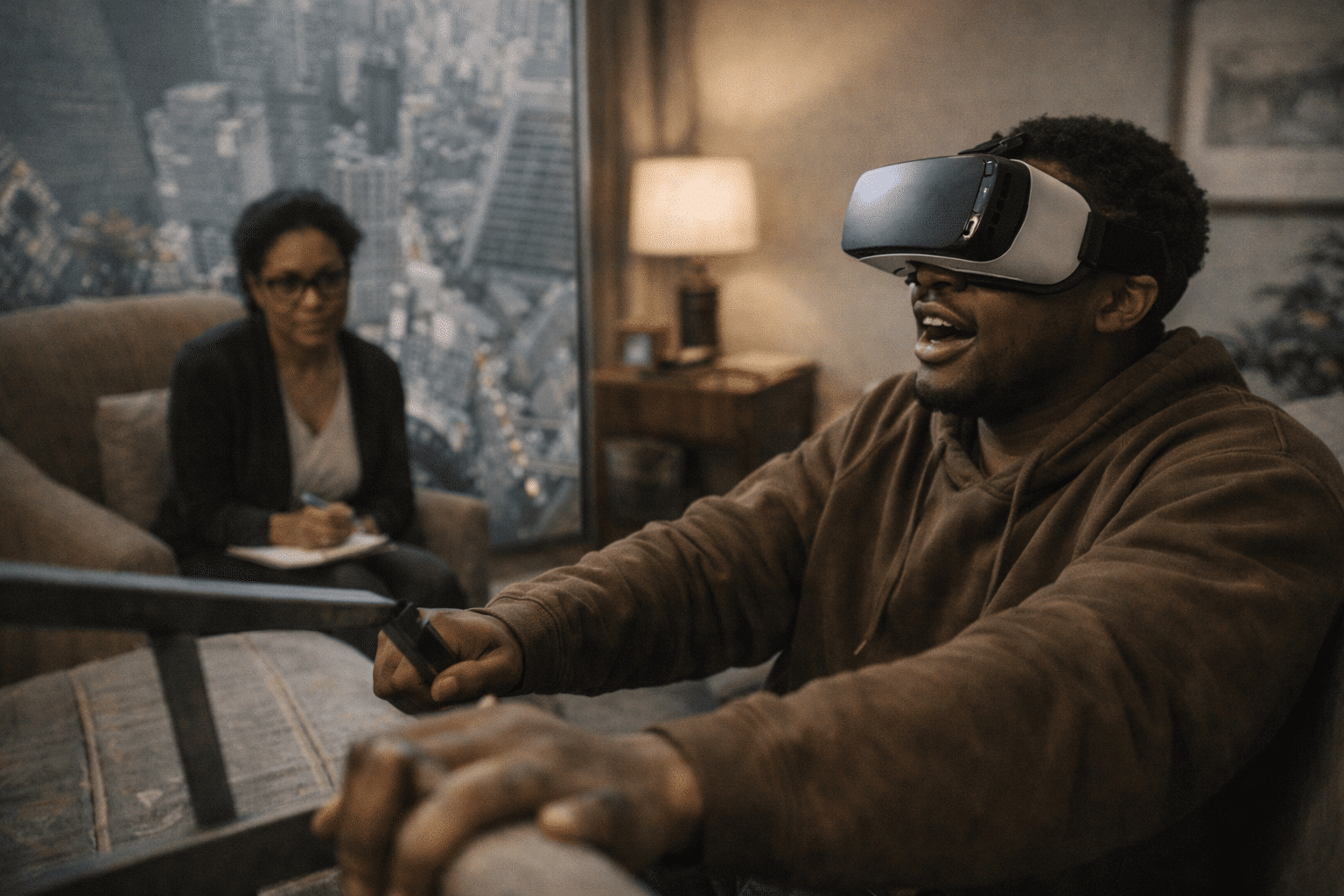
At its core, virtual reality (VR) exposure therapy (often called VRET) is all about immersion. It’s all about putting you into a hyper-realistic virtual environment that can be totally tailored to your specific phobia.
With VRET, you don’t simply imagine your fear; you outright experience it. The whole process is grounded in psychology. See, the point of exposure therapy is to gradually and repeatedly confront your fear to reduce its hold on you over time.
Whether you see a therapist or use a self-guided program, this approach relies on a hierarchy of exposures. First, you start very mildly. If you fear heights, maybe you only go up a little bit in some building or outdoor elevation. From there, you ramp it up step by step.
For somebody with a fear of spiders, arachnophobia, you might start with the image of a single spider appearing in the distance, before multiple ones crawl closer. And herein lies the awesomeness of VR. Even though your mind may think it’s real, you have total control. You can pause a situation, rewind, or adjust the intensity instantly. You don’t have to be on an actual plane, or stand in an actual skyscraper, or go looking for actual spiders. Because of this repeatability, you can address your phobia in a safe space, allowing you to rewire your brain’s fear response and teach it that the stimulus isn’t truly threatening.
With the latest versions of VR, the simulations are more real than ever. They can also introduce dynamic elements, like turbulence on a flight, or loud, intimidating crowds, if you have a social phobia. According to the most recent research, these simulated immersive experiences trigger genuine physiological responses, like elevated heart rate and sweating, making them truly lifelike.
Without any risk, of course.
But it gets even cooler. VRET works particularly well for certain phobias. Studies show that it’s most impactful for people with a fear of flying (aviophobia), people who fear heights, people terrified of spiders, people who dread enclosed spaces, and people who feel paralyzed when public speaking. Research consistently demonstrates strong results. Some trials actually show success rates as high as 90 percent in reducing symptoms.
What’s crazy about this is that these results may even surpass real-world exposure therapy. In other words, you’re getting better outcomes with none of the potential risks! What’s not to love? Not to mention, the effects don’t just fade. They can last for years, and if you ever feel like you’re slipping, you can always put yourself back into the VR.
For people with post-traumatic stress disorder (PTSD), these simulations are great for recreating trauma-related environments. Patients experience controlled processing and desensitization, without the terrifying circumstances that created their disorder. Meta-analyses confirm the benefits. When used consistently, VR can reduce avoidance and anxiety symptoms significantly.
But perhaps what’s best about VR is its accessibility. It makes therapy feel futuristic and empowering, and many patients report being more willing to engage in VR therapy compared to traditional methods.
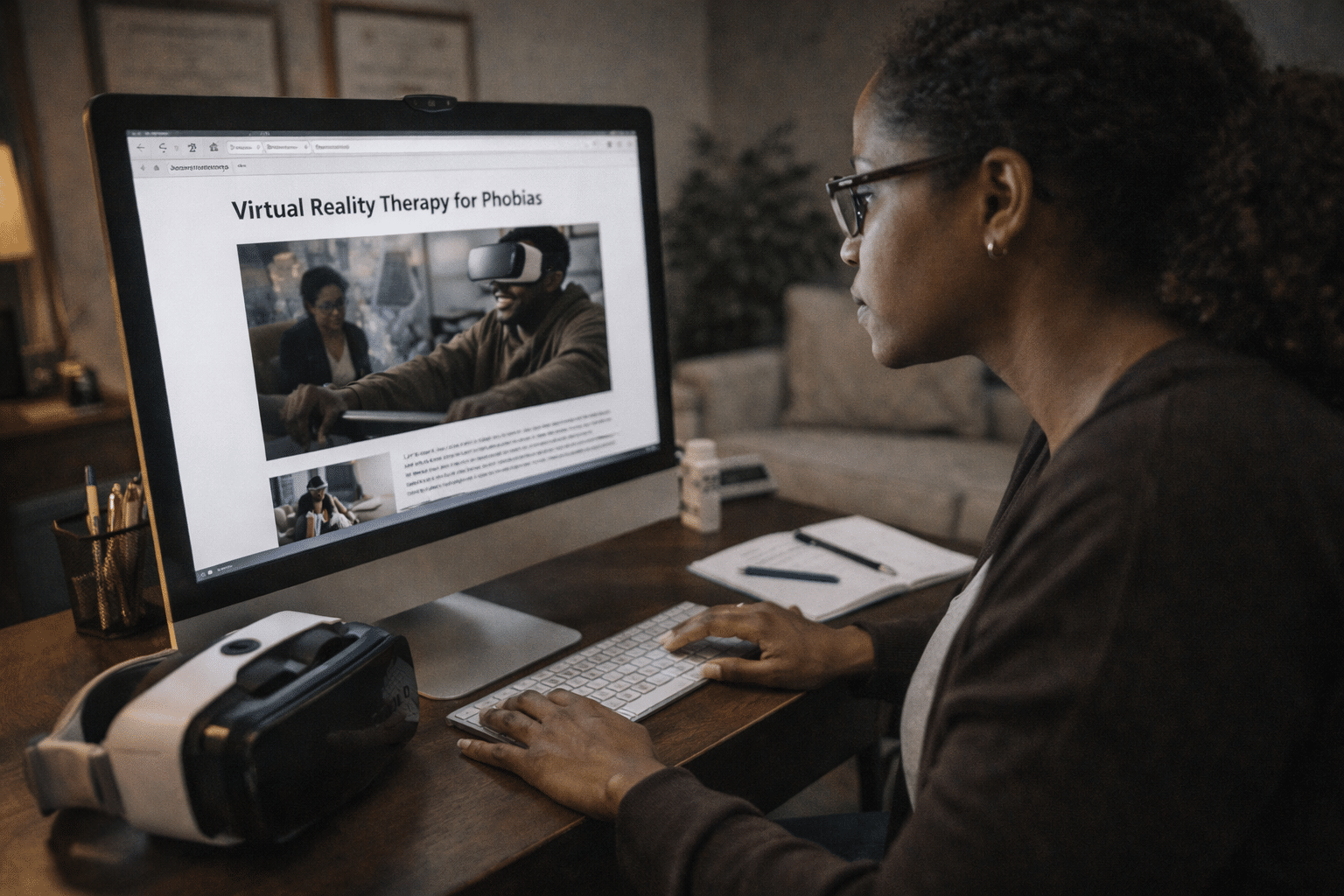
One of the main perks of VR is its flexibility. In professional-guided sessions, typically in clinics, therapists enjoy many real-time insights. They can monitor your reactions, they can personalize adjustments, and they can even integrate talk therapy to guide you through the exposure. This level of hands-on treatment is ideal for complex and severe phobias.
Of course, clinical therapy isn’t for everyone. Home-based options have exploded in accessibility, especially given the overall shift toward remote work. Nowadays, we have affordable headsets like Meta Quest, which pair nicely with apps for self-guided programs. Other platforms, such as oVRcome, PsyTech VR, and ZeroPhobia, can address various and specific phobias, too.
You even have libraries of graded exposure options, such as those offered by Virtually Better’s Phobias Suite, which addresses fears like needles, dogs, flying, and spiders.
Now, you might be asking yourself, are these apps and programs as effective as professional therapy? The answer is that no one size fits all. It all depends on your phobia. Research strongly supports stand-alone apps, and in some randomized trials, a smartphone-based VR app can significantly reduce fear of heights and avoidance.
That said, home tools suit mild-to-moderate phobias. They’re also, obviously, best for people who live far from clinical settings or people who have mobility issues. Their main strength is that they are convenient and private, so people may be more likely to use them. However, professional guidance is always the gold standard. It ensures safety and maximizes outcomes, and is best used first before transitioning to home treatments.
When combined with cognitive behavioral therapy (CBT), the impacts of VR therapy go even further. With CBT, you are essentially reframing your thoughts. Rather than thinking, this spider is dangerous and big and scary, you eventually learn to think, this spider is a tiny little insect that can’t harm me.
Evidence shows that a VR-CBT combination yields substantial symptom reductions, especially for people with social anxiety. If you’re using professional-guided therapy, therapists will often help you make accurate interpretations during and after your session. With this hybrid approach, you can turn technology into your biggest ally for lasting change.
Just be realistic. Nothing is a cure-all. Although VR is generally safe, side effects can occur. Most of the time, they stem from “cybersickness,” presenting as nausea, dizziness, and headaches. The good news is that these negative impacts are usually mild, temporary, and affect very few people. Not to mention, most patients are so bent on treating their phobia that they’re willing to endure some side effects if they can reach that end.
To minimize these effects, just aim for shorter sessions with breaks and good ventilation, and always start slow. Remember: phobias don’t have to define you forever. You don’t have to be paralyzed in fear! A phobia is not an unchangeable characteristic of your being. It is a treatable, manageable, and in many cases, curable condition.
Whether clinic-guided or home-based, the power is in your hands. Now you just have to use it…


By subscribing, you consent to receive emails from BlackDoctor.com. You may unsubscribe at any time. Privacy Policy & Terms of Service.