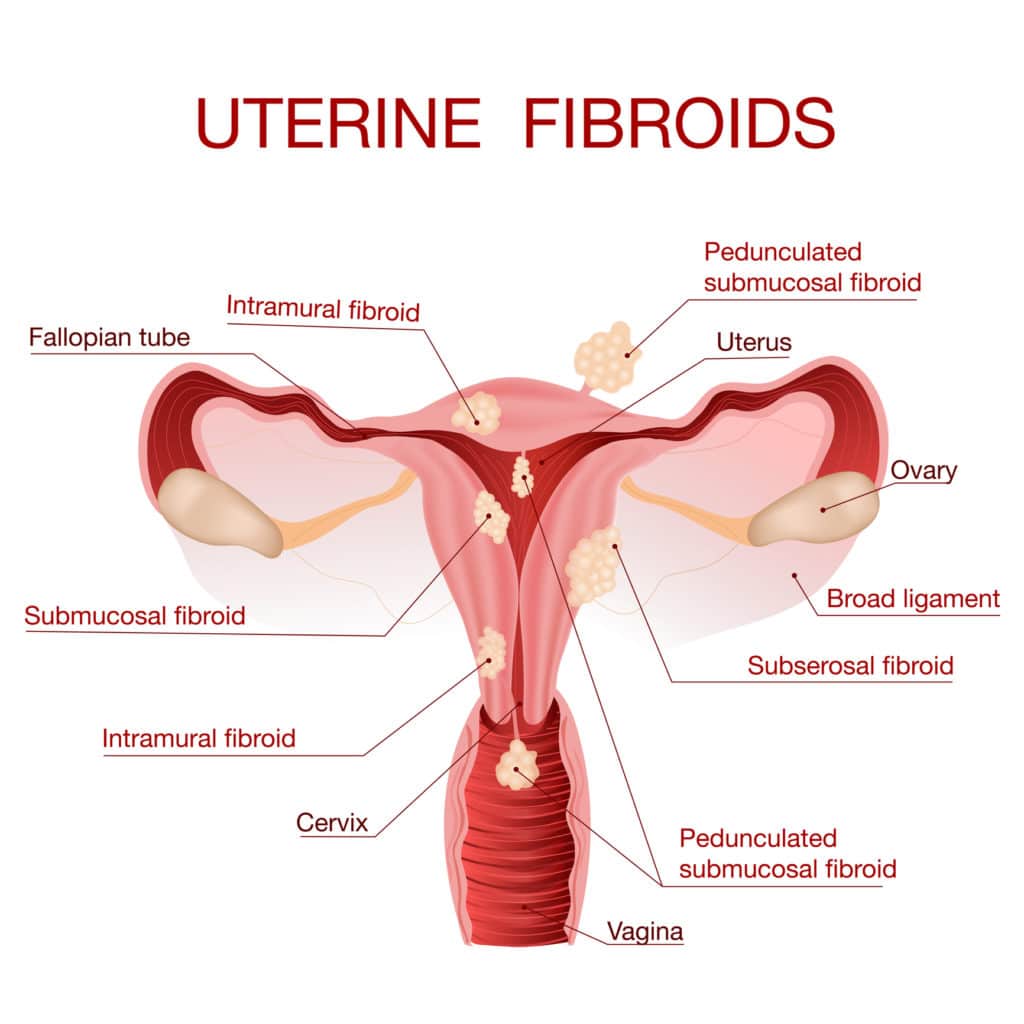
Fibroids are hard to predict. Given the cloud of unpredictability surrounding fibroids, women approaching the 50 years landmark are distraught over menopause and what comes with it. Can menopause trigger or worsen fibroids?
There are questions about menopause affecting the development of uterine fibroids – or even worsening the tumors if they were already there.
To better analyze the effect of menopause on fibroids, let us start by examining the hormonal changes that occur during and after menopause.
When a woman experiences or approaches menopause, there is a significant decline in hormones like estrogen and progesterone.
These hormonal reductions diminish the pace at which the uterus walls thicken.
These noncancerous tumors – otherwise known as fibroids – growing on the uterus depend largely on these hormones to fuel their development.
Thanks to the onset of menopause, these tumors are starved of hormonal sustenance, consequently shrinking and dying.
Therefore, menopause doesn’t facilitate the development of tumors in women.
On the contrary, it suppresses them. However, this doesn’t mean that menopause is the ultimate cure for fibroids.
Post-menopausal women still have fibroid symptoms, but how does menopause affect these symptoms?
Most women are concerned about the pain and discomfort that comes with fibroids and if they intensify after menopause. Pre-menopause fibroid symptoms are not entirely dissimilar to post-menopause fibroid systems.
Post-menopausal women may not experience the typical intensity of menstrual cycles usually provoked by fibroids because they no longer have periods.
Regardless, menopausal women may still experience pre-menopausal fibroid symptoms like stomach protrusions, stop-start bleeding, and regular urination.
In some cases of fibroids after menopause, women still experience pain during sexual intercourse, difficulty in emptying their bladders, unusual tiredness, and pain in the leg or lower back.
Take note that women undergoing hormone replacement therapy (HRT) after menopause may not experience significant declines in their fibroid symptoms.
This is due to the treatment combining progesterone and estrogen symptoms.
We’ve established the expected shrinkage of fibroids after menopause, so now you may wonder if you will ever need to remove your fibroids surgically after menopause.
It is a known fact that women approaching menopause are inclined to delay treatment for fibroids in the hopes that the onset of menopause will eliminate them.
It is not advised to leave your fibroids untreated, even after menopause.
Outsourcing your fibroid treatment to menopause could cause complications, including deteriorating fibroid symptoms to long-term uterus damage.
Before now, surgery was the sole treatment option for fibroids. The downside of such surgical procedures was partial or complete removal of the uterus.
The good news is that there are more treatment options on the table aside from surgery.
Recent technological advancements introduced less invasive alternatives like Uterine Fibroid Embolization (UFE). In this procedure, fluoroscopy – a real-time X-ray technology – is deployed to administer embolic agents to the fibroids and uterus.
Consequently, such medical agents shut off the arteries feeding the fibroid’s blood, which leads to the lack of necessary nourishment to the tumors for them to thrive.
This causes them to shrink and eventually die.
Statistics on UFE are exciting. An estimated 90% of women who adopted UFE treatment enjoyed substantial (and in some cases, complete) alleviation of the symptoms associated with their fibroids.
Always consult your doctor to choose the best treatment option for you.
Medical practitioners often look at parameters like fibroid location and size, woman’s age, and severity of symptoms when deciding on the treatment plan to treat post-menopausal fibroids.
In cases of severe fibroids, the medical doctor may suggest a hysterectomy, where the woman’s uterus is completely removed.
Conversely, fibroids without associated symptoms may not need treatment at all.


By subscribing, you consent to receive emails from BlackDoctor.com. You may unsubscribe at any time. Privacy Policy & Terms of Service.