The sun broke through after a rainy start to Day 2 of BlackDoctor House on Martha’s Vineyard, and so did a wave of hard truths about a federal program most attendees had never heard of — but one that shapes their prescriptions every day.
BlackDoctor Chief Marketing Officer Derrick Lane opened the morning by recapping Day 1’s emotional highs — the laughter, the tears, the quiet commitment to make lifestyle changes back at home — before framing Day 2’s theme: “Generational Health,” and the cycles families pass down along with the physical and personality traits.
“Some of us inherit our mom’s eyes, or maybe our dad’s sense of humor,” Lane told the audience gathered on Aug. 13 at The Strand Theatre in Oak Bluffs. “And some of us inherit our grandfather’s cholesterol levels. But today we talk about breaking some of those cycles.”
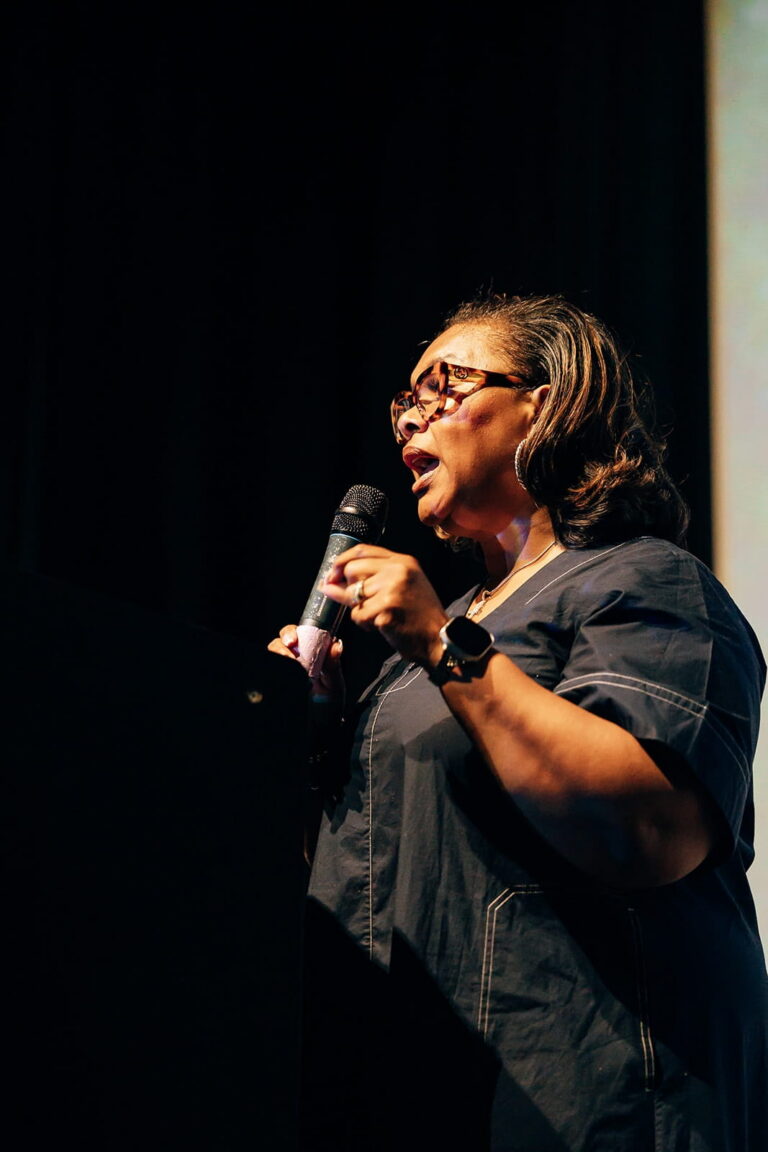
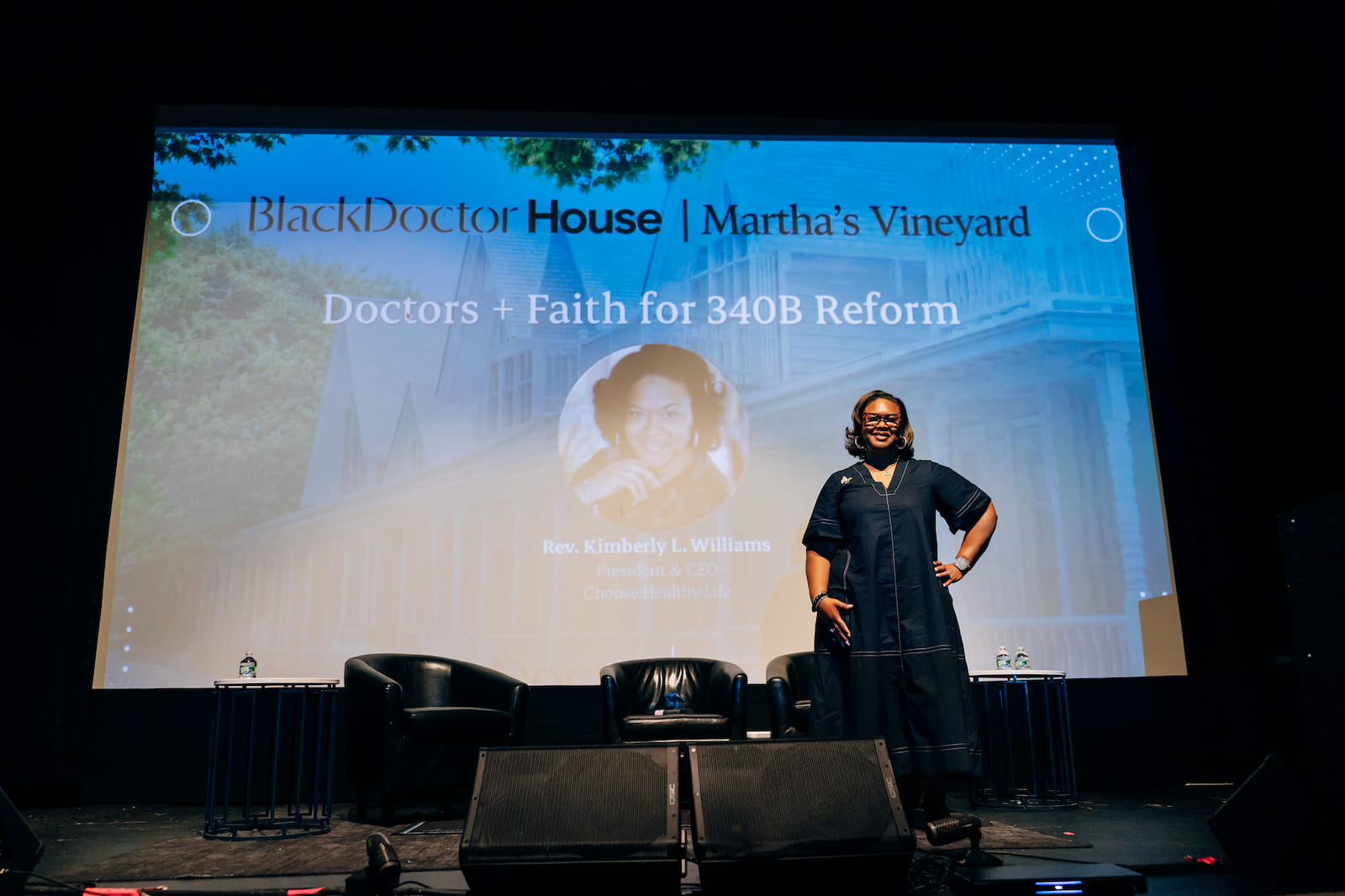
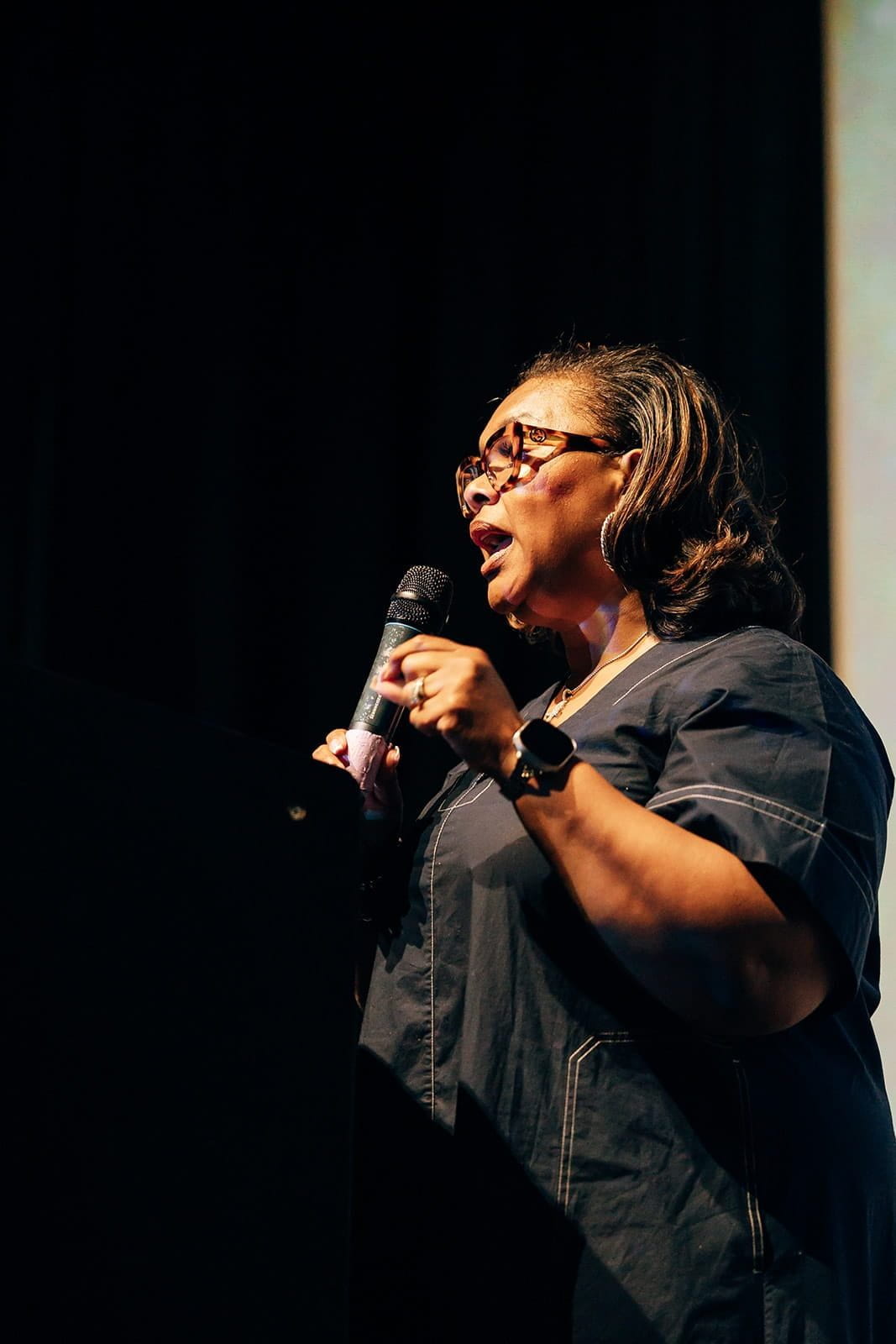
That set up the day’s first session, “Doctors and Faith for 340B Reform,” featuring the Reverend Kimberly L. Williams, President and CEO of Choose Healthy Life.
It wasn’t a Sunday service, but Rev. Williams took the audience to church in the tradition she is most accustomed. She started by setting the stage with an analogy that both health care professionals and audience members in attendance could related to.
“Sometimes the most dangerous condition is the one developing quietly,” Rev. Williams said, comparing an unfolding policy problem to a disease that progresses before symptoms ever show. The program, 340B, has stayed largely invisible for three decades, buried, she said, under “language built for accountants and lawyers.”
Rev. Williams walked the audience through the brief basics and timeline. In 1992, Congress struck a deal with drug manufacturers: if companies wanted Medicare and Medicaid to purchase their drugs, they had to sell those same drugs at a steep discount to hospitals and clinics serving underserved communities. The hospital buys the medicine cheap, the insurer still reimburses at full price, and the hospital is supposed to use the difference to fund care for uninsured patients.
The problem is what happens next, Rev. Williams said. There is no federal requirement that hospitals report where those savings actually go — even as the number of participating hospitals and contract pharmacies has grown to more than 30,000. What is more, a September 2025 Congressional Budget Office report found the program now creates incentives that push federal spending and drug prices up rather than down.
“The discount is real,” Rev. Williams said. “The medicine still costs the patient what it always did. The savings land somewhere in the middle. And nobody outside of the institution can say where.”
That’s where the change needs to happen, Rev. Williams explained. “Our message is not end 340B; it is reform 340B. It makes those discounts actually reach the low-income patients they were meant for.”
Rev. Williams says that sees the issues firsthand at Choose Healthy Life every week. The organization works through a network of 120 churches across 13 states, training community health navigators to bring free screenings directly to their neighbors.
But the numbers, aren’t the point, she said, the people are. Her navigators see time and time again that someone gets screened at one of their church events, learns for the first time that they are pre-diabetic or hypertensive, gets connected to a doctor who writes them a prescription to help manage the condition and then they cannot afford to fill it.
“340B was built for exactly that person,” she said. “That last step is where the discount was supposed to land, and navigators are standing right there when it doesn’t.”
What happens next creates a ripple effect through families. For example, a grandmother may begin rationing blood pressure medication, then the grandchildren step into caregiving roles, so then they start to miss work, which causes them to miss income coming into the home.
“This is not community failure,” Rev. Williams said. “It is policy failure.”

Rev. Williams pointed to Choose Healthy Life’s recent advocacy: a co-authored op-ed with Dr. Sharon Allison and Shari Beagelman, BlackDoctor’s Director of Policy, that ran in the Maryland Reporter, and letters sent to legislators in Michigan, Illinois, California, Maryland, and New York pushing for greater transparency in how 340B savings are tracked and spent.
Now, she needed audience members to join in the effort. In the church’s tradition of call and response, she asked them to join her in saying the call the action together: “Transparency. Accountability. Reinvestment.”
“Learn what 340B is,” she urged. “Ask where the savings are going. Ask who benefits. And ask whether the communities whose need makes these discounts possible are actually seeing the benefit.”
Rev. Williams closed with a nod to Bible’s book of Deuteronomy, tying the policy fight back to the day’s larger theme: “This is generational health. This is stewardship. This is the assignment.”



By subscribing, you consent to receive emails from BlackDoctor.com. You may unsubscribe at any time. Privacy Policy & Terms of Service.