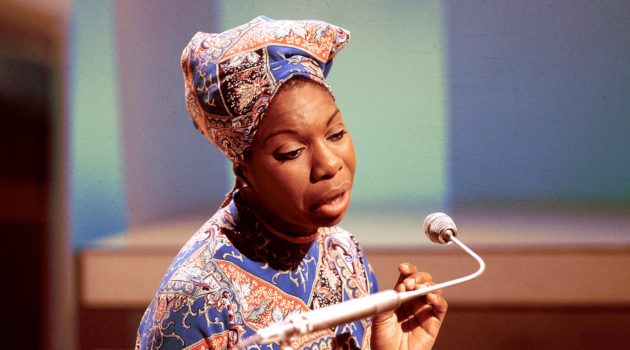
Arguably one of the most prolific entertainers in recent history, Nina Simone spent her career breaking barriers, shedding light, and fighting necessary battles. Many of which she won. One, however, fought for many years but ultimately succumbed to; breast cancer.
She died at the age of 70 on April 21, 2003, at her home in Carry-le-Rouet, France. While she may be gone, Simone left a lasting impression on the world of music, art, and activism.
Her career began around 1958 and reached a fever pitch in the ’60s when Simone began singing out loud and clear about civil rights —well after her peers like Harry Belafonte and Sammy Davis, Jr., but still at a relevant enough time when many Black entertainers felt constrained by two worlds: commercial success and social responsibility. Simone melded both together. Sometimes inelegantly but always necessary.
Always one to point out racial disparities through music, her songs often underscored the quiet rage that Black women held due to society’s blatant disregard for their well-being. In an improvised live rendition of her song, Four Women her lyrics spoke to the anguish: “My name is Sarah…my back is strong to take the pain inflicted again and again.”
Her words can still poignantly describe what’s happening to Black women today, especially when it comes to their health.
Simone’s fatal illness, Breast cancer, for example, is diagnosed at lower numbers in Black women, but they have a significantly higher mortality rate than their white counterparts.
Per Cancer Connect:
Black women have the highest breast cancer death rates of all racial and ethnic groups and a 41 percent higher rate of breast cancer death than White women.1,2 That is not a typo—it’s a staggering statistic: Black women with breast cancer are 41 percent more likely to die from the disease than White women. What’s more, African-American women are less likely to survive for five years after diagnosis.3

But the disparity doesn’t stop there. African-American women are more likely to develop breast cancer at a younger age (under 50) and often have a more aggressive form of the disease called triple-negative breast cancer, which means the cancer does not express the gene for estrogen receptor, progesterone receptor, or HER2 that can stimulate breast cancers to grow—and therefore is immune to many of the targeted treatments that can be used to block tumor growth. Triple-negative breast cancer tends to grow and spread more quickly than other types of breast cancer. Black women are three times more likely to develop triple-negative breast cancer than their White counterparts. In fact, research indicates that 20 to 30 percent of breast cancers diagnosed in African-American women are triple-negative.
Breast cancer is treated in many ways as more research is done. Of course, treatment plans are tailored to each patient’s condition, the rate at which the cancer spread, and the state of the patient’s current health. According to the CDC (Center for Disease Control) here are some of the typical treatments:
Surgery. An operation where doctors cut out cancer tissue.
Chemotherapy. Uses special medicines to shrink or kill the cancer cells. The drugs can be pills you take or medicines given in your veins, or sometimes both.
Hormonal therapy. Blocks cancer cells from getting the hormones they need to grow.
Biological therapy. Works with your body’s immune system to help it fight cancer cells or to control side effects from other cancer treatments.
Radiation therapy. Using high-energy rays (similar to X-rays) to kill the cancer cells.
Hybrid treatment. Doctors from different specialties often work together to treat breast cancer. Surgeons are doctors who perform operations. Medical oncologists are doctors who treat cancer with medicine. Radiation oncologists are doctors who treat cancer with radiation.
BDO’s Black History of Health series is designed to show the correlation between the health of historical black figures and Black Americans today. Many of the health disparities we currently experience have been in our community for centuries. This series is meant to bring these conditions to the forefront and provide blacks with preventative and management steps to reduce these disparities and improve the overall health of the Black American community. It’s time to change the narrative.


By subscribing, you consent to receive emails from BlackDoctor.com. You may unsubscribe at any time. Privacy Policy & Terms of Service.