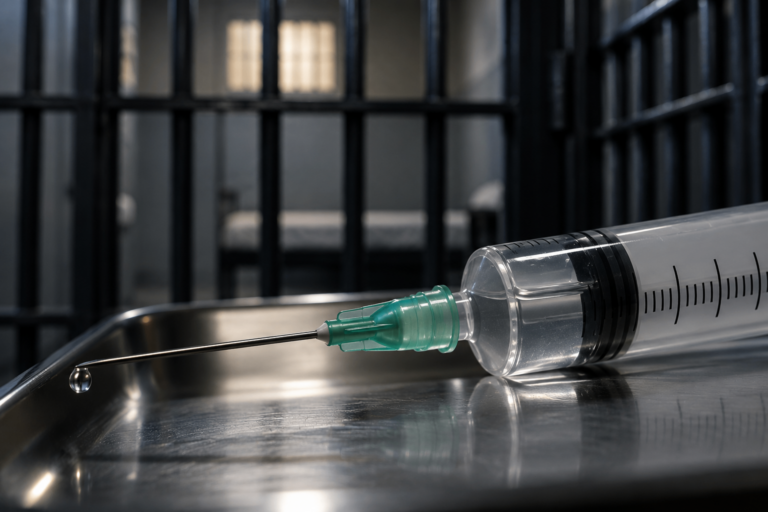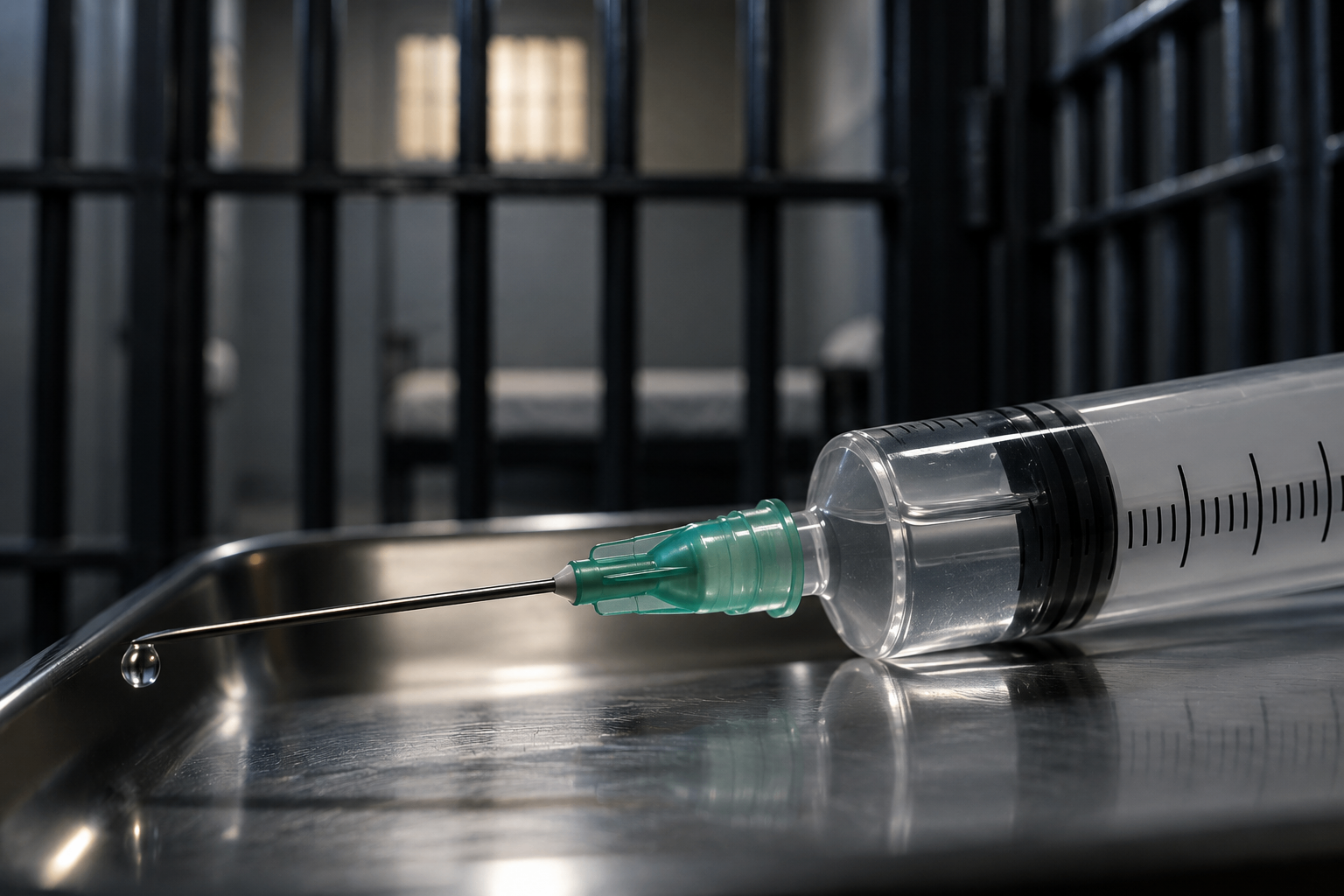
A Tennessee death-row inmate who was expected to become the first woman executed by the state in more than 200 years instead survived an extraordinary attempt to carry out her death sentence.
Christa Gail Pike, 50, remained alive after Tennessee officials administered two doses of the lethal-injection drug pentobarbital on September 30, 2026, according to her attorneys and media witnesses. The execution was ultimately stopped, and Pike was transported by ambulance to an off-site medical facility.
Witnesses said Pike was still breathing and could be heard loudly snoring well after the drugs were administered. The execution was eventually stopped, and she was transported by ambulance to an outside medical facility.
The extraordinary case has raised legal questions about whether Tennessee can attempt to execute Pike again.
But it has also raised a fascinating—and disturbing—medical question:
How can someone survive a drug intended to shut down the brain, breathing and cardiovascular system?
To understand what may have happened, it helps to understand what pentobarbital actually does inside the human body.
Pike’s case dates back to January 1995, when she was 18 years old.
Pike and 19-year-old Colleen Slemmer were students at a Job Corps program in Knoxville, Tennessee. Prosecutors said Pike believed Slemmer was interested in Pike’s boyfriend, Tadaryl Shipp.
According to evidence presented in the case, Pike, Shipp and another young woman went with Slemmer to an isolated wooded area near the University of Tennessee agricultural campus.
There, Slemmer was subjected to a prolonged and brutal assault.
She was beaten, cut with a box cutter and struck with a large piece of asphalt. A pentagram was carved into her body; Shipp later said that he had carved the symbol.
Pike was convicted of premeditated first-degree murder and conspiracy to commit first-degree murder and was sentenced to death.
Three decades later, Tennessee scheduled Pike’s execution. She would have been the first woman executed by the state in more than 200 years.
Instead, the execution ended with Pike alive and on her way to a hospital.
There is no single lethal-injection formula used throughout the United States. Protocols vary by state and have changed considerably over the years.
Tennessee currently uses a single drug: pentobarbital. The state adopted its revised single-drug protocol in December 2024.
Pentobarbital belongs to a class of medications called barbiturates.
Barbiturates are powerful central nervous system depressants. Historically, drugs in this family have been used for sedation, anesthesia, seizures and other medical purposes.
Pentobarbital essentially tells the brain and nervous system to slow down.
At medically controlled doses, that can produce sedation.
At higher levels, it can cause unconsciousness.
At toxic levels, it can cause coma, dangerously low blood pressure, respiratory failure and cardiovascular collapse.
The drug does this largely by enhancing the effects of GABA, one of the brain’s major inhibitory neurotransmitters.
Think of GABA as the nervous system’s brake pedal.
Pentobarbital pushes down hard on that brake.
It enhances activity at GABA-A receptors, making neurons less likely to fire. At the same time, barbiturates can reduce activity involving glutamate, an important excitatory neurotransmitter.
The result is profound suppression of nervous-system activity.
And that suppression doesn’t just affect whether you’re awake.
It can affect the systems keeping you alive.
The brain is one of the first major organs affected.
As pentobarbital reaches the brain, communication between neurons becomes increasingly suppressed.
At progressively toxic levels, a person can move from:
Drowsiness → deep sedation → unconsciousness → coma.
With severe barbiturate poisoning, normal brain-stem reflexes can also become impaired.
That’s especially important because your brain stem controls many automatic functions you never have to think about—including breathing.
Normally, the brain constantly monitors levels of oxygen and carbon dioxide in your blood.
When carbon dioxide rises, the brain essentially tells the body:
Breathe.
Severe central nervous system depression can interfere with that command.
Pentobarbital doesn’t necessarily “attack” the lungs themselves.
The bigger problem is that it can suppress the brain’s respiratory centers.
Breathing may become progressively slower and shallower.
Eventually, severe barbiturate toxicity can cause apnea, meaning breathing stops completely.
When breathing becomes inadequate, oxygen levels can fall while carbon dioxide accumulates.
That creates another problem.
Every organ—including the brain and heart—needs a continuous supply of oxygen.
If breathing stops long enough, oxygen deprivation can damage the brain, destabilize the heart and eventually lead to cardiac arrest.
This is one reason severe pentobarbital overdose is a medical emergency. Someone who receives a toxic amount may require intubation and mechanical ventilation while the body metabolizes and eliminates the drug.
Pentobarbital can affect the cardiovascular system in several ways.
Barbiturates can cause vasodilation, meaning blood vessels relax and widen.
When blood vessels widen dramatically, blood pressure can fall.
At the same time, barbiturates can suppress areas of the brain involved in regulating cardiovascular function and can reduce the heart’s pumping strength.
The combination can become dangerous:
Blood vessels widen → blood pressure drops → the heart pumps less effectively → organs receive less blood and oxygen.
In severe poisoning, this can progress to profound hypotension and cardiovascular collapse.
The brain, kidneys, liver and heart can all suffer when blood pressure and oxygen delivery fall far enough.
This is where Pike’s case becomes medically unusual.
Receiving a potentially lethal amount of a medication doesn’t necessarily guarantee that a lethal concentration reaches the bloodstream and critical organs in the expected way.
Several factors can influence the outcome of a drug overdose.
Intravenous drugs are intended to enter a vein and travel directly into the circulation.
If an IV catheter becomes displaced, infiltrates surrounding tissue or otherwise fails to deliver its contents fully into the bloodstream, the drug may not circulate in the way intended.
Pike’s attorneys have raised concerns about IV access during the execution. Exactly what happened has not yet been established, which is one of the reasons Tennessee has ordered an independent investigation.
Pentobarbital is primarily metabolized by the liver, and its elimination can vary substantially.
Its reported half-life in adults ranges roughly from 15 to 50 hours, meaning significant amounts can remain in the body for an extended period.
Age, liver and kidney function, other medications, genetics and overall health can all affect how a person responds to a drug.
However, individual variation alone should not be assumed to explain Pike’s survival. Investigators still need to determine how much medication actually reached her circulation and what occurred during the procedure.
Pentobarbital poisoning is not universally fatal.
A 2026 medical case report, for example, described a patient with severe pentobarbital poisoning who developed coma and respiratory failure and required six days of mechanical ventilation, yet ultimately recovered after intensive supportive care.
An older clinical series involving 162 patients hospitalized after pentobarbital or secobarbital overdoses also illustrates how variable severe barbiturate poisoning can be. Fifty-nine percent required intubation and assisted ventilation, while 23 percent developed clinically significant hypotension.
The important distinction is that these were medical overdose cases, not execution protocols, so they cannot tell us precisely what happened to Pike. They do show, however, that even profound barbiturate poisoning can sometimes be survivable when breathing and circulation are maintained long enough for the body to eliminate the drug.
Here’s another important medical fact about pentobarbital:
There is no specific antidote that simply reverses a pentobarbital overdose.
Treatment is largely supportive.
If a patient can’t breathe adequately, doctors can place a breathing tube and use a ventilator.
If blood pressure falls dangerously low, IV fluids and medications called vasopressors can help maintain circulation.
Doctors can monitor oxygen levels, heart rhythm, blood pressure, kidney function and body temperature while the liver gradually metabolizes the medication.
In other words, medicine may be able to temporarily perform some of the body’s essential functions while the drug concentration declines.
That can make the difference between a fatal overdose and survival.
One of the strangest details reported by execution witnesses was that Pike could be heard snoring loudly after the drugs had been administered.
Snoring does not necessarily mean someone is simply sleeping normally.
Deep sedation causes muscles in the upper airway to relax. That can narrow the airway and cause surrounding tissues to vibrate as air passes through—the sound we recognize as snoring.
In someone who is profoundly sedated, loud or abnormal snoring can therefore indicate that air is still moving but the airway is partially obstructed.
Witnesses reported hearing Pike snoring until approximately 8:53 p.m., after a second dose of pentobarbital had already been administered.
Exactly what was happening physiologically cannot be determined from witness observations alone.
The medical consequences may not end when the execution attempt ends.
Someone who survives severe barbiturate poisoning could potentially face complications associated with prolonged unconsciousness, low oxygen levels, low blood pressure or respiratory failure.
Possible complications of severe poisoning can include aspiration into the lungs, pneumonia, muscle injury, kidney problems, pressure injuries and neurological damage depending on how long oxygen and circulation were compromised.
But it is important not to assume Pike suffered any particular complication.
As of October 1, detailed information about her medical condition and treatment has not been publicly released.
Legally, surviving an execution does not automatically eliminate a death sentence.
But Tennessee is not immediately trying again.
Gov. Bill Lee ordered a comprehensive third-party review of the failed execution and halted Tennessee’s remaining scheduled execution for 2026.
The Tennessee Department of Correction said it followed every step of its established execution protocol. The department also said the protocol did not permit additional procedures beyond those performed that evening.
Pike’s attorneys are likely to challenge any future attempt to execute her, including potentially arguing that subjecting her to another execution procedure would constitute cruel and unusual punishment.
There is currently no publicly announced second execution date.
Pike’s case involves the death penalty, but the biology behind it offers a broader health lesson.
Powerful sedatives don’t simply “put someone to sleep.”
At high enough concentrations, central nervous system depressants can begin shutting down the very systems that keep us alive.
The brain becomes deeply suppressed.
The signal to breathe weakens.
Breathing can stop.
Blood pressure can collapse.
The heart and other organs may stop receiving enough oxygen.
And yet the line between profound poisoning and death is not always perfectly predictable.
That’s why severe barbiturate poisoning is treated as a medical emergency—and why Pike’s survival after Tennessee officials attempted to execute her with two doses of pentobarbital has generated so many unanswered medical, legal and procedural questions.
For now, perhaps the biggest question is also the simplest:
Why did a procedure designed specifically to cause death fail to do so?
Tennessee’s newly ordered investigation will now have to determine the answer.

By subscribing, you consent to receive emails from BlackDoctor.com. You may unsubscribe at any time. Privacy Policy & Terms of Service.