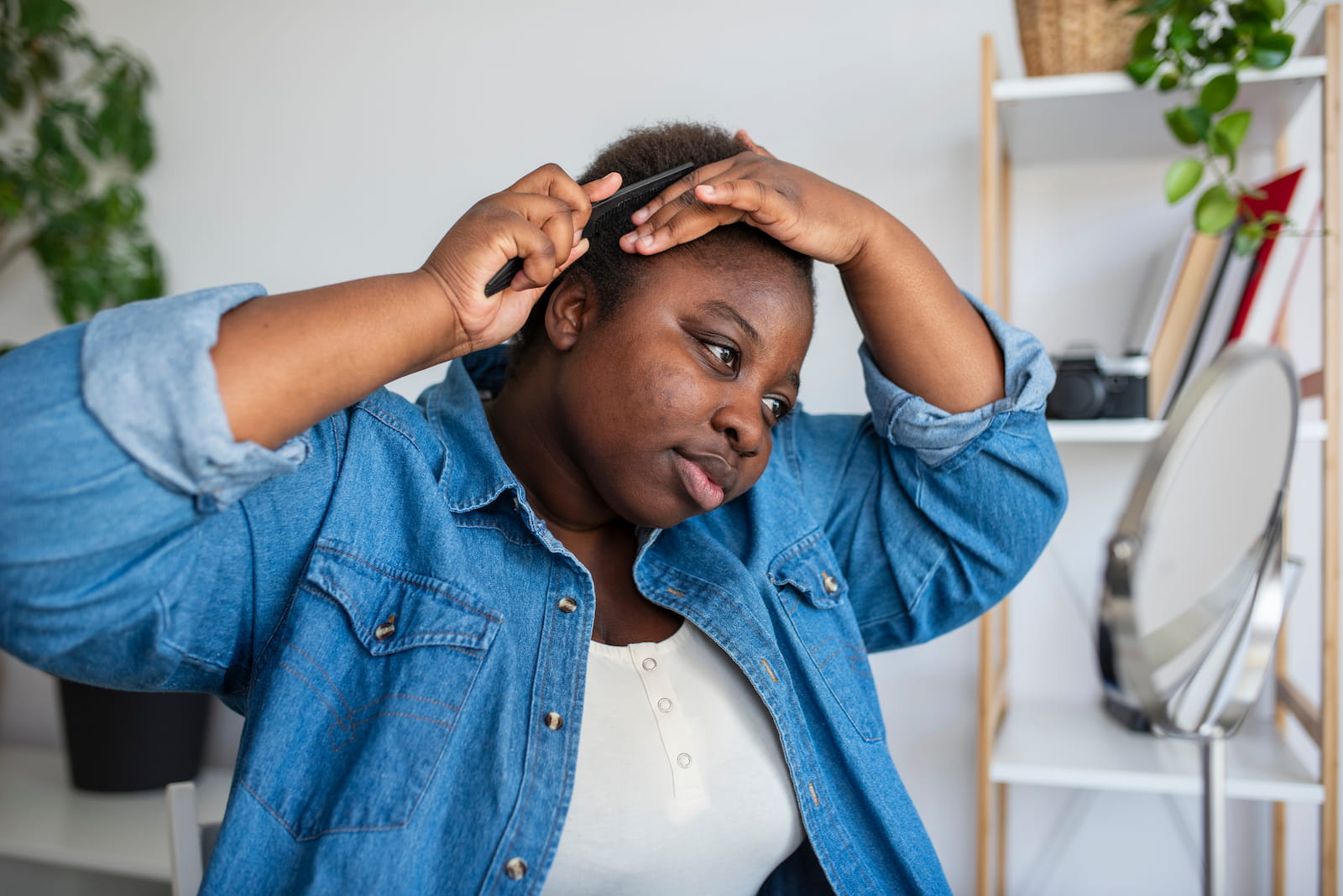
Many women struggle with hair loss.
But a major reason isn’t even the hair that’s lost. It’s what else is lost – a sense of youth, self-image, and the feeling that you’re looking and presenting your best self when you step out the door.
Bottom line: hair isn’t just hair, and as National Hair Loss Awareness Month approaches, this difficulty is finally getting the much-needed attention it deserves. For millions of Black women, who often notice changes starting in their 20s and 30s and struggle with traction alopecia, awareness is as important as ever.
Thinning edges, widening parts, or overall shedding can all feel deeply personal and distressing. Fortunately, there’s an encouraging reality. By understanding the root causes and applying evidence-based, culturally relevant strategies, numerous women have found remedies and even solutions to their issues.
Looking for possible ways to regrow hair or prevent hair loss?
Let’s cover it all…
RELATED: A Dermatologist Explains: Central Centrifugal Cicatricial Alopecia
If you’ve never heard of this condition, it’s actually more common than you think.
In fact, traction alopecia is one of the most common forms of hair loss seen in Black women. It typically develops from prolonged tension on the hair follicles and is usually caused by tight braids, weaves, ponytails, buns, or even extensions.
Over time, this mechanical stress can contribute to inflammation near the follicle, which in turn can lead to miniaturization and sometimes permanent loss if the tension is not addressed.
Unfortunately, many lifestyles may exacerbate this condition.
For example, consider the hypothetical of a young Black professional in her late 20s or early 30s. She might regularly wear tight sew-in weaves or sleek ponytails, all part of maintaining a polished corporate look.
But at what cost? As time passes, this appearance may gradually cause thinning at the temples and frontal hairline. However, by switching to looser styles and giving her scalp the regular breaks it needs, this same individual can see hairs return along her edges.
Another hair-related condition prevalent among Black women is central centrifugal cicatricial alopecia (CCCA). This frequently begins at the crown and spreads outward in a centrifugal pattern, or as if originating from the center of a circle. More than that, CCCA is a type of scarring alopecia, meaning that inflammation can destroy hair follicles, replacing them with scar tissue.
Although the early signs may be subtle, such as itching and tenderness at the crown, they can become significantly pronounced with time.
RELATED: Ask The Expert: “Will My Edges Ever Grow Back?”
Oftentimes, people overlook the role of nutrition in their physical appearance.
This is a no-no. Turns out, nutritional status plays a major role in hair health, particularly if adequate levels of vitamin D are not obtained from diet and sun exposure. This is particularly common in Black adults because, due to their higher melanin levels, their skin may struggle to synthesize vitamin D from sunlight.
Low levels of vitamin D have been linked to certain forms of hair loss and impaired follicle cycling, which is when the natural growth cycle of a hair follicle gets disrupted. When this happens, instead of moving smoothly through the growth, resting, and shedding stages, the follicle may get ‘stuck’ or undergo abnormal changes.
From this point, the hair may thin, the hair may shed excessively, and/or new hair growth may stop completely. Your body can usually get adequate vitamin D from sunlight exposure and consuming food sources such as fatty fish, cod liver oil, and UV-exposed mushrooms.
While there are usually no symptoms, possible signs of low vitamin D levels are bone pain, prolonged fatigue, muscle cramps and aches, and obvious mood changes. Children with severe deficiency may also experience rickets, an often noticeable bone disorder, while adults may experience bone softening, weakness, and muscle pain.
For many children and adults with mild deficiency, however, there may be few noticeable symptoms. A blood test is the only way to confirm if your vitamin D level is low. Your doctor can order a test and, depending on the results, recommend an appropriate vitamin D supplement and dosage.
Another issue to consider is iron deficiency, exhibited by symptoms such as extreme fatigue, pale skin, shortness of breath, cold hands and feet, brittle nails, and a sore or inflamed tongue. Lab tests are used to diagnose iron deficiency and determine whether treatment is necessary. Iron deficiency may contribute to increased shedding, though studies are mixed.
Many women may struggle due to heavy menstrual periods or dietary patterns low in heme iron, which can also contribute to increased shedding or telogen effluvium. Chronic stress also elevates cortisol levels, which can sometimes push hair follicles prematurely into the telogen phase, which is your hair’s natural resting phase.
If this happens, it can lead to noticeable shedding in the months that follow (seeing significantly more hair in your brush and shower drain, noticing visible thinning, and finding large clumps rather than smaller strands). Normal shedding is roughly 50–150 hairs per day. In telogen effluvium, shedding rises substantially — often to more than 200 hairs per day — and typically begins two to four months after a trigger such as illness, childbirth, surgery, rapid weight loss, thyroid disease, or nutrient deficiency, then usually normalizes over six to nine months once the trigger is corrected.
Thankfully, certain nutritional changes can help support healthy hair.
Firstly, focus on protein through foods like eggs, fish, beans, lentils, nuts, and Greek yogurt. Second, try to pair iron sources with vitamin C by eating items like spinach, kale, lean meats, and beans with bell peppers or citrus fruits. Also be mindful of omega-3 fatty acids. Salmon, walnuts, flaxseeds, and chia seeds are all well-established sources.
And finally, consume some biotin- and zinc-rich foods! Good sources of zinc and/or biotin, or vitamin B7, include eggs, nuts, avocados, sweet potatoes, and pumpkin seeds.
Besides diet, how you wear your hair also makes a big difference.
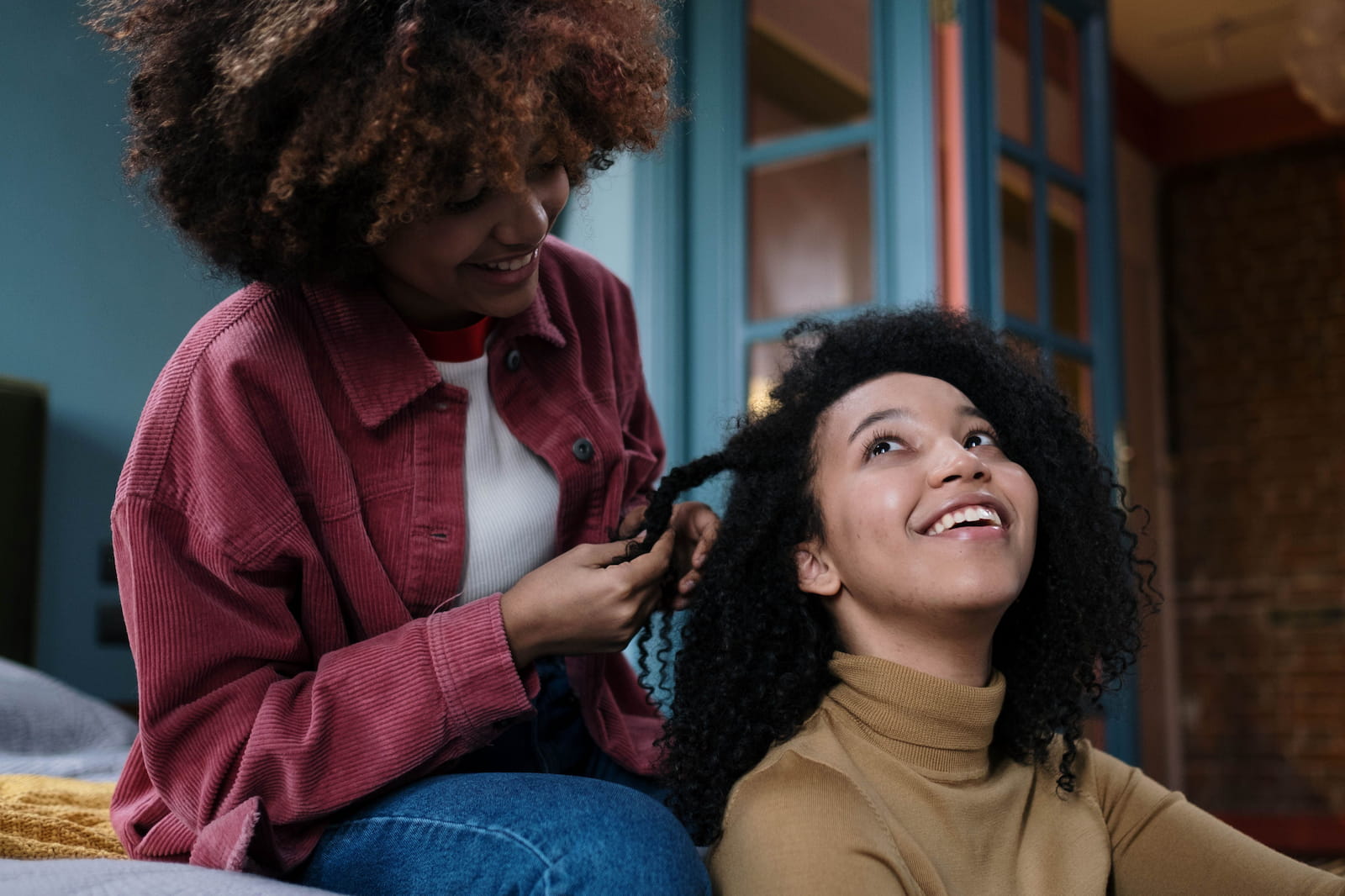
Black hair tends to be especially fragile and prone to breakage, so gentle styling is one of the most impactful changes you can make.
Here are some pointers to consider:
You should also think about your hair care routine. Dermatologists recommend washing Black hair about once a week or every other week to help prevent product buildup and dryness. Use conditioner every time you wash, paying special attention to the ends, which are the oldest and most fragile part of the hair. A hot oil treatment about twice a month can also add moisture and improve elasticity. And finally, don’t neglect moisturizing leave-ins. You can then seal these with natural oils such as jojoba, grapeseed, or lightweight castor oil blends.
You can also try over-the-counter minoxidil (Rogaine), an at-home topical scalp treatment that can help slow hair loss and promote some regrowth. It usually takes six to 12 months to see results, and you need to keep using it regularly to maintain the benefits.
Not sure if you’re making headway?
For mild thinning and early-stage traction alopecia, many lifestyle and styling changes can yield good results. Patience is key.
Sometimes, you simply need to see a professional.
Is your hair loss rapid, patchy, or accompanied by scales and pain? Do you suspect you have a condition like CCCA or scarring alopecia?
Have you noticed zero improvement after three to six months despite optimized home care?
If so, consult a dermatologist. Skin doctors can perform scalp biopsies when needed and also prescribe treatments such as topical or injected steroids, minoxidil, and other medications for inflammatory conditions.
Hair loss can sometimes be a side effect of certain medications. Your healthcare provider can review your current medications and supplements with you to see if any of them could be contributing to hair thinning. In some cases, a dose adjustment or switching to an alternative can help, as guided by your provider.
Women already know. Hair is not just hair; it’s deeply tied to identity, beauty standards, and cultural expression in Black communities. For many, thinning edges can trigger feelings of shame and anxiety, even crushing self-esteem.
This is why it’s important to address the emotional side alongside the physical. Search local communities based on “hair loss” or a particular condition like “CCCA.” In the ‘real world,’ local salons may also specialize in healthy hair or therapy focused on body image.
Remember: your worth is not defined by your hairline. Many Black women can successfully regrow edges and maintain healthy hair; it just takes practice and patience. Through a combination of gentler practices, nutrition, stress management, and professional care, the threads can come together.
Stay confident, stay steadfast, and stay observant. It’s often a good idea to track progress with photos every four to six weeks rather than daily mirror checks. As a rule of thumb, employ variation. Rotate styles and avoid heat and chemicals whenever you can. Make sure your sleep is on point, and consider bloodwork annually to check for biomarkers such as vitamin D, iron, ferritin, and thyroid levels.
Your hair journey is personal. And hair loss can be painful.
But with some knowledge, patience, and consistent care, many Black women can maintain healthier hair for years to come. Start where you are today – no matter where that may be – and work for the better future you deserve.


By subscribing, you consent to receive emails from BlackDoctor.com. You may unsubscribe at any time. Privacy Policy & Terms of Service.