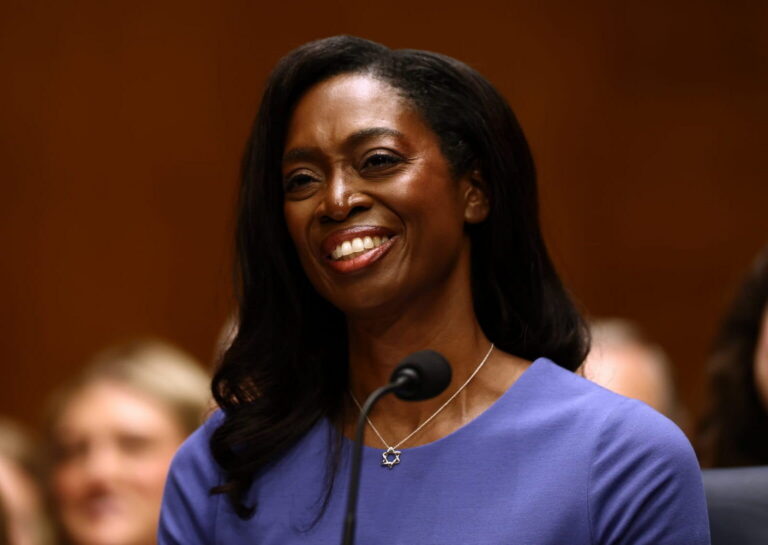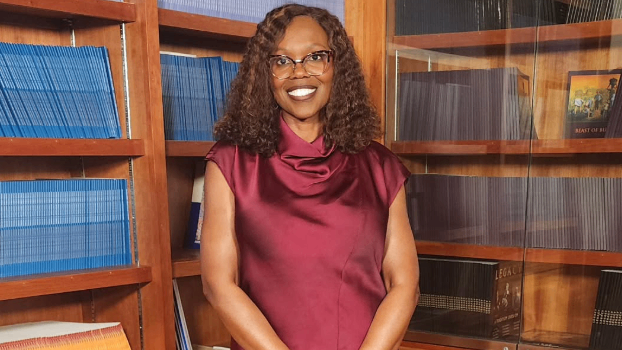
For Valarie Traynham, the label cancer survivor has evolved into something far more complex and profound than she ever imagined. Last year, we shared her harrowing journey through a dual diagnosis of multiple myeloma and breast cancer—a story of fighting for a diagnosis, finding her voice, and discovering the life-saving necessity of specialized care at City of Hope.
Today, Traynham stands in a different place. As we mark National Cancer Survivors Month, she is not just celebrating the fact that she is here; she is redefining what it means to be a thriver.
RELATED: You Beat Cancer. Why Does Life Still Feel Different?
“I like this transition phase. Since last year, I’ve started to do a little bit more in the research advocacy space, and just making sure that I am giving back to my community in that sense of talking about clinical research and the importance of representation in clinical research, and really educating the community,” she says, highlighting the fact that cancer survivors are living longer.
She believes that understanding the science behind what will lead to improved care and better outcomes ultimately leads to longer survivorship.
This shift has been career-defining. “I was working in human resources prior to the diagnosis of multiple myeloma. And it was kind of through that journey that I realized it wasn’t what my purpose was,” Traynham tells BlackDoctor. “The more I was leading the support group, working as a myeloma coach, and really connecting with patients, the more I felt something in me come alive, and that’s when I started shifting more towards the patient advocacy side.”
Thinking about her life as a cancer survivor, Traynham has a new perspective. “In years past, I looked at survivorship as, ‘Yes, I’m here, I’ve survived two cancers, I’m doing well, I’m living my life,’” she notes.
Now, she understands that survivorship is complex. Yes, she’s happy to be alive, but she is also grieving the life she would have had if cancer hadn’t affected her.
“I’m finding that a lot of cancer patients think about that,” she adds. “… The crossroads between grief and gratitude. Yes, we are grateful that we’re here… many of us outlived the statistics, and we are happy about that. But we’re still grieving the lives that maybe we should have had, or that we wanted. And I think that’s something that a lot of survivors don’t talk about, because—you’re always supposed to be grateful that you’re still here, that you outlived the cancer. But I think this is something that we need to focus on as well: the gratitude and grief, that intersection right there.”
For so long, Traynham carried the weight of feeling that she could only talk about her gratitude for being alive and well. However, saying it out loud really helped.
“Just to get it out there, that was so relieving, and to just know that others are dealing with the same thing. Like, I did a post about this last week, and it’s just amazing that people were like, ‘Yeah, I feel that way too,’ or, ‘This is what I’ve been dealing with.’ But for me, it’s just getting it out there. It’s talking to people about it. I do a lot of writing about it—just getting it out there on paper.”
She is also focusing on reclaiming her pre-cancer identity while embracing the new: “What can I pick up on and keep going with? You know, things are going to be different, but what are some of the things that I enjoyed doing that I can get back into doing and enjoying that area of life that I was living before cancer?”
She continues, “Because of cancer, my world has been opened up to so many other new things, embracing some of those things as I go into survivorship. So it’s really just talking about it, knowing that it’s a part of survivorship, and … acknowledging that grief and gratitude at the same time, but still continuing to move forward. Because as you go into survivorship, you’re going to see changes,” Traynham adds.
Navigating life after diagnosis can be daunting, but Traynham offers guidance for those walking this path:
Traynham’s advocacy is moving to the national stage. Later this year, she will join researchers in Vail, Colorado, as a faculty member for a project with ASCO (American Society of Clinical Oncology) and the AACR (American Association for Cancer Research). In this role, she is helping to design clinical research projects from the ground up—ensuring the patient perspective is embedded in the science itself.
“Getting a seat at the table to have input from the very beginning—that’s where I feel I’m making a difference,” she says. “That’s what brings me joy.”
Looking ahead, Traynham is focused on launching a new podcast—a project dedicated to storytelling that ensures every patient feels heard and known. It is the latest step in her evolving mission. Her motto, which carries her through the hardest days, is simple but transformative: “Cancer didn’t happen to me; it happened for me.”
As she prepares to participate in the upcoming City of Hope Walk for Hope in Chicago on October 3, 2026, Traynham invites others to join her—not just to walk, but to build a future where every patient has the same opportunity for a long, vibrant life.
“Cancer is a word, it’s not a sentence,” she reminds us. “It’s just one chapter in your story, not the whole thing.”

By subscribing, you consent to receive emails from BlackDoctor.com. You may unsubscribe at any time. Privacy Policy & Terms of Service.