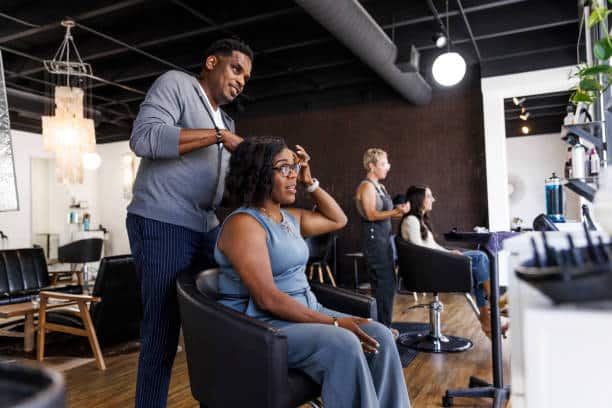
K-Tip extensions—keratin-tipped strands fused strand by strand to your natural hair—have surged in popularity thanks to their seamless blend and long-lasting volume. But do they actually protect Black hair, or might they contribute to damage? Let’s unpack the facts, pros, and cons, and hear from real users to help you decide.
What Are K-Tip Extensions?
Unlike clip-ins or weaves, K-Tips are fusion extensions: strands with keratin bonds at the tip are heated and fused to your hair one by one. Stylists use a small heat tool to melt the keratin, then wrap and seal it around your natural strand—creating small, virtually invisible bonds close to the scalp.
According to InStyle, they’re especially popular for fine to medium hair types, lasting three to six months with proper care. The tiny keratin tips also allow stylists to customize placement for natural-looking volume and versatile styling.
Featured on BlackDoctor
Pros commonly cited include their seamless appearance and durability, but they aren’t without drawbacks.
The Benefits That Spark the “Protective” Claim
Seamless Natural Movement
K-Tips are praised for blending perfectly with textured and styled hair. Stylists can space them individually, making them nearly invisible.
Long-Lasting Style
With proper upkeep, K-Tips can hold for months, reducing frequent manipulation and offering consistent coverage over time.
Styling Versatility
You can style your hair up, down, and in virtually any way without the pitfalls of visible wefts or bulky closures.
Low Daily Maintenance
Once installed, care is similar to natural hair—regular, gentle brushing, avoiding buildup, and keeping bonds clean and dry.
But Here’s Why They Might Not Be Protective
Despite these perks, K-Tips can cause significant strain and damage, particularly if misused:
Heat-Installed Bonds ≠ Gentle
Bonding requires high heat (often around 400°F), which can weaken your natural hair strand even before weight is added.
Weight Stress & Tension
Each keratin tip adds mass. Over time, the cumulative weight—even of fine 4C hair—can lead to traction alopecia or thinning along stress points near the roots.
Removal requires bond-dissolving solvent and expert precision. Improper removal—ripping, pulling, or inadequate bond removal—can strip strands and cause breakage.
Unsupervised Use = Follicular Stress
Reddit users share poignant stories. One woman experienced 60 percent density loss after four months of K-Tips, even with “perfect care.” Her stylist noted minimal matting, yet the damage was real. Another fine-haired user had continual tangling and stresses that “hair was wrapping around the extensions,” leading to thinning.
These testimonies underscore that fine to medium hair is particularly vulnerable.
Adopt a gentle maintenance routine: soft-bristle brushes, anti-sulfate shampoos, and cautious pre-bond care.
Keep consistent salon check-ins every eight to 12 weeks to rebalance weight and assess stress points.
A few users have even said their K-Tips worked well alongside alopecia treatments when carefully managed with a trusted stylist.
K-Tips vs Other Protective Styles
Let’s break down how K-Tips compare to other common protective hairstyles, especially for Black hair textures:
K-Tip Extensions (Keratin-Tip Extensions)
Installation: Individual strands bonded to natural hair using heat-activated keratin.
Pros:
Natural-looking and nearly invisible bonds.
Long-lasting wear (up to 4–6 months).
Full styling versatility—wear your hair up, down, or out.
Cons:
Requires heat to install, which can damage fragile strands.
Can cause tension or traction if bonds are too heavy.
Difficult and potentially damaging to remove without a professional.
High cost and long salon appointments.
Best For: Medium-density hair with strong strands and consistent salon care.
Tape-In Extensions
Installation: Small wefts taped between sections of your natural hair.
Pros:
Faster and easier installation than K-Tips.
Lightweight and fairly discreet.
No heat or glue required.
Cons:
Weaker bond, especially in humid or oily hair conditions.
Requires reapplication every 4–8 weeks.
Less ideal for thick, textured hair (can slip).
Best For: Short-term volume on fine to medium hair textures.
Clip-In Extensions
Installation: Temporarily clipped into your hair for instant length or fullness.
Pros:
Fully non-permanent and easy to install or remove at home.
Budget-friendly.
Great for occasional style changes.
Cons:
Can be bulky or visible on coarse or kinky textures.
Daily removal needed—can snag hair if rushed.
Not protective long term.
Best For: Short-term looks, events, or beginner-friendly glam.
Sew-Ins (Weaves)
Installation: Hair is cornrowed and extensions are sewn onto braids using a curved needle and thread.
Pros:
Full scalp protection with proper braiding.
Long-lasting (6–8 weeks).
Great for dramatic style shifts or growing out your hair.
Cons:
Can be heavy and cause tension on edges if too tight.
Poor braiding or install can lead to scalp sores or mildew.
Limited scalp access for moisture and cleaning.
Best For: Medium to thick hair textures; users who want a full protective barrier with minimal manipulation.
I-Tips (Micro-Link Extensions)
Installation: Strands of hair are attached using a small bead or ring—no heat or glue.
Pros:
Reusable hair—can be adjusted and reinstalled.
No heat required.
Easy to style and reposition.
Cons:
Beads can slip on very coily or silky textures.
Still requires regular salon visits for tightening and upkeep.
Not ideal for tender or thinning scalps.
Best For: Clients who want long wear and flexibility without glue or heat.
What Black Hair Experts Say
Leading stylists (e.g., from BellaMi) highlight that properly installed K-Tips have a silicone additive in keratin bonds designed to shield natural strands, if done correctly.
InStyle’s senior stylists liken K-Tips to a permanent solution, durable for an average of four plus months—and emphasize their suitability for fine to medium textures, not heavier types.
Best Practices If You Try K-Tips
Consult Fearlessly: Get a thorough consultation—discuss your texture, past hair trauma, scalp health, and care routine.
Choose Bond Size Wisely: Fine hair requires smaller bonds to reduce strain.
Schedule Regular Check-ins: Salon visits every 8–12 weeks mean adjustments can prevent damage before it starts.
Keep It Clean and Cool: Use gentle, sulfate-free cleansers. Brush daily with extension-safe tools to avoid matting.
Plan Safe Removal: Don’t DIY it—use a stylist familiar with dissolving keratin bonds to avoid tugging or breakage.
Properly installed and maintained on healthy, medium-density hair—yes, they can be protective by reducing daily manipulation and providing styling flexibility.
If installed poorly, left without maintenance, or used on fine/scarred hair—no, they risk heat damage, tension-related shedding, and even long-term thinning.
Like any protective style, success lies in mindful use: consult expert stylists, tailor it to your hair type, and care for it diligently.
K-Tips can function as a protective hairstyle for Black women, but only with intelligent application, consistent maintenance, and honest evaluation. Without these, even the most seamless extensions risk causing the very damage we aim to avoid. Whether you’re seeking extra length, volume, correction, or transformation, choose mindful care—and remember, your natural hair deserves the same attention as your extensions.
BlackDoctor is the world’s largest and most comprehensive online health resource specifically for the Black community. BlackDoctor understands that the uniqueness of Black culture - our heritage and our traditions - plays a role in our health. BlackDoctor gives you access to innovative new approaches to the health information you need in everyday language so you can break through the disparities, gain control and live your life to its fullest.
✦ AI Search Disclaimer This AI-powered search tool helps you find relevant health articles from the BlackDoctor.org archive. Please keep the following in mind:
✦ For Informational Purposes Only The information provided through this AI search is for general educational and informational purposes only. It is not intended as a substitute for professional medical advice, diagnosis, or treatment.
✦ Always Consult a Healthcare Provider Never disregard professional medical advice or delay seeking it because of something you have read through this search tool. If you have a medical emergency, call your doctor or 911 immediately.
✦ AI Limitations This search tool uses artificial intelligence to help match your queries with articles in our archive. While we strive for accuracy, AI-generated results may occasionally be incomplete, outdated, or not fully relevant to your specific situation.
✦ No Doctor-Patient Relationship Using this search tool does not create a doctor-patient relationship between you and BlackDoctor.org or any healthcare provider.
Explore over 35,000 articles and videos across black health, wellness, lifestyle and culture