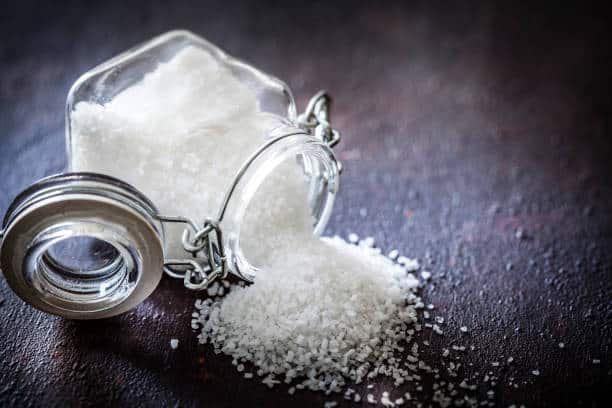
About 90 percent of Americans eat more sodium than is recommended for a healthy diet.
Why is this a problem?
Too much sodium increases a person’s risk for high blood pressure. High blood pressure often leads to heart disease and stroke. More than 800,000 people die each year from heart disease, stroke, and other vascular diseases, costing the nation $273 billion in health care dollars in 2010.
Note: The words salt and sodium are sometimes used interchangeably because most of the sodium we eat is in the form of salt (sodium chloride). Some salts don’t contain sodium.
Featured on BlackDoctor
Where does all this sodium come from?
Most of the sodium we eat comes from processed foods and restaurant meals. Sodium is already part of processed foods and cannot be removed.
However, manufacturers and restaurants can produce foods with less sodium. In addition, you can select lower-sodium foods when possible, and you can cook more foods yourself to better control how much sodium you eat.
Types of foods matter: More than 40 percent of sodium comes from the following 10 types of foods:
Breads and rolls
Cold cuts and cured meats such as deli or packaged ham, or turkey
Pizza
Fresh and processed poultry
Soups
Sandwiches such as cheeseburgers
Cheese
Pasta dishes
Mixed meat dishes such as meatloaf with tomato sauce
Snacks such as chips, pretzels, and popcorn.
Sources of foods matter:About 65 percent of the sodium we eat comes from food bought at retail stores, so look for lower-sodium choices. About 25 percent comes from restaurants, and it can be hard to tell how much sodium is in restaurant foods.
Food brands matter:Different brands of the same foods may have different sodium levels. For example, sodium in chicken noodle soup can vary by as much as 840 milligrams (mg) per serving.
Americans eat about 3,300 mg of sodium a day on average. The U.S. Dietary Guidelines recommend limiting sodium to less than 2,300 mg a day, and about six in 10 adults should further limit sodium to 1,500 mg a day.
Foods that otherwise seem healthy may still have high sodium levels (e.g., cottage cheese and turkey breast luncheon meat).
Sodium is already part of processed foods and cannot be removed.
Sodium is included in surprising ways. For example, much of the raw chicken and pork bought from a store has been injected with a sodium solution.
Too many restaurant foods are high in sodium.
Some foods that you eat several times a day, such as bread, add up to a lot of sodium even though each serving is not high in sodium.
People who should limit their sodium to 1,500 mg a day are:
People who are 51 years or older
Black Americans
People with high blood pressure
People with diabetes
People with chronic kidney disease
What Can Be Done
Everyone can:
Choose healthy options and talk with your grocer or favorite restaurant about stocking lower-sodium choices.
Read the Nutrition Facts label while shopping to find the lowest sodium options of your favorite foods.
Eat a diet rich in fresh fruits and vegetables and frozen fruits and vegetables without sauce.
Limit processed foods high in sodium.
When eating out, ask for lower-sodium options.
Support initiatives that reduce sodium in cafeteria and vending machine foods.
Places that produce, sell, or serve food can:
Consider joining voluntary initiatives to reduce sodium such as the National Salt Reduction Initiative
Give choices to consumers to help them reduce sodium in their diet by:
Stock lower sodium foods.
Ask food manufacturers to provide lower sodium foods.
Make phased reductions in the amount of sodium they add to foods they sell or serve.
Limit sodium in food products.
Provide information about sodium in foods.
The federal government is:
Encouraging agencies and departments to adopt HHS/GSA or similar procurement guidelines that define how much sodium can be in products sold or served in their facilities.
Improving data collection on sodium, including how much sodium people consume and their knowledge, behaviors, and health outcomes.
State and local health departments can:
Increase public awareness about the amount of sodium added to processed and packaged foods.
Increase public awareness of the health outcomes of a high-sodium diet.
Help reduce sodium in people’s diets.
Encourage reductions in the amount of sodium in foods purchased in cafeterias and vending machines.
Check the Nutrition Facts label, which lists sodium content per serving. For help reading labels, click here.
BlackDoctor is the world’s largest and most comprehensive online health resource specifically for the Black community. BlackDoctor understands that the uniqueness of Black culture - our heritage and our traditions - plays a role in our health. BlackDoctor gives you access to innovative new approaches to the health information you need in everyday language so you can break through the disparities, gain control and live your life to its fullest.
✦ AI Search Disclaimer This AI-powered search tool helps you find relevant health articles from the BlackDoctor.org archive. Please keep the following in mind:
✦ For Informational Purposes Only The information provided through this AI search is for general educational and informational purposes only. It is not intended as a substitute for professional medical advice, diagnosis, or treatment.
✦ Always Consult a Healthcare Provider Never disregard professional medical advice or delay seeking it because of something you have read through this search tool. If you have a medical emergency, call your doctor or 911 immediately.
✦ AI Limitations This search tool uses artificial intelligence to help match your queries with articles in our archive. While we strive for accuracy, AI-generated results may occasionally be incomplete, outdated, or not fully relevant to your specific situation.
✦ No Doctor-Patient Relationship Using this search tool does not create a doctor-patient relationship between you and BlackDoctor.org or any healthcare provider.
Explore over 35,000 articles and videos across black health, wellness, lifestyle and culture