You fall asleep just fine. Then, at 2 a.m., you’re staring at the ceiling. Maybe your stomach is growling. Maybe dinner is still sitting heavy. Or maybe you’re making another trip to the bathroom after drinking a big mug of tea right before bed. The best thing to eat before bed depends in part on what’s waking you up.
If hunger is keeping you awake, a small snack can help you get comfortable. If you’re waking up with heartburn, moving dinner earlier may do more for your sleep than adding another bite. And while foods like kiwi and tart cherries have been studied for sleep, the evidence is still limited. The National Heart, Lung, and Blood Institute recommends avoiding large meals within a few hours of bedtime and says a light snack is fine.
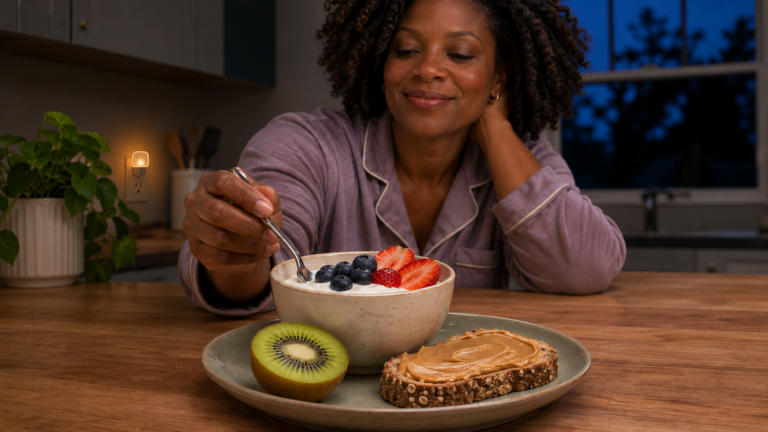
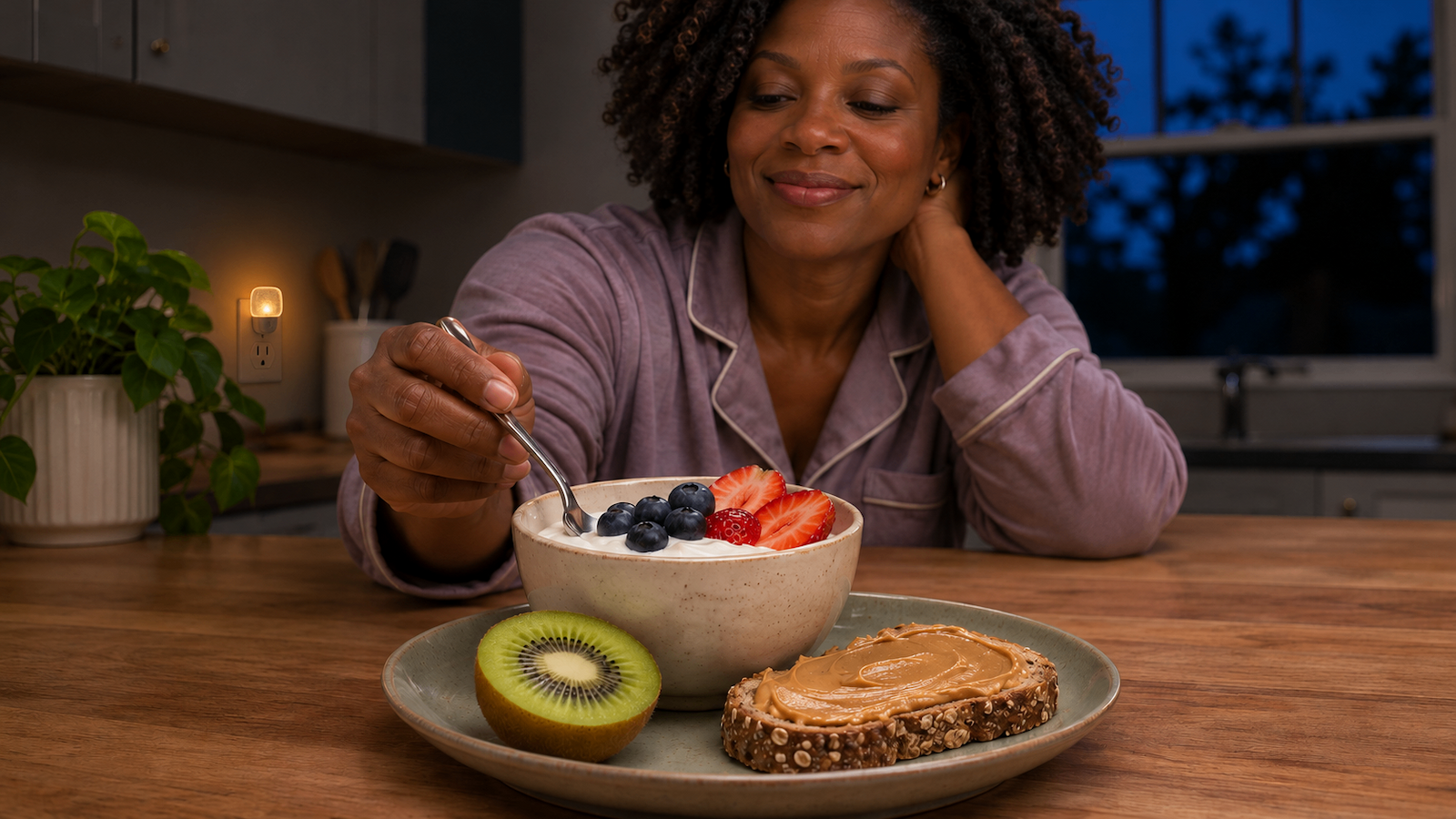
If dinner was hours ago and you’re genuinely hungry, a small bowl of plain Greek yogurt with berries is an easy place to start. The yogurt provides protein, while the berries add sweetness and a little fiber. Try about half a cup of yogurt with a few spoonfuls of blueberries or sliced strawberries. Frozen berries work, too. Thaw a small portion and stir in the juice for extra flavor.
If dairy gives you gas or bloating, try lactose-free yogurt or an unsweetened soy yogurt. Pay attention to how you feel when you lie down. A snack that agrees with your stomach is a better fit for bedtime than one you eat because it’s popular online.
Half a banana with a spoonful of peanut butter is a practical option if you want something sweet and have no interest in cooking. The banana provides carbohydrates, and the peanut butter adds some fat and protein. If you have a peanut allergy, use a spread you know you tolerate, such as sunflower seed butter.
Bananas often show up on sleep-food lists because they contain magnesium and potassium. The more practical reason to choose this snack is that it can take the edge off hunger without requiring a large portion. If richer foods tend to give you heartburn, use a thin spread or try the banana on its own. High-fat foods are a common reflux trigger for some people.
Oatmeal makes sense at night if you want something warm and a piece of fruit feels too light. Start with about half a cup of cooked oats and add cinnamon, a few banana slices, or a splash of milk. If you’re using instant oatmeal, plain packets let you control how sweet you make it.
Oats provide fiber, and there’s some research linking overall fiber intake with sleep quality. In one small laboratory study, people who ate more fiber spent more time in deep sleep. The study looked at what participants ate across the day, so it can’t tell us whether a bowl of oatmeal at bedtime changes how often you wake up. Think of oats as a satisfying snack and a way to get more whole grains into your day.
Kiwi has some preliminary research behind it. In a small study, 24 adults with sleep problems ate two kiwifruits one hour before bed for four weeks. By the end of the study, participants fell asleep faster and spent less time awake after initially falling asleep. The study had no separate comparison group, so it’s unclear how much of the improvement came from the fruit itself.
If you already like kiwi, try slicing one for an evening snack or stirring it into plain yogurt. You can start with the portion that feels comfortable. The two kiwis in the study describe what researchers tested, and the research hasn’t established an ideal serving for sleep.
If you’d rather have something savory, try one slice of whole-grain toast with a hard-boiled egg. It’s a simple combination of carbohydrates and protein, and it’s easy to put together after a late shift if you boil the eggs ahead of time.
This option can be especially useful if your evening meal was light and you’re hungry enough that fruit alone sounds unsatisfying. If you’re regularly so hungry at bedtime that a small snack barely makes a dent, look at what you’re eating earlier in the day. A more substantial dinner, eaten earlier when your schedule allows, may make the evening easier.
Tart cherry juice has been studied for the kind of sleep trouble that happens after you’ve already drifted off. In a small pilot study of older adults with insomnia, a tart cherry beverage produced a modest improvement in time spent awake after falling asleep compared with a placebo. The trial was small, and its findings don’t establish that a glass right before bed will help most people sleep through the night.
If you want to try it, look for unsweetened tart cherry juice and have a small serving earlier in the evening. If bathroom trips are already interrupting your sleep, an extra drink just before bed could work against you. And if acidic drinks tend to trigger your heartburn, a snack like oatmeal may be a more comfortable choice.
If you’re hungry near bedtime, start with a small snack. One serving is enough to see whether hunger was the issue. If you feel comfortably full after dinner, you can skip the snack. The CDC’s National Institute for Occupational Safety and Health specifically suggests a small snack before bed when hunger is likely to wake you.
If you wake up with heartburn or a sour taste, try moving dinner earlier. The National Institute of Diabetes and Digestive and Kidney Diseases says that people with nighttime reflux symptoms may benefit from eating meals at least three hours before lying down. Pay attention to your own triggers. Fried foods, spicy meals, chocolate, mint, and acidic foods are common ones.
If you fall asleep quickly but wake up later, consider what you drank. Alcohol can make you feel sleepy at first and increase the likelihood that you’ll wake up during the night. Caffeine is worth checking even if you usually fall asleep easily. Its effects can last up to eight hours, so a late-afternoon coffee, energy drink, or caffeinated tea can still matter at bedtime. If you’re waking up to urinate, try moving large drinks earlier in the evening.
Change one thing for several nights so you can see how you respond. If you usually go to bed hungry, try half a banana with peanut butter or a small bowl of yogurt. If you usually eat dinner and lie down soon afterward, try moving dinner earlier first. Jot down what you ate and when, whether you woke up, how long you stayed awake, and how rested you felt in the morning. Look for a pattern across several nights. A sleep diary can also give a healthcare professional more information if the problem persists.
If you frequently wake up and struggle to fall back asleep, or you feel exhausted during the day despite giving yourself enough time to sleep, bring it up with a healthcare professional. Loud snoring, gasping for air, or breathing pauses someone else notices can point to sleep apnea. For ongoing insomnia, cognitive behavioral therapy for insomnia, or CBT-I, is generally the first treatment recommended.


By subscribing, you consent to receive emails from BlackDoctor.com. You may unsubscribe at any time. Privacy Policy & Terms of Service.