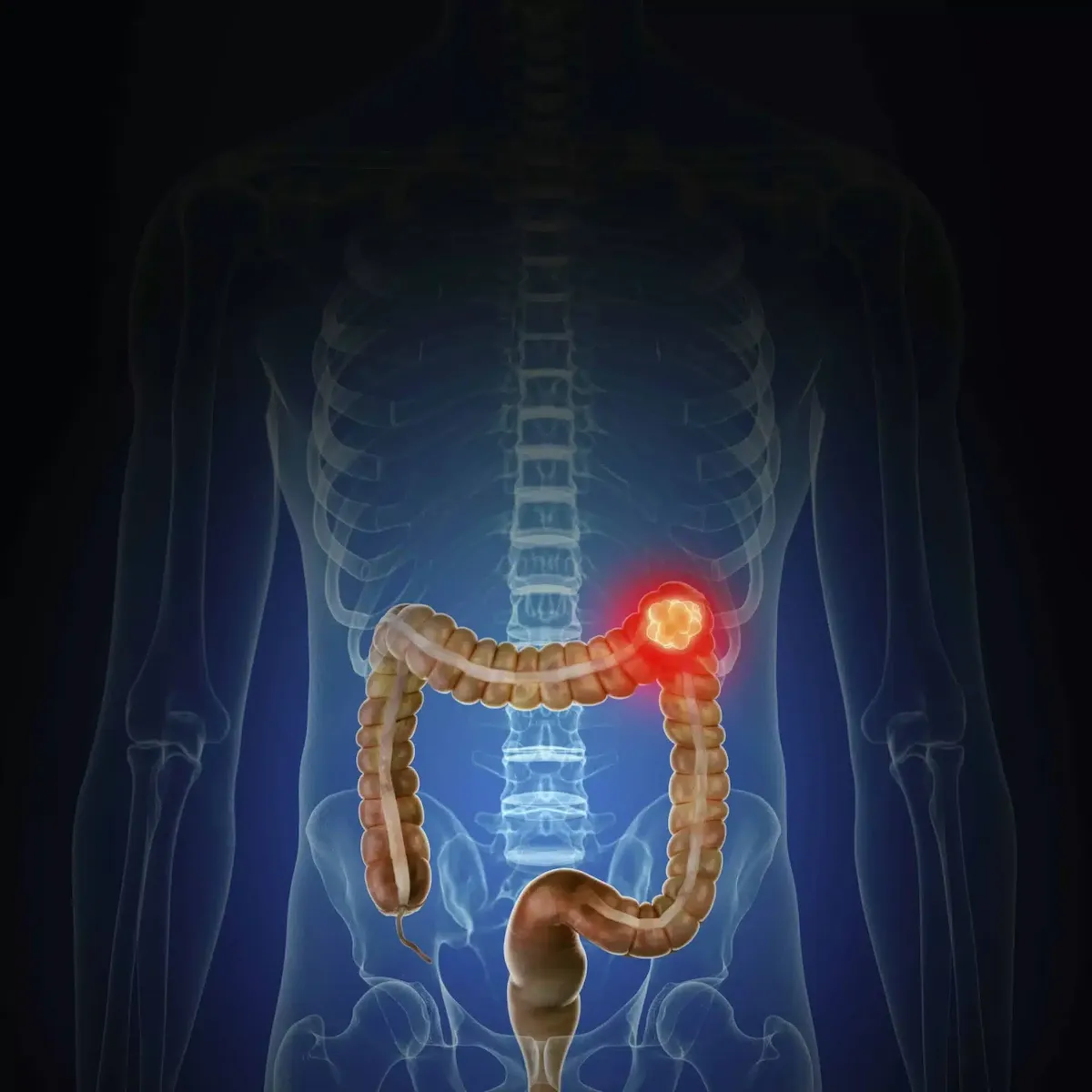
Colon cancer seems to be hitting the Black community hard. Over the past few years, colon cancer rates have steadily gone up in men and in young people. They symptoms of colon cancer can be easily confused with other, less serious conditions, making early detection challenging. Symptoms like abdominal discomfort, changes in bowel habits, and rectal bleeding can be attributed to less severe issues like irritable bowel syndrome, hemorrhoids, or infections. This overlap can lead to delays in diagnosis and treatment.
Do you have consistent pain in your abdominal area? Does your stomach pain feel a little off: less like gas and more like something internally is wrong? While colon cancer can cause abdominal discomfort, it can also be a symptom of many other gastrointestinal issues.
Many patients describe their pain symptom as an intermittent crampy feeling in their abdomen.
But it’s important to note that many patients say that they don’t have any pain at all. Instead, they might report an odd sensation of fullness in their abdomen
Diarrhea or constipation lasting more than a few days, or a feeling of incomplete bowel emptying, could indicate colon cancer, but these can also be signs of other conditions like IBS.
“Narrowing of the Stool” is another change that happens. Stools that are thinner than usual, sometimes described as pencil-thin, can indicate a narrowing or blockage in the colon.
After a bowel movement, do you still feel full or have an incomplete emptying feeling? Even after a bowel movement, you might feel like you still need to go, which can be a symptom of colon cancer.
Blood in the stool can also show up in a variety of ways, and what the blood looks like can give clues to what’s going on in your body.
An adult’s digestive system, including the esophagus, stomach and intestines, can be as long as 30 feet, and the blood in your stool can come from any part along it. A good description of the look and amount of blood can help your doctor identify the problem.
“Bright red blood might be something low in the colon or rectum like diverticular bleeding or hemorrhoids; darker blood may be from higher up in the colon,” says gastroenterologist David Richards, M.D. “If the blood is more black or tar-like, that might signal an issue in the small intestine or stomach.”
If you only have blood on the tissue when you wipe but not in your stool, this is more likely to be hemorrhoids or anal fissures, which should be confirmed by your doctor.
Even though many problems can cause blood in your stool, there is only one way to check it out properly — a rectal exam and colonoscopy.
“The investigative part is straightforward: we take a look inside and out,” says Richards. “With data telling us that more younger people are getting colorectal cancer, most doctors will say, ‘Let’s just do a colonoscopy.’ I know people don’t want to hear that, but my priority is to make sure I don’t miss anything.”
A colonoscopy is an exam of the whole large intestine (colon) and rectum, which is done while you are sedated. It requires preparation, which includes drinking a laxative solution to clean out your colon.
It can be easy to confuse fatigue with simply being tired. Between work and personal obligations, everyone can feel run down at times. If the exhaustion does not go away with rest, it could be fatigue. In addition to colorectal cancer, fatigue and weakness could also be symptoms of diabetes, anemia and heart disease.
Similar to unexplained weight loss, cancer cells can cause fatigue as they use up the body’s energy. Sometimes colon cancer can cause fatigue due to internal blood loss from the disease. In many cases, the symptoms of colon cancer are connected. Other colon cancer symptoms, such as unintentional weight loss and a change in bowel habits, can increase the feeling of weakness.
Fatigue is typically a symptom of an underlying condition. Fatigue is a constant state of weakness and exhaustion with no apparent cause. If you feel what could be fatigue, it’s important to visit your doctor to determine the cause.

While this can be a sign of colon cancer, it can also be caused by other factors.
How Colon Cancer Can Cause Weight Loss:
Early detection is crucial: Colon cancer is often treatable when found early.
According to the American Cancer Society, polyps can take 10 to 15 years to become cancerous. This slow growth and lack of symptoms illustrate why colorectal cancer can develop silently.
Finding issues early can increase survival chances. Screenings are important for catching problems early and improving outcomes.
Tell your physician about any irregularities to catch cancer early and have access to more treatment options if needed. Preventive care is key.
Two main cancer screening approaches detect colorectal cancer: stool-based tests and visual exams. Stool tests, which is a less invasive option, analyze stool samples for polyps that are cancerous and can be done at home instead of in the hospital or doctor’s office.
Visual exams allow physicians to directly view the colon’s interior, typically through colonoscopies. The American Cancer Society recently lowered the recommended starting age for screenings to 45 due to rising cancer rates in younger adults.
Colonoscopies use a flexible tube with a tiny camera at the tip. During the procedure, the physician inserts the tube through the rectum to examine the entire colon’s lining for polyps. The test itself takes about 15 minutes.
Sigmoidoscopies, another visual exam option, only examine a smaller portion of the colon and are not as widely used as colonoscopies. Another visual exam is a CT colonoscopy, which takes a CT scan of the colon and rectum to identify any abnormalities.
If screenings detect cancer, your physician’s next pivotal task is to identify the stage of the disease. The stage, a critical component in guiding treatment decisions, encompasses a range from stage 0 to stage IV, denoting the extent to which the cancer has spread within the body.
This identification is the foundation that allows the physician to create a targeted and personalized treatment plan that is right for you and your cancer diagnosis. While people have been diagnosed with the same cancer, each malignancy and tumor are distinct, requiring a customized treatment approach.


By subscribing, you consent to receive emails from BlackDoctor.com. You may unsubscribe at any time. Privacy Policy & Terms of Service.