For years, many women were told that exercise meant cardio. Walk longer. Run faster. Get on the treadmill. Burn more calories. For some Black women, especially those over 40, that message is changing. The conversation shifts from exercising to make the body smaller to building a body that feels strong and capable.
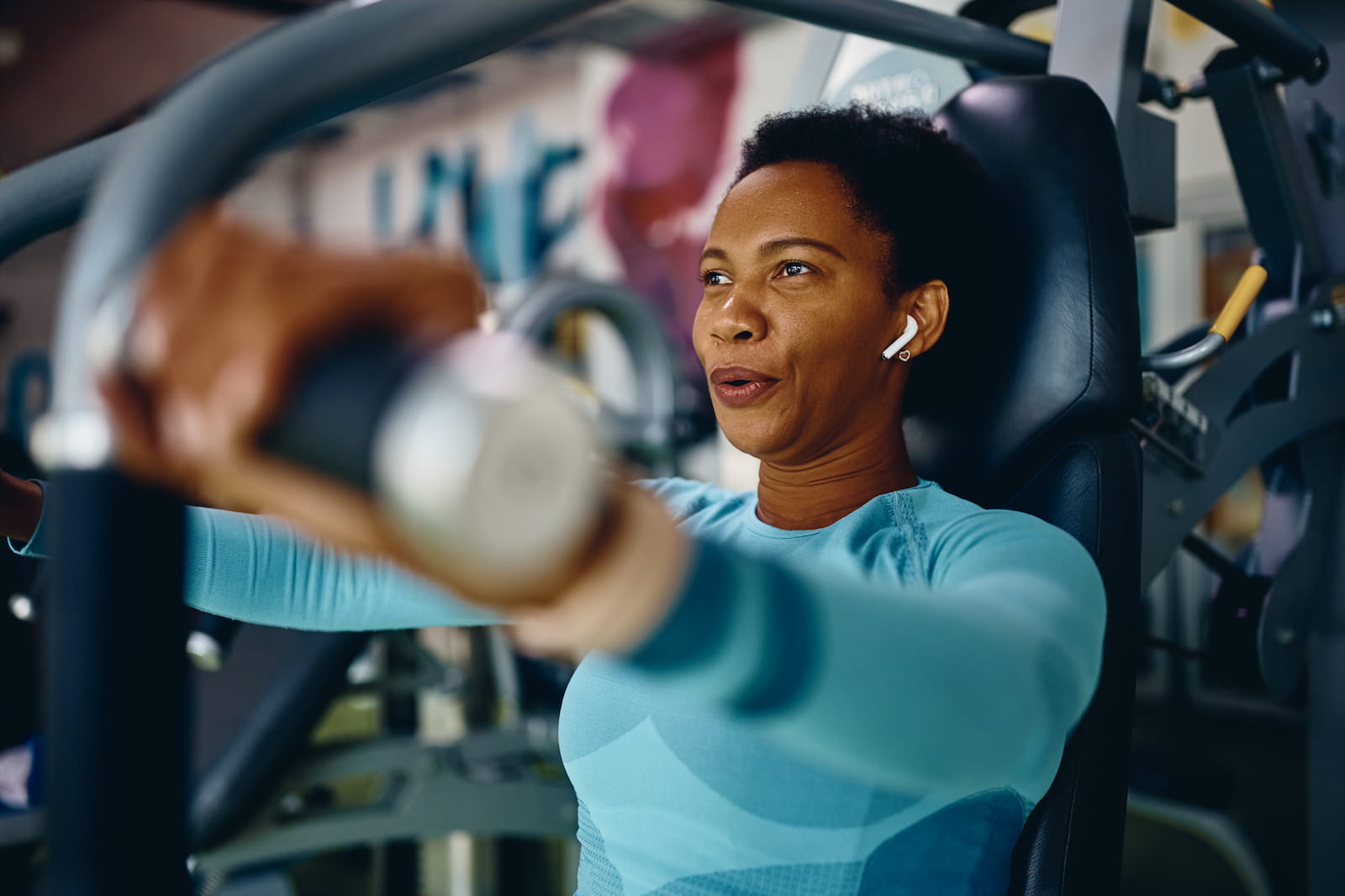
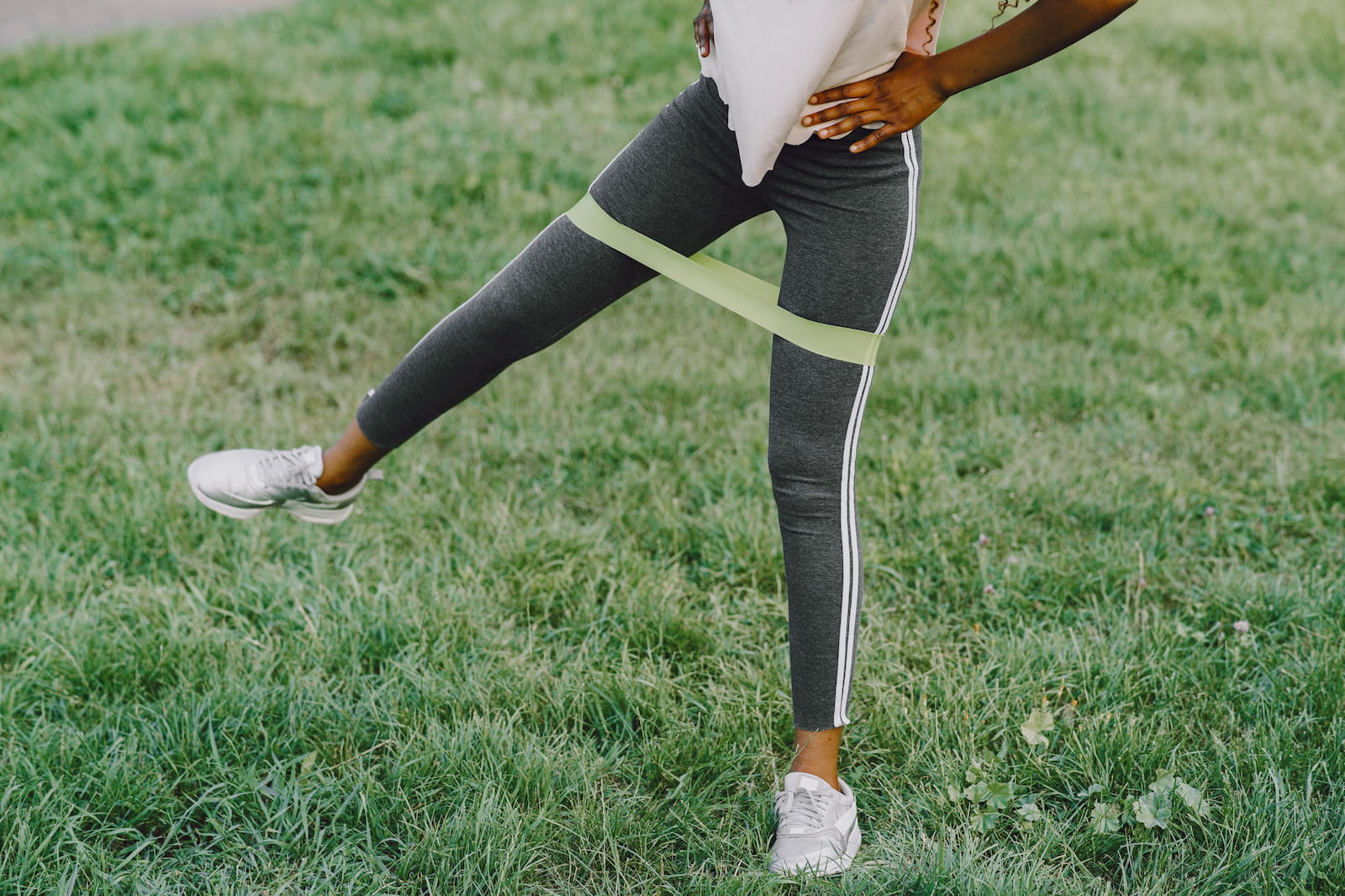
Strength training can make everyday life easier. Think about carrying groceries into the house, lifting a suitcase into an overhead bin, walking upstairs, getting off the floor, helping an older parent, or keeping up with children and grandchildren. The National Institute on Aging explains that muscle-strengthening exercise can make activities like climbing stairs and carrying groceries easier while helping people maintain their independence as they age. And you don’t have to become a bodybuilder to get those benefits. Strength training can include dumbbells, resistance bands, gym machines, body-weight exercises, or even household items. The goal is to challenge your muscles safely.
Before throwing away your walking shoes, there’s one important point to clear up: strength training shouldn’t completely replace cardio. Both matter.
Current Physical Activity Guidelines for Americans recommend that adults get 150 to 300 minutes of moderate-intensity aerobic activity each week, along with muscle-strengthening exercise at least two days a week. That could mean walking several days a week and strength training twice a week. You don’t have to choose one or the other. What’s changing is the idea that cardio needs to be the main event while strength training is optional. For women entering their 40s, 50s, and beyond, building and maintaining muscle deserves a place in the routine too.
You don’t have to train for a competition to benefit from stronger muscles. Strength shows up in ordinary life: carrying several grocery bags from the car without struggling, picking up a child, moving a heavy laundry basket, climbing stairs without feeling as tired, carrying your suitcase through an airport, getting up from a chair or the floor more easily, and helping care for a loved one without putting as much strain on your own body.
The National Institute on Aging notes that physical activity helps people perform everyday tasks and maintain independence as they get older. That gives exercise a different purpose. Instead of asking, “How many calories did I burn?” you can also ask, “What am I helping my body do better?” That shift can make exercise feel less like punishment and more like an investment in your future.
RELATED: Yes, Women Lift! The Importance Of Resistance Training After 35
Our bodies naturally change with age, and muscle is part of that change. The National Institute on Aging explains that muscle mass and strength tend to decline with age. Staying active and doing resistance exercises can help slow some of that loss and support mobility and independence.
Menopause adds another reason for women to think about strength. Hormonal changes during and after menopause are connected with changes in muscle and bone health. Research on resistance training in postmenopausal women has found improvements in strength and physical function, although researchers are still studying exactly how different exercise programs affect bone density. That means strength training isn’t simply getting toned arms. It’s about protecting the strength you’ll need later.
RELATED: Strength Training May Protect Memory As We Age
Walking into a weight room can feel intimidating when you’ve never lifted before. Maybe you don’t know what the machines do. Maybe everyone else seems more experienced. Or perhaps the image you have of strength training involves someone lifting a huge barbell. Start smaller.
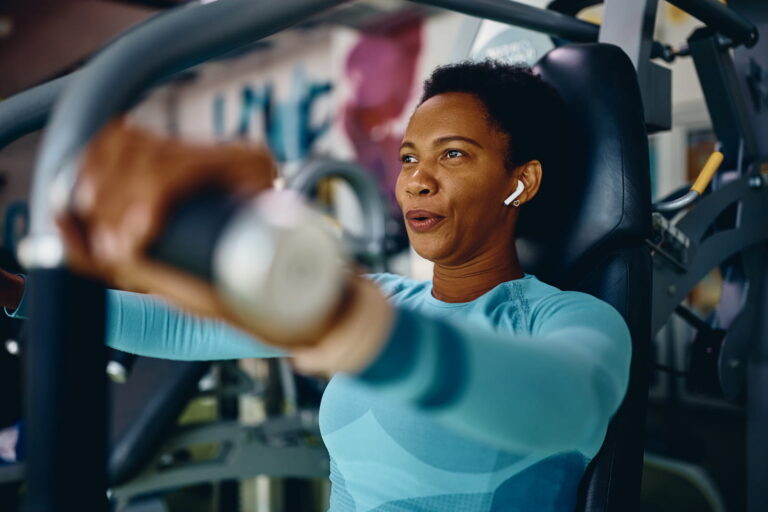
Strength training can include:
The National Institute on Aging lists free weights, machines, resistance bands, medicine balls, and body-weight movements as forms of resistance exercise. If you’ve been inactive, you don’t have to jump immediately into a hard workout. Federal physical activity guidance recommends gradually increasing muscle-strengthening activity over time. Someone new to exercise may begin with lighter effort and build from there. The first goal isn’t to lift as much as possible. It’s to learn the movements and build confidence.
If the workout you did at 30 feels different at 45 or 50, listen to your body. Menopause can come with changes in sleep, energy, body composition, muscle strength, and recovery. That doesn’t mean you should stop exercising. It may mean your routine needs to change.
Research suggests resistance training can improve strength and physical function in postmenopausal women, but exercise should still be adjusted for someone’s current fitness level and health history. That may mean adding more recovery time, starting with lighter resistance, shortening a workout, or slowly increasing the challenge.
Rest is part of training too. The National Institute on Aging recommends avoiding training the same muscle groups on back-to-back days to allow them time to recover. More isn’t automatically better. Consistency matters more than exhausting yourself every time you exercise.
Knee pain, arthritis, a past injury, or years of inactivity can make strength training feel risky. But having joint concerns doesn’t always mean you need to avoid resistance exercise.
The Arthritis Foundation explains that people with arthritis can use machines, free weights, resistance bands, and body-weight exercises. Proper form and choosing the right amount of resistance are important. You may need modifications. A deep squat might become a sit-to-stand from a chair. You might do a floor exercise standing against a wall. A heavy dumbbell might become a light resistance band.
If you have arthritis, osteoporosis, a previous injury, balance problems, heart disease, or another medical concern, talk with your healthcare provider or physical therapist about what is safe for you. You aren’t “cheating” by modifying an exercise; you’re making the exercise work for your body.
For Black women, saying “just work out” can ignore something very real: hair takes time and money. Sweating can affect silk presses, relaxed styles, braids, natural styles, wigs, and other hairstyles in different ways. And wash day may take considerably longer than the shower that follows someone else’s workout.
This isn’t an imaginary barrier. Research involving Black American women has found that hair maintenance, sweat, the cost of restyling, and the time required to redo hair can affect decisions about physical activity. One study found that nearly 40 percent of the Black women surveyed sometimes avoided exercise because of hair concerns.
Instead of pretending hair doesn’t matter, plan for it. Maybe you schedule harder workouts before wash day. Perhaps braids, locs, twists, or another lower-maintenance style work better during certain weeks. You might use a sweat-friendly headband or give yourself enough time for scalp and hair care after exercise.
There isn’t one “exercise hairstyle” that works for every Black woman. Research has found that women use different strategies depending on their hair and preferences. Your fitness routine should fit into your real life—including your hair routine.
Walking into a gym where you don’t see many women who look like you can feel uncomfortable. You may worry that you’re using equipment incorrectly. You might feel watched in the weight room, or simply that the space wasn’t designed with you in mind. Start where you feel comfortable. That might mean taking a strength class with other women, finding a Black woman trainer, exercising with a friend, using machines before trying free weights, or working out at home.
You can also ask a gym employee to show you how a machine works. That’s part of their job. You deserve to take up space in the weight room without having to already know everything. And if one gym makes you feel unwelcome, that doesn’t mean strength training isn’t for you. It may simply mean you haven’t found your space yet.
Spend five minutes watching fitness videos online, and you’ll probably hear someone talk about protein. Protein helps the body maintain and repair muscle, so it does matter when you’re strength training. But you don’t necessarily need protein shakes, powders, bars, or an extremely high-protein diet.
Your needs can depend on your age, activity level, overall diet, health conditions, and goals. Someone with kidney disease or another medical condition may also need different nutrition advice. Instead of copying the amount of protein an influencer eats, ask your doctor or a registered dietitian what makes sense for you. Food should support your training—not become another set of rules to stress over.
You don’t have to leave every workout drenched in sweat for it to “count.” A 20- or 30-minute strength session can still be useful. So can two strength workouts per week. In fact, federal guidelines recommend muscle-strengthening activity at least twice weekly—not seven days a week. Give your body time to adapt. That means sleep, rest days, hydration, and nutrition deserve attention too. If you’re constantly sore, exhausted, or dreading your next workout, you may be doing too much too soon.
Perhaps the biggest shift in the strength-training conversation is what we’re asking exercise to accomplish. You don’t have to exercise because your arms need to be smaller, and you don’t have to lift weights because you’re trying to fit into an old pair of jeans. You can build muscle because you want to carry your own luggage at 60, have stronger bones, keep climbing stairs, travel, care for children, grandchildren, parents, or yourself, and help your body keep doing the things you enjoy.
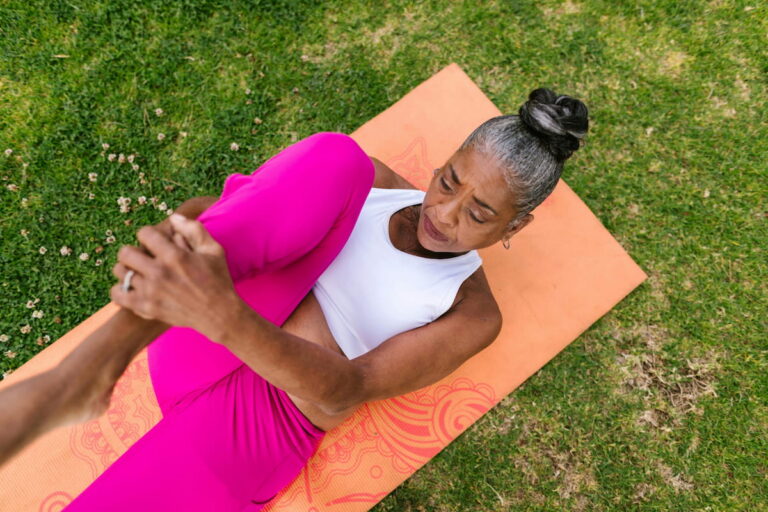
Strength training isn’t a replacement for every other kind of movement. Walking, dancing, swimming, cycling, stretching, and other activities still have important benefits, but strength deserves a place beside them. For Black women over 40, that can mean changing the question from “How can I make my body smaller?” to “How can I help my body stay strong?” That’s a fitness goal worth carrying into every decade.
RELATED: Strength Training To Preserve Your Sexy

By subscribing, you consent to receive emails from BlackDoctor.com. You may unsubscribe at any time. Privacy Policy & Terms of Service.