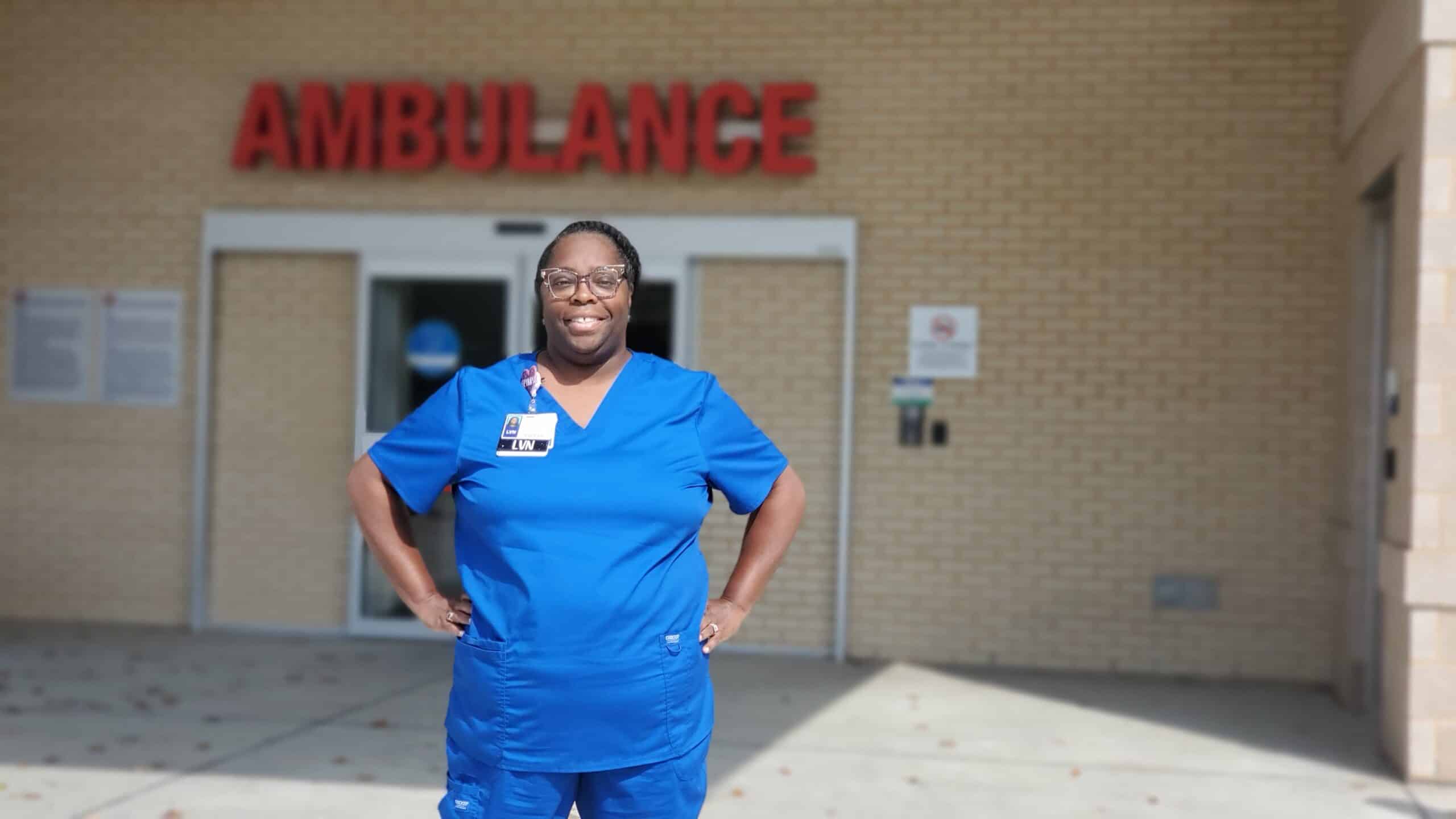
Erica Cash, a Licensed Vocational Nurse (LVN) at Texas Health Rockwall, has a story that epitomizes resilience, faith, and purpose. Her remarkable transition from being a patient to becoming a healthcare provider is a testament to her strength and dedication to serving others.
Returning home from a relaxing cruise on April 30, Cash didn’t expect the life-changing events that would follow. Early the next morning, her husband found her seizing in bed.
“I remember waking up going to the bathroom and praying to God to calm my spirit because I was stressing about how I was going to pay for nursing school and all the things that come with being in school full-time, working, and running a household,” Cash recalls.
Cash’s seizure was followed by an emergency room visit that revealed a shocking diagnosis: a tennis ball-sized meningioma, a type of brain tumor.
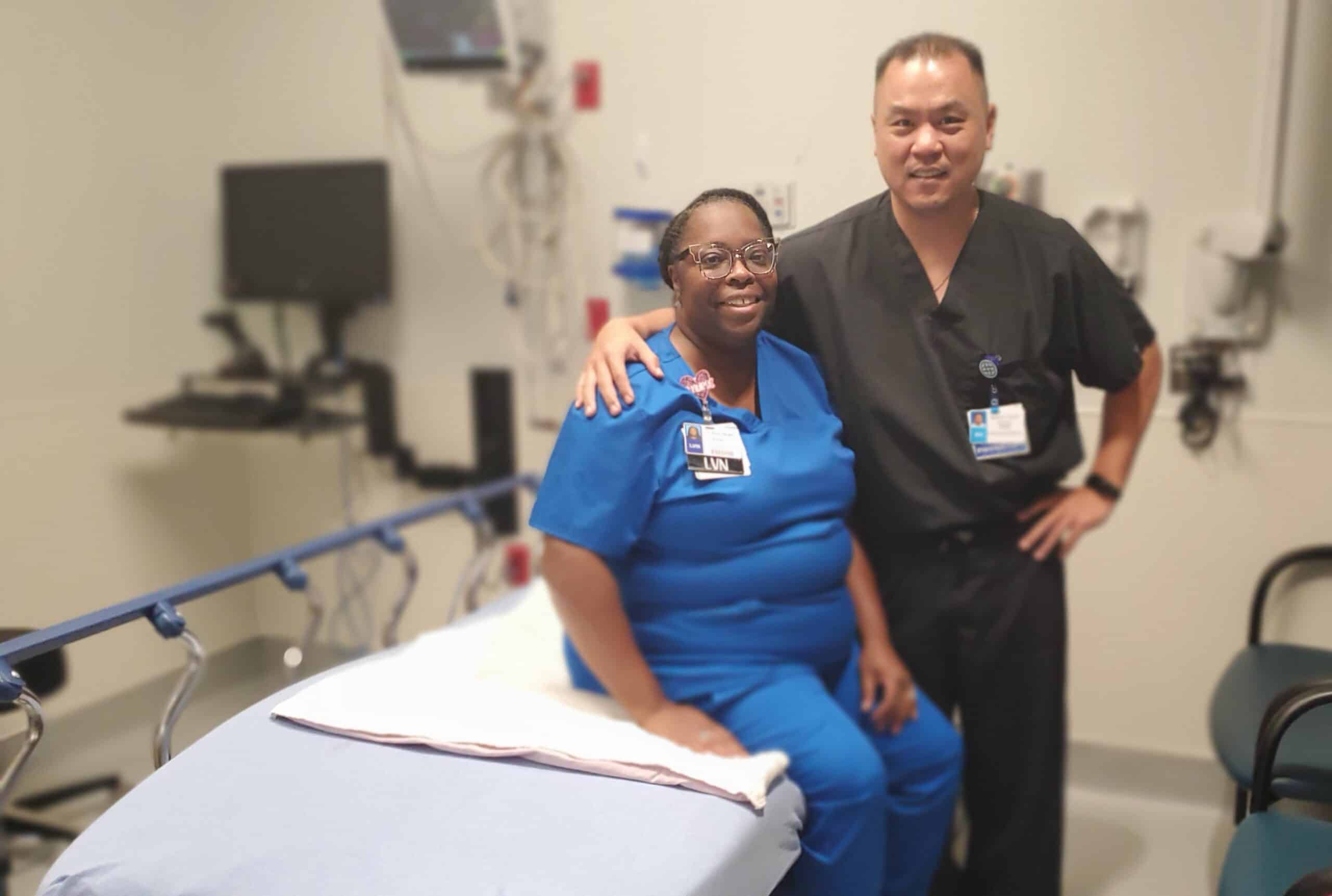
The seizure was a critical sign of the tumor’s impact on her brain, including swelling and pressure, as explained by Yoo Joo Hwang, D.O., an emergency medicine physician at Texas Health Rockwall.
“There are typically no symptoms of a meningioma until it gets too large,” Dr. Hwang says.
Meningiomas are primary central nervous system (CNS) tumors, meaning they begin in the brain or spinal cord. They are most commonly found in older adults, with a median diagnosis age of 65. While many remain asymptomatic, about 20 to 50 percent of people with a meningioma experience seizures, as Cash did.
Each year, approximately 90,000 people in the United States are diagnosed with a primary brain tumor, and over one million people live with such diagnoses. Meningiomas account for a significant percentage of these cases.

Once Cash’s meningioma was identified, immediate measures were taken to stabilize her condition. Doctors worked to control her blood pressure, as she had a bleed, using medication to decrease vasospasm in blood vessels, which also reduced the risk of further bleeding. Anti-seizure medication was introduced to prevent additional seizure activity, and steroids were administered to manage swelling in her brain.
Due to the severity of her case, Cash was transferred to Texas Health Dallas for specialized care.
“With how her meningioma presented, it was likely she needed intervention,” Dr. Hwang adds.
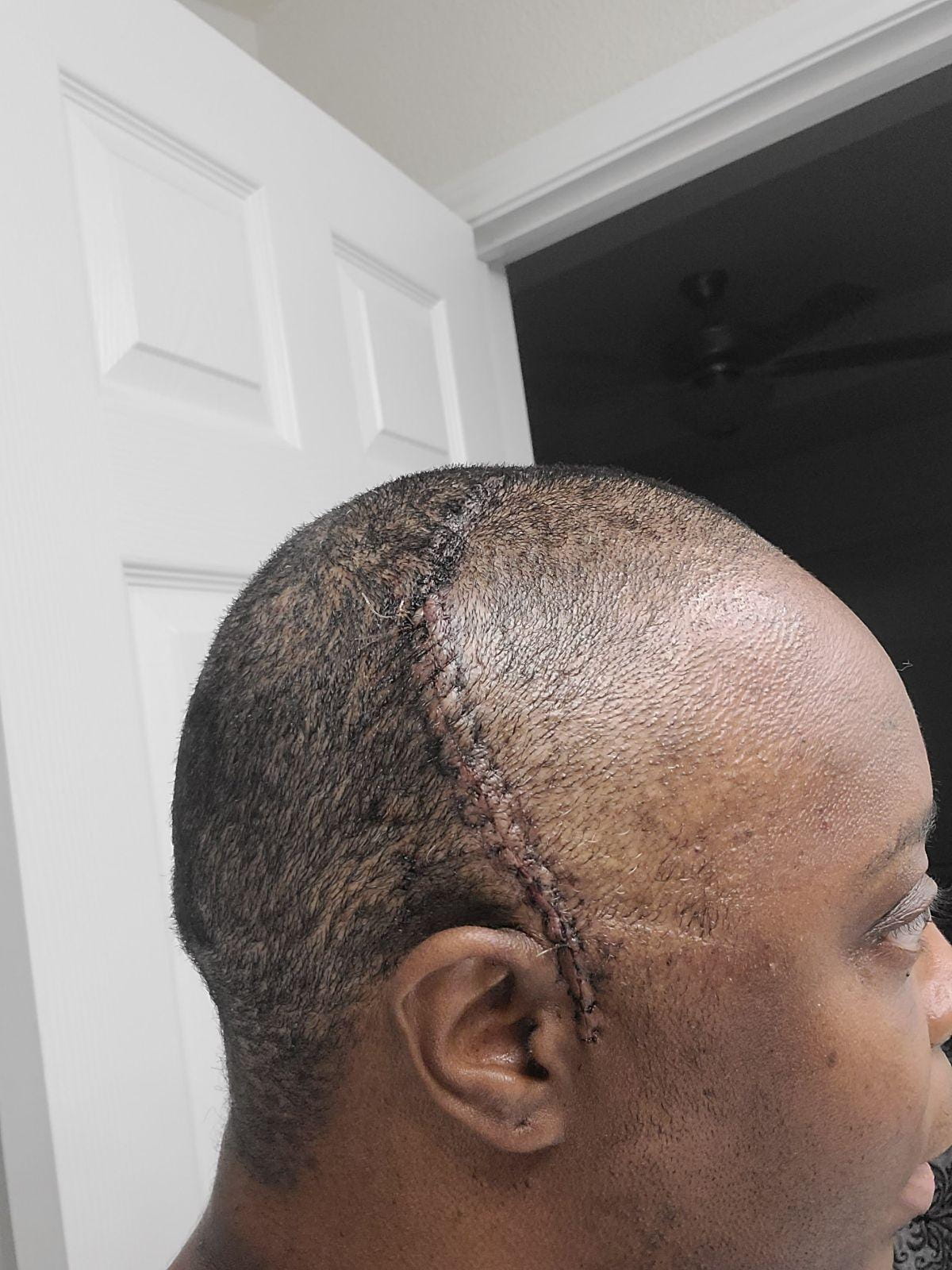
Cash’s tumor posed a significant risk due to its size and location, pressing on vital areas of her cerebrum, which is responsible for higher brain functions such as thought, movement, and emotions, had been under pressure due to the tumor.
Cash underwent an intricate procedure called a craniotomy, which required temporarily removing part of her skull to access and remove the tumor.
“This allowed for direct access to the tumor and allowed for removal of the tumor as well as some of the surrounding meninges to ensure all of the tumor is removed. Then the meninges are approximated and sutured to seal the meninges again, and the skull is placed and fixed again. The scalp is then stapled together,” Dr. Alejandro Magadan M.D., vascular neurologist, Texas Health Dallas medical staff, explains.
Though the meningioma was benign, its size and symptoms underscored the urgency of the operation.
“In the case of Erica, it relieved some of the mass effect of the tumor pressing on the brain which can cause temporary or permanent injury of the tumor if long-standing. Sometimes it causes seizure due to irritation of that area and dysfunction of that particular area and can cause weakness, numbness or tingling to the opposite side of the body,” Dr. Magadan adds.
The news that the tumor was noncancerous brought immense relief.
“Meningioma can be life-threatening, depending on location and growth rate. A benign meningioma brain tumor may impinge on vital nerves or compress the brain, causing disability. My tumor was the size of a tennis ball, and even though they were able to remove most of it, I was still on edge waiting for the results. But when those results came back that it was not cancer, I was overwhelmed with joy and gratitude!,” Cash shares.
“Malignant or cancerous meningiomas are rare and account for less than about two percent of all meningiomas,” Dr. Magadan notes.
Cash attributes her survival to her husband’s quick actions.
“Had he not heard me making noises in my sleep, who knows what would have happened. He is my rock. I didn’t lose any mobility, but because I had brain surgery, I wasn’t able to bend over. I had to sleep in a recliner for the first month out of the hospital. He helped me shower and get dressed. Once my husband went back to work, my mother and son helped me around the house, cooking and cleaning,” she shares.
Cash showcased her sense of humor during her hospital stay by naming her tumor “Timmy” and hosting a farewell party in its honor.
“Imagine going through something so severe as this, I needed to lift my spirits and lighten the mood for other people, so I decided to name my tumor Timmy. It became the running joke among my family and friends. My friend, who is also a nurse, (who actually worked at Texas Health Dallas where I was admitted), decided that Timmy needed a farewell party. So, she had a sign made. The rule when entering my room was that you had to sign the card. It spread throughout the hospital (I had people from all over coming to wish Timmy farewell). My care team was amazing, and they brought ballons, flowers and one even brought me a cake!,” Cash says.

Cash’s journey came full circle as she transitioned from patient to nurse at Texas Health Rockwall.
“It still feels so unreal to think I was once a patient, not knowing that what I was going through would one day help someone else. But now I am able to help others through their journey. It is a full-circle moment, and I am living out my purpose. I am doing what God called me to do,” she notes.
The connection Cash shares with her patients is one she can’t put into words. “I treat every patient with love, like family and friends!,” she shares.
Despite the challenges of recovery, Cash stayed motivated to finish nursing school. She relied on daily walks, journaling, and therapy to maintain her mental and emotional resilience. Her determination paid off when she received the prestigious Future Nurse Leader award, a recognition of her leadership and dedication.
“I felt so grateful and honored that my classmates saw me as a leader,” she says.
Cash’s ambitions continue to grow.
“I plan to go back to school to get my RN [Registered Nurse] and go on to get my BSN [Bachelor of Science in Nursing] and master’s degree. I want to continue working in the ER and may one day be the CNO [Chief Nursing Officer] at one of the Texas Health facilities,” Cash adds.
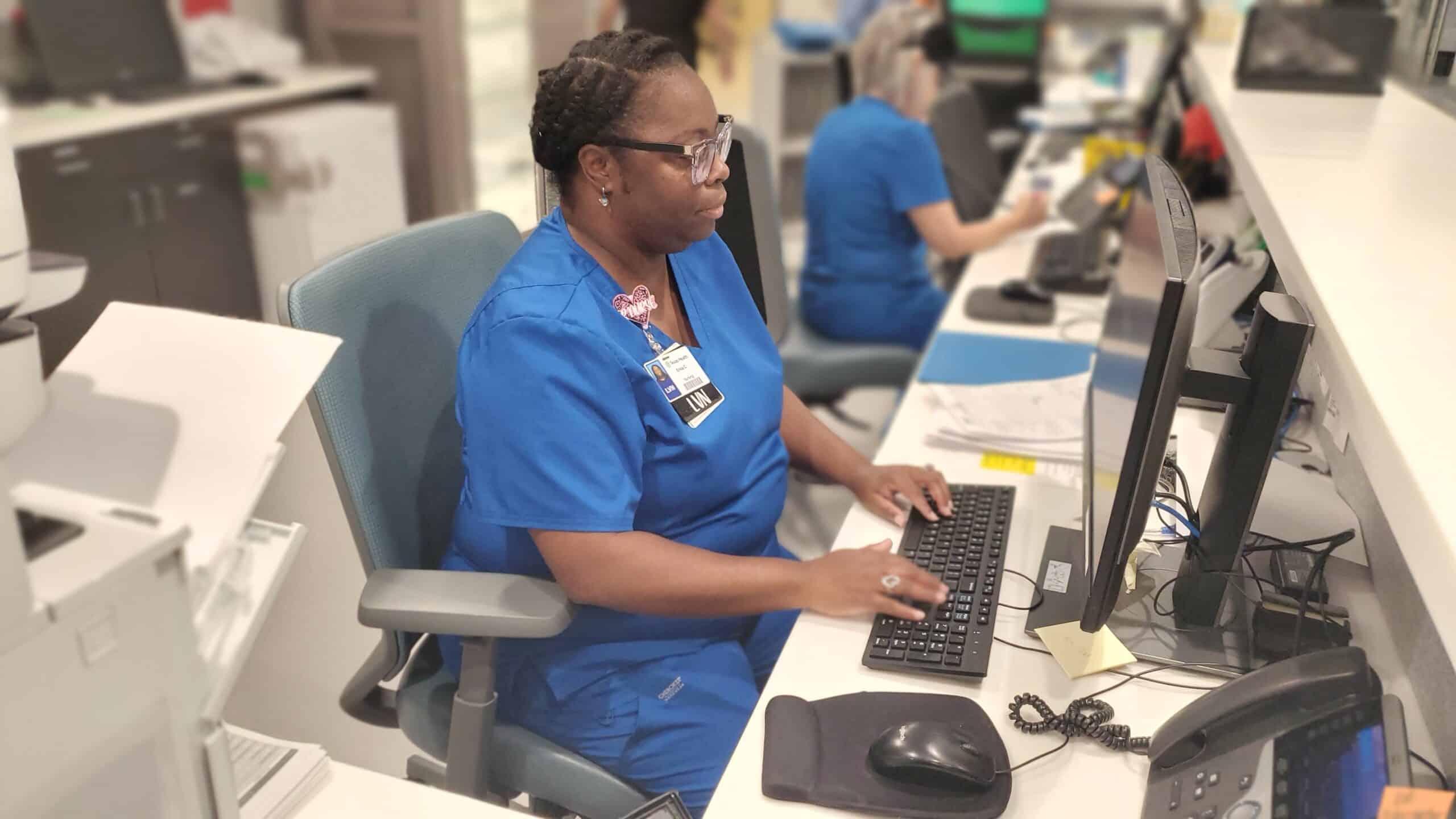
Cash advises others facing similar health challenges to stay positive and proactive.
“The main thing I find is that when we are facing things that are beyond our control, it’s best to stay positive, talk to someone. I was raised on this motto, ‘Life is 10% of what happens to you and 90% of how you REACT!,’” she shares.
Dr. Magadan echoes the importance of early detection and treatment.
“Early detection and treatment remain key. Once the tumor is removed, there is always recovery,” Dr. Magadan adds.
As Cash continues her career, she reflects on the most rewarding part of her work: “The most rewarding thing is being able to service others when they are at their weakest point. I think back to my time in the hospital, and it helps me remember why I am doing what I am doing.”


By subscribing, you consent to receive emails from BlackDoctor.com. You may unsubscribe at any time. Privacy Policy & Terms of Service.