Who hasn’t forgotten the name of an old friend, where they put their keys or why they went into a room for something? I know I have. And it does make you stop and wonder—am I losing my memory? As we get older, our memory does slow down a bit naturally. But that does not signal that Alzheimer’s Disease and Dementia are taking root. I am writing this article because I have seen the impact that dementia has on people that you love. When my Dad looked at me and asked who I was, it was awful.
When my Mom kept asking what day it was over and over, it required tremendous patience to soothe her. These were two incredibly smart, wonderful people. I am committed to doing all I can to protect my brain, and to help others to do so as well. Based on research, there are things we all can do to reduce the risks of getting these debilitating and devastating symptoms and diseases of the brain.
First, let’s provide some clarity of definition on the two from the Alzheimer’s Association:

Dementia is a general term for a decline in mental ability severe enough to interfere with daily life. Alzheimer’s is the most common
cause
Dementia is caused by damage to brain cells. This damage interferes with the ability of brain cells to communicate with each other. When brain cells cannot communicate normally, thinking, behavior and feelings can be affected. Many conditions are progressive, which means that the signs of dementia start out slowly and gradually get worse.
In
Alzheimer’s disease
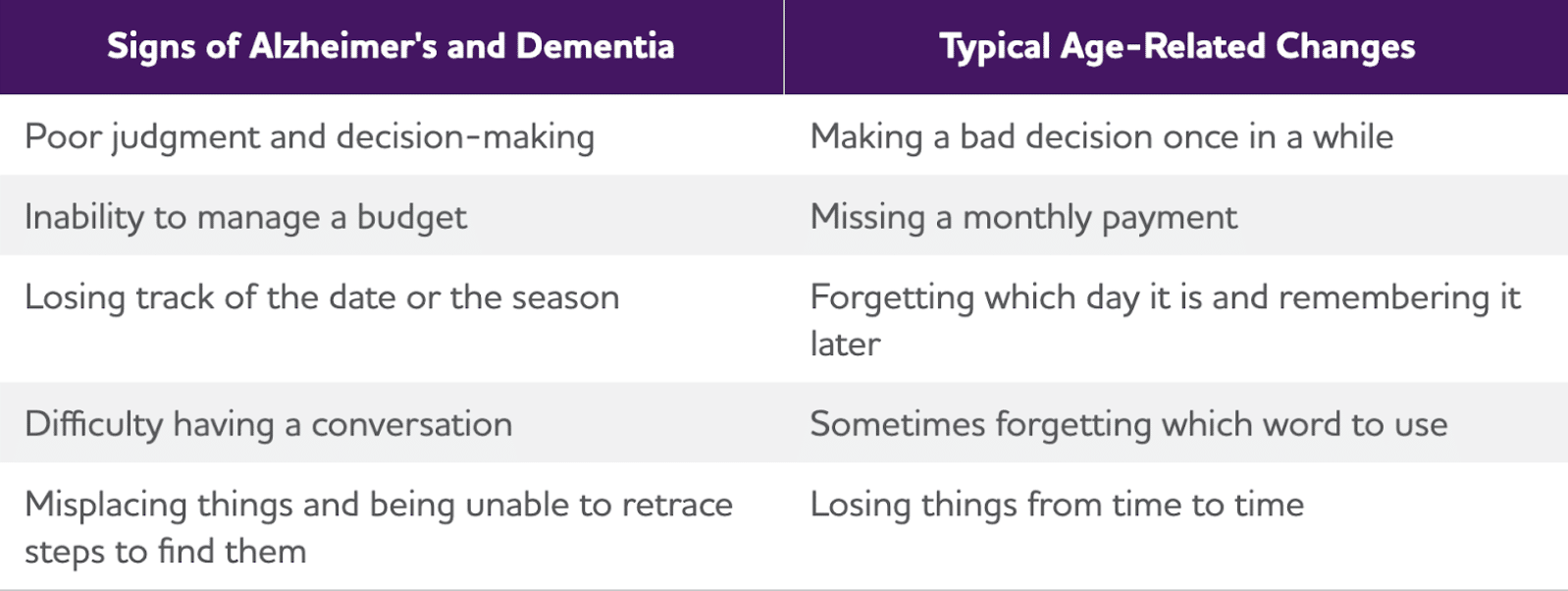
, high levels of certain proteins develop inside and outside brain cells and make it hard for brain cells to stay healthy and to communicate with each other. The brain region called the hippocampus is the center of learning and memory in the brain, and the brain cells in this region are often the first to be damaged. That’s why memory loss is often one of the earliest symptoms of Alzheimer’s. Let’s compare normal signs of aging with sign of Alzheimer’s and Dementia:
According to
The Aging Brain: Proven Steps to Prevent Dementia and Sharpen Your Mind
by Dr. Timothy R. Jennings, (available on Amazon) there are several risk factors that exacerbate the potential to get Alzheimer’s and Dementia. His book goes into much detail about what can cause the dangerous proteins to develop and damage our brain cells. Fortunately, Dr. Jennings cites lifestyle choices can help keep our brains sharp. Let’s get specific:
Risk Factors
ApoE4 Gene – Having two copies of this gene (one from your mother and one from your father) increases the risk of late onset AD by 30-60 percent, but it is not a cause. Research is still on-going.
Reduce risk by: Regular exercise, Mediterranean/vegan diet, avoiding substances that increase inflammation (tobacco, illegal drugs, excessive alcohol), healthy spirituality and stress management, mental stimulation, getting 7-8 hours of sleep nightly, drinking 8 oz. of pomegranate juice daily, eating a handful of walnuts daily, getting enough vitamin D, B12, E, C, folic acid and omega 3 fatty acids, drink a balance of coffee and green tea, avoiding artificial sugar and soft drinks
Oxidative Stress – Damage done to body tissues by molecules containing oxygen capable of interacting and causing damage/stress to tissues. Some may surprise you!
Reduce risk by: In addition to above: Minimizing eating charred, grilled or fried foods (these produce highly oxidizing end products), eat more oily fish high in omega 3 fatty acids (salmon, sardines, herring), eat more fresh foods with color ( berries, kale, spinach, etc.) eating almonds, Using curcumin (turmeric) in your diet
Sedentary Lifestyle – Increases risk of obesity, oxidative stress, inflammation
Reduce risk by: Regular exercise after consulting with your doctor
Head Injuries – Can develop into Alzheimer’s years after the injury
Reduce risk by: Avoiding known risks such as boxing and extreme sports–use head protection if you participate, wear a helmet when bike riding, use seat belts, clear your hone of trip hazards, practice balancing exercises to prevent falls, avoid icy walkways, use caution roller skating
Diabetes Type 2 – Doubles the risk of AD as anything that increases inflammation is a risk
Regular exercise, anti-inflammatory diet: Mediterranean or vegan, avoid added sugars, soft drinks, eat fewer processed foods, avoid junk foods, see your doctor regularly
Obesity – This is an inflammatory state that increases the risk of dementia and early death
Reduce risk by: Regular exercise, walk 20 minutes daily, anti-inflammatory diet: Mediterranean or vegan, address sleep disorder issues like sleep apnea, medical issues like hypothyroid, reduce mental stress, sleep 8 hours nightly, fast 12 hours between dinner and breakfast (no late-night snacking!), work with your doctor on a plan
Western Diet – Unfortunately, our American diet is inflammatory and full of processed foods, sugars, and trans fats, dairy—all of which increase the risk of dementia. My Dad ate this way for years.
Reduce risk by: Changing to vegan or Mediterranean, limit added sugars, eat more fish, reduce dairy, milk, and cheese, avoid soft drinks, junk foods, artificial sweeteners, eat more nuts, fruits
High Blood Pressure – Increases AD risk
Reduce risk by: Seeing your doctor for treatment, watch your diet
Low Mental Stimulation – If you don’t use your mind you will lose your mind’s sharpness.
Reduce risk by: Staying mentally active, puzzles, playing instruments, taking classes, languages, dance lessons
Depression – Increases risk of dementia
Reduce risk by: Exercise, diet, stress management, sleep, avoidance of toxins, depression treatment, consult your doctor
Social Isolation – Loneliness causes increased stress which can cause increased inflammation and associated risk of dementia
Reduce risk by: Joining groups with shared interests: church, exercise, reading, volunteering
Mental Stress – Activates the brain’s alarm circuitry which increases inflammation, oxidative stress, depression, and dementia
Reduce risk by: Practicing forgiveness, meditation, spending time in nature, considering seeing a counselor
Sleep Deprivation – Without adequate sleep, brain function is impaired, and the brain cannot restore itself. Sleep is critical.
Reduce risk by: Establish a regular sleep routine, sleeping in a dark room, avoiding late night eating and more – (See
https://blackdoctor.com/10-tips-for-a-better-nights-sleep/)
In summary, I hope you can see that there are many lifestyle choices that can help to avoid getting Alzheimer’s and Dementia. Dementia symptoms and Alzheimer’s disease do not inevitably come with getting older. Decide to take proactive steps to protect your brain. It is worth the effort for yourself and your loved ones. Trust me.
Hugs,
Amy


By subscribing, you consent to receive emails from BlackDoctor.com. You may unsubscribe at any time. Privacy Policy & Terms of Service.