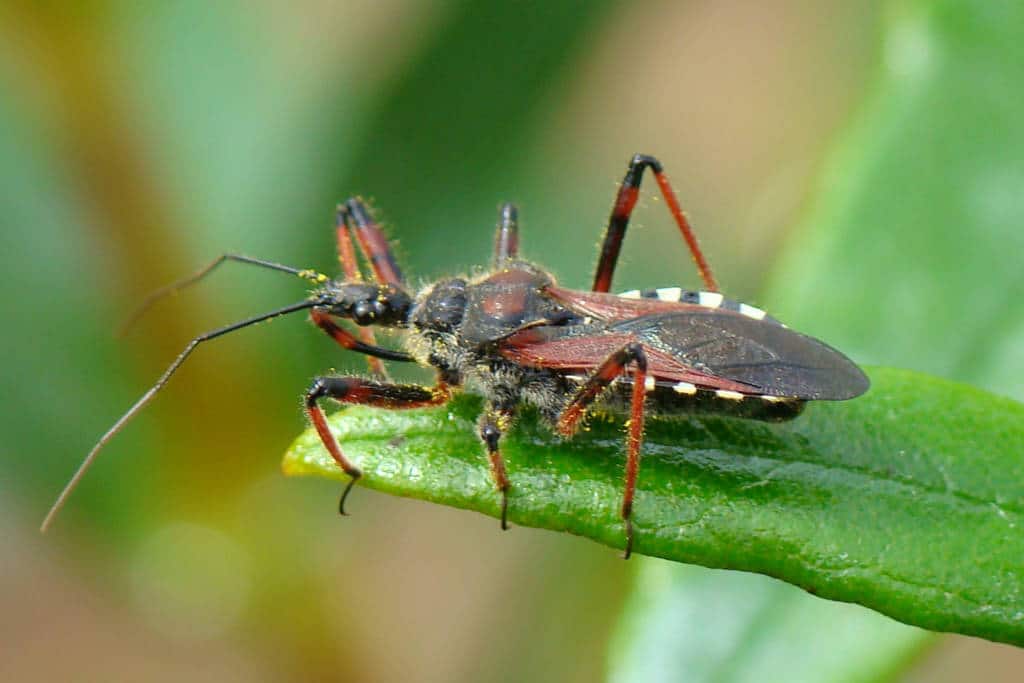
A little-known life-threatening illness, Chagas Disease–or the “Kissing Bug” disease–caused by blood sucking insects should now be considered endemic in the United States, experts say – and without recognition that it’s a constant presence in some parts of the country, more people will suffer unnecessarily.
A report on the topic was published early September 2025 in the US Centers for Disease Control and Prevention’s (CDC) journal Emerging Infectious Diseases, and the authors say they hope that growing global attention on the new paper means Chagas could finally get the surveillance, prevention and testing efforts and research funding it deserves in the United States.
The World Health Organization considers Chagas a neglected tropical disease, and the Pan American Health Organization says it is endemic – with a constant presence or usual prevalence – in 21 other countries in the Americas, not including the United States. Chagas is one of the leading causes of heart disease in Latin America, and it causes more disability than other insect-borne infections, even more than malaria and Zika, studies show.
The said disease was once largely contained to Latin America but is now spreading into the United States due to the increases in travel and migration. Chagas is usually transmitted from the bite of blood-sucking insects called Trypanosoma cruzi which releases a parasite into the victim’s bloodstream.
According to a report, the parasitic illness called Chagas Disease has similarities to the early spread of HIV. The shocking comparison has put this neglected tropical disease in headlines around the world.
Experts warn that more cases of Chagas and other neglected tropical diseases are being reported in the U.S. An estimated 12 million Americans have one or more tropical infections, including an estimated 300,000 with Chagas disease.
In Texas, one in every 6,500 blood donors are infected with Chagas disease, compared with one in every 27,500 donors across the country.
Chances are, if you have it, you don’t know it. That’s because the parasite stays dormant for years and because American doctors are uneducated about the infection.
Chagas disease isn’t new to Texas, and neither is the dime-size kissing bug that spreads the infection. The first case in the U.S. was reported in 1955, and kissing bugs have been spotted in Texas since the early 1800s.
Surveillance is limited, but the CDC estimates that about 280,000 people in the US have Chagas at any given time. It’s unclear how many have the more serious form of the disease or how many deaths are caused by Chagas each year.
Scientists have found kissing bugs in 32 states, the new report says. The blood-sucking insect mostly lives in warmer Southern states, but with climate change causing more bug-friendly temperatures, there’s a good chance they have spread farther.
Who’s at risk? Is Chagas really as bad as AIDS? Before fear runs rampant, it’s important to know the facts.
Chagas disease is caused by a parasite called Trypanosoma cruzi. The parasites multiply within cells of the body. Infected cells burst, releasing parasites into the bloodstream.
Kissing bugs live in rats’ nests and wood piles or in the nooks of your furniture or cracks in your house. They earned their name by biting us around our eyes and mouth. They poop where they eat, and when you rub the irritated bite, you rub the poop — and the parasite — into your skin. The infection is also spread through blood transfusions, organ transplants and, during pregnancy, from mother to baby.
Chagas disease was first recognized in the modern era by Brazilian doctor Carlos Chagas in 1909. But the disease has been around for 9,000 years. Chagas parasites have been found in the remains of mummies from the ancient Chinchorro culture of South America. The most common complication of chronic Chagas disease is a heart condition called chronic Chagas cardiopathy. These complications include an enlarged heart, heart failure, severely altered heart rhythm, and heart attack.
Some patients with chronic Chagas disease get intestinal complications. These may include enlarged esophagus (causing difficulty swallowing) or enlarged colon (causing difficulty passing stool).
There are several ways Chagas disease is spread.
The most common way is through the bite of a family of blood-sucking insects called triatomes. They’re better known as kissing bugs, assassin bugs, cone-nosed bugs, and reduviid bugs.
While most cases of Chagas disease are in Central and South America, 11 different species of the bugs live in the Southern U.S. They may be found as far north as Pennsylvania in the East and Northern California in the West.
Inside houses, the most common places to find the bugs are near pet resting areas (a good reason not to sleep with your pets), in areas infested by rodents, and in or around beds (particularly under mattresses or bedside tables).
These bugs usually come out at night. They feed on the blood of humans and other mammals, birds, and reptiles. The bugs are attracted to the lips — hence the nickname “kissing bug” — although bites may occur on other parts of the body.
The bug bite itself doesn’t spread Chagas parasites. But while feeding bug droppings are left near the wound. When these droppings get into the wound or mucous membranes (as when a person touches the droppings and then rubs his or her eye), the parasites enter the body.
Chagas can also be spread:
While the burden of Chagas disease falls mainly on people in Central and South America, the disease is spreading worldwide. Cases have been seen in Japan and Western Europe. And Chagas is becoming more of a problem in the Southern U.S., particularly in Texas and the Gulf Coast.
People with acute-phase Chagas disease may not have any symptoms at all. Mild symptoms of acute Chagas disease are similar to other illnesses: fever, fatigue, body aches, headache, rash, loss of appetite, diarrhea, and vomiting.
One unique sign of Chagas disease is called Romaña’s sign: swelling of the eyelids and around the eye on the side of the face near the bite or where infected bug droppings have been rubbed into the eye.
But these acute-phase symptoms usually go away on their own even though the infection does not.
When chronic symptoms occur, they are the symptoms of severe heart disease or severe intestinal disease.
Children and adults under age 50 should be treated as soon as possible after infection with Chagas parasites. For adults 50 and older, treatment decisions should be individualized based on age, health, and personal preference.
Treated early enough, the disease can be cleared in most children and in about 80% of adults. Even when treatment does not totally eliminate the parasite, it can greatly reduce the odds of severe chronic disease.
There are only two drugs used to treat Chagas disease: nifurtimox and benznidazole. Neither of these drugs is approved by the FDA and, in the U.S., must be obtained by doctors through the CDC.
Treatment must continue for 60 to 90 days. Side effects, some of them severe, are common.
Some 9 million people worldwide have Chagas disease, with about 20% to 40% suffering from chronic disease. Both drugs used to treat the disease are in short supply. Even when they are available, the cost of treatment can be as high as $1,000 or more.
In some ways, the comparison of Chagas to AIDS is unfortunate.
Unlike HIV, the AIDS virus, Chagas parasites cannot be spread via sex. Untreated HIV infection is almost always fatal, while 70% to 80% of people with Chagas disease do not develop severe heart disease.
But Chagas disease does share some features with AIDS:


By subscribing, you consent to receive emails from BlackDoctor.com. You may unsubscribe at any time. Privacy Policy & Terms of Service.