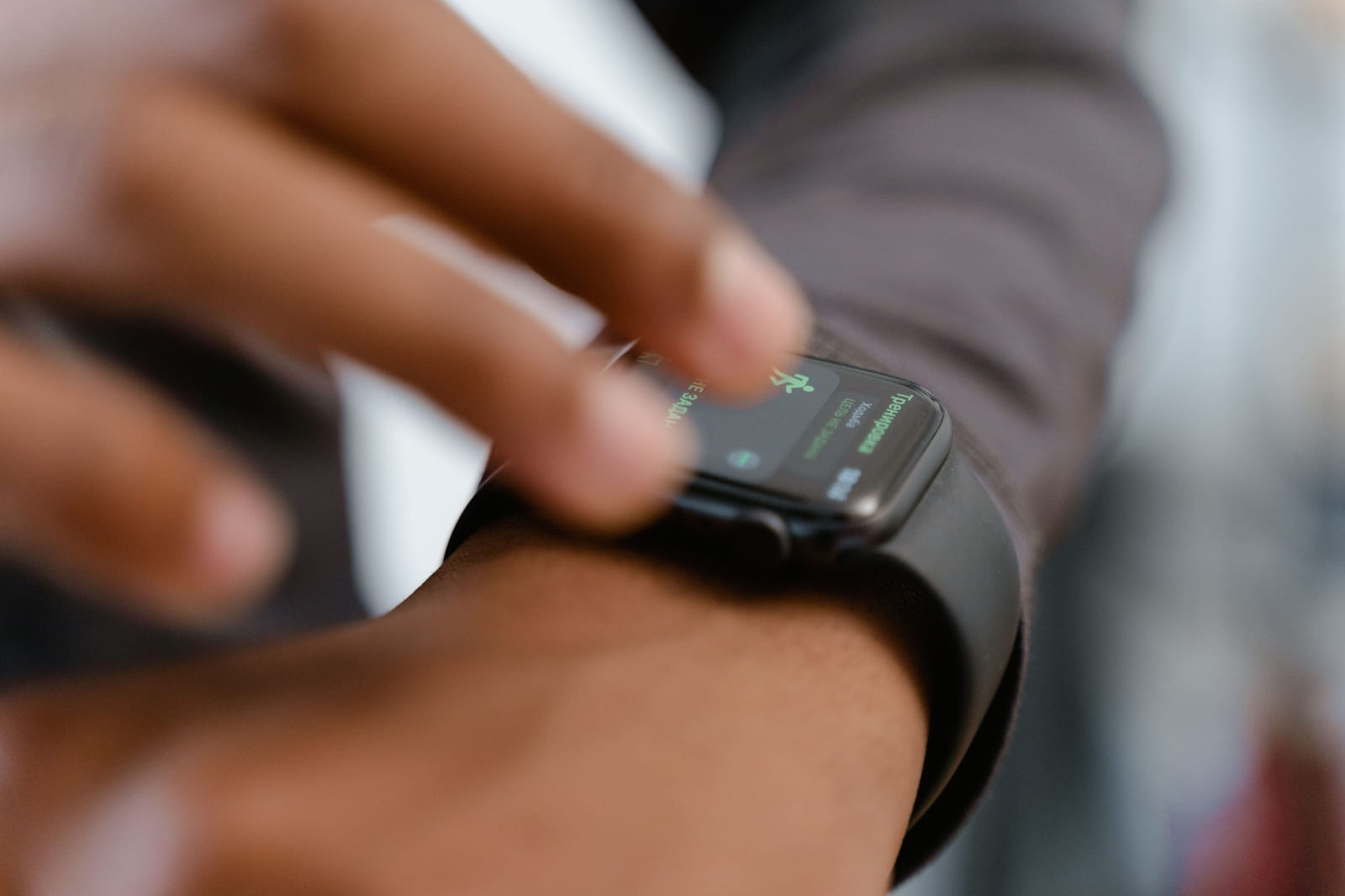
If you’ve scrolled through social media, you’ve probably already seen it. From smartwatches to smart rings, many newer technologies promise to track blood sugar without fingersticks or sensors beneath the skin.
The claim is certainly appealing – especially for Black communities, where adults are roughly 24 percent more likely than U.S. adults overall to have diabetes.
But is the reality as simple as they make it seem?
According to the FDA, the picture is much more complicated, and the stakes can be high. And if people rely on inaccurate numbers, it can lead to dangerous decisions about food, insulin, and medication.
So, without further ado, let’s break down what you should know. If you or someone you know is managing blood sugar, it’s time to get informed…
As mentioned, the FDA cautions against using these devices to monitor blood sugar and diabetes metrics. In fact, the U.S. Food and Drug Administration has issued a direct safety communication concerning this:
Do not use smartwatches or smart rings that claim to measure blood glucose levels without piercing the skin.
The main reason is that the agency has not authorized, cleared, or approved any smartwatch or smart ring product for this use. None of these technologies should be utilized to measure or estimate blood glucose on their own.
Why, you ask?
Mainly because these consumer devices differ from legitimate continuous glucose monitors (CGMs). Real CGMs actually use a small filament (inserted under the skin) which then measures your glucose in interstitial fluid, the clear fluid around and between your cells.
Although some smartwatches can display readings from an FDA-authorized CGM, remember one thing. The watch itself is only a screen. The medical sensor still does the measuring. Consider, for instance, Apple Watch’s glucose monitor, which still faces FDA scrutiny.
Companies are hard at work researching optical and other noninvasive methods, but so far, they have failed to meet the accuracy and reliability standards required for medical use in the United States.
If you’ve done a bit of research on these smartwatches and smart rings, you’ve probably noticed one word over and over. And that would be the term ‘non-invasive.’
By ‘non-invasive,’ we mean measuring glucose through the skin using light or other external signals. However, there’s one problem. This can be technically difficult, as many factors, including skin tone, thickness, temperature, movement, and other substances in the body, can all prevent an accurate reading.
In fact, many so-called noninvasive concepts have shown higher error rates throughout testing. This is based on what is called MARD, or Mean Absolute Relative Difference, a standard metric used to measure the accuracy of Continuous Glucose Monitors.
Typically, the lower the MARD, the more accurate the CGM, with most medical-grade products measuring at under 10 percent.
By contrast, some research has put the best MARD values for noninvasive devices at around 19-20 percent. Clearly, a difference that could cause problems if individuals rely on these devices for their readings!
Remember: an inaccurate reading is not merely inconvenient. For many Black patients facing higher comorbidity rates and worse overall outcomes than other races, these inaccuracies can lead to serious mistakes.
For example, an individual may react to certain readings by taking too much or too little insulin, miss a low, or ignore a high.
Wearable devices in general may struggle with darker skin tones.
In fact, devices that rely on optical sensors have a documented history of reduced accuracy on darker skin tones for measurements such as heart rate. Although glucose sensing is a different technical challenge, the same underlying issue applies. When light interacts differently with melanin-rich skin, accuracy and efficacy concerns arise.
Remaining hopeful is one thing. But marketing unproven noninvasive devices is another; this can create false hope or, even worse, encourage people to avoid regulated medical technology that actually works.
This is why – for now – the best thing an individual monitoring blood sugar can do is use a legitimate FDA-authorized option. CGMs remain the standard for continuous glucose monitoring. Newer dual monitors that track both glucose and ketones have also received authorization, expanding options for people with diabetic ketoacidosis.
While some smartwatches and phones can receive and display data from these authorized CGMs, it’s important to understand the distinction. After all, receiving and displaying data is different from generating the glucose number itself without a medical sensor.
As a rule of thumb, stay skeptical. Don’t be overly trusting of any wearable that advertises “needle-free” or “noninvasive,” and speak to your doctor about certain product-related questions/concerns.
You can also check the FDA website or ask your pharmacist. If a product is sold through social media marketplaces with dramatic before-and-after claims, pause and verify.
It’s easy to get excited, especially in today’s modern world of newfangled devices and techie claims. However, just because smart devices have fitness features that monitor activity, heart rate, and sleep doesn’t mean they can provide accurate, medical-grade glucose data.
Again, when you’re not sure where to turn, talk to your doctor about the best way to capture accurate, reliable data. CGM coverage has expanded, and many people with type 2 diabetes now qualify under updated guidelines.
Although your smartwatch and other ‘smart’ devices can do many useful things, none have received FDA authorization to measure glucose without a skin-piercing sensor. Remember that, stay up to date on the latest trends and consult medical authorities for accurate information.
Never forget that using an unapproved device for treatment decisions can actually cause significant harm. For numerous Black adults navigating higher diabetes risk and longstanding gaps in technology access, it’s best to choose the safest path. That means relying on proven, regulated tools while exercising caution around noninvasive promises and claims.
It’s the best way to protect your health and get the top-line care you deserve!


By subscribing, you consent to receive emails from BlackDoctor.com. You may unsubscribe at any time. Privacy Policy & Terms of Service.
Enter your name and email to receive the download link.