
A narrowed artery in your neck can go unnoticed for years.
The biggest difference is where neck arteries send blood. Coronary arteries supply your heart muscle, arteries in your legs supply your legs and feet, and two pairs of arteries in your neck supply your brain. That direct connection is why a blockage in a neck artery can cause a stroke.
Carotid arteries can develop plaque buildup just like arteries elsewhere in the body. Plaque can narrow the artery, and a piece of plaque or a clot can break loose, travel upstream to the brain, and block a smaller vessel. That’s one way an ischemic stroke, a stroke caused by blocked blood flow, can happen. Carotid narrowing can be present without symptoms.
While there’s no proven home remedy that clears plaque like a clogged drain, the goal is to lower your risk of a stroke. And you can do that by slowing plaque buildup, managing the conditions that contribute to it and, in some cases, treating the narrowing. Here’s how to do it.
High blood pressure, high LDL cholesterol and diabetes can all raise your risk of carotid artery disease. At your next checkup, ask for your actual numbers and the targets that make sense for you.
Blood pressure. A normal adult reading has a top number below 120 and a bottom number below 80, measured in millimeters of mercury (mm Hg). If you’re being treated for high blood pressure, the usual treatment goal is below 130/80 mm Hg, though your clinician may tailor it to your health.
Cholesterol. A standard cholesterol test, also called a lipid panel, gives you several numbers. These are common adult reference levels.
| What the test measures | Common healthy or desirable level |
|---|---|
| LDL (“bad”) cholesterol | Below 100 mg/dL |
| HDL (“good”) cholesterol | At least 40 mg/dL for men and 50 mg/dL for women |
| Total cholesterol | Below 200 mg/dL |
| Triglycerides, another type of fat in the blood | Below 150 mg/dL |
If you already have plaque in your carotid arteries or have had an ischemic stroke, ask whether you need a lower LDL target, such as below 70 mg/dL. A total cholesterol result under 200 can look reassuring, so ask for your LDL result specifically. If you have diabetes, ask for your latest A1C, which reflects your average blood sugar over the past few months, and review your personal goal.
If you smoke, ask your healthcare team about help quitting. For meals, start with changes you can repeat. Season greens or beans with garlic, vinegar or spices so you can use less salt. Choose unsaturated fats, such as olive oil, more often in place of butter. If walking is safe for you, a short walk after dinner is one way to make regular activity part of your day. These habits support blood pressure and cholesterol management over time.
If you have carotid artery disease, your clinician may prescribe a statin to lower LDL cholesterol, medication to manage blood pressure, or an antiplatelet drug such as aspirin to reduce the chance of a clot. Ask your clinician before starting daily aspirin. Whether it’s right for you depends in part on your bleeding risk and whether you’ve already had a stroke or a transient ischemic attack (TIA).
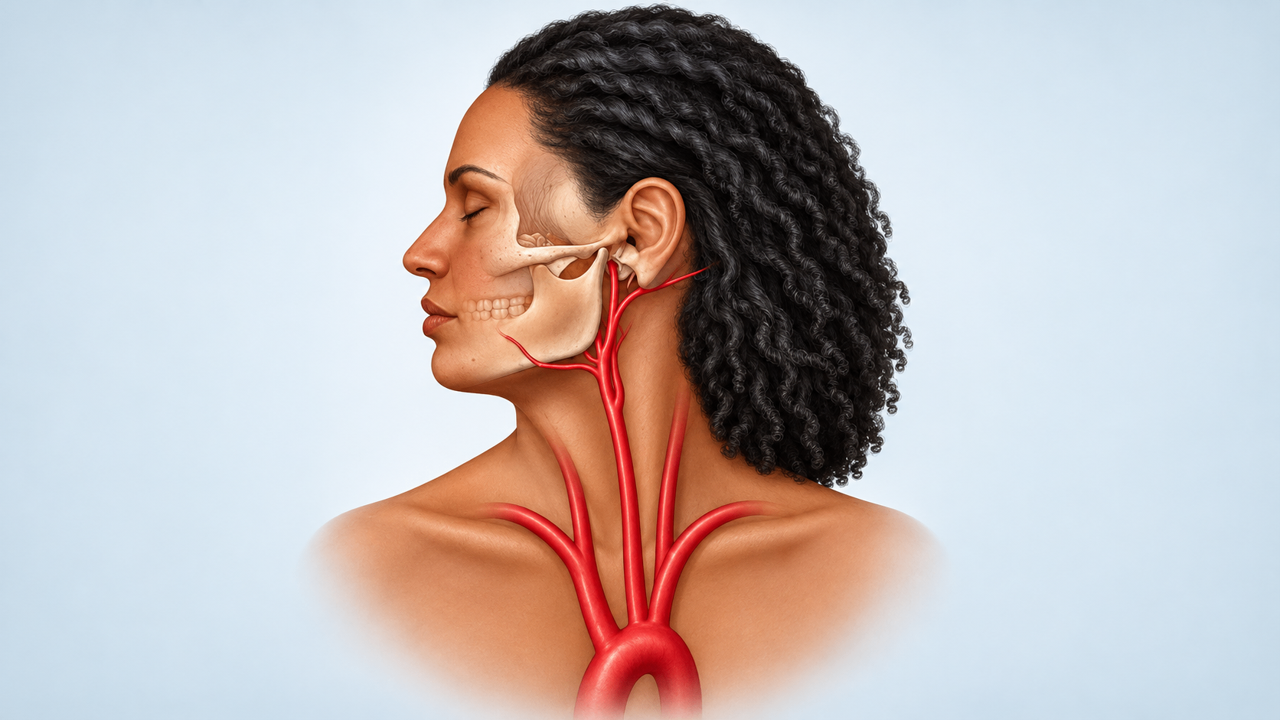
If you’ve already been told you have carotid narrowing, ask how severe it is, whether it could explain any symptoms you’ve had, and when you need follow-up. A carotid ultrasound can help assess blood flow and the degree of narrowing. For adults in the general population without stroke or TIA symptoms, the U.S. Preventive Services Task Force recommends against routine carotid screening because the harms outweigh the benefits. Evaluating symptoms or monitoring a known narrowing is a different situation.
Carotid endarterectomy is surgery that removes plaque from inside the artery. Carotid angioplasty and stenting widens the narrowed area and places a small mesh tube to hold it open. A specialist weighs how much the artery has narrowed, whether it recently caused a TIA or stroke, and the risks of the procedure. For some people, medication and follow-up are the best approach.
No single food can clear an existing blockage in your neck. What you eat regularly can help lower LDL cholesterol and blood pressure, two factors you can work on to protect your arteries. The DASH eating plan, which emphasizes vegetables, fruit, whole grains, beans, nuts and fish, is one way to do both. NHLBI, NIH
Call 911 immediately if you or someone else develops sudden face drooping, weakness or numbness on one side, trouble speaking, vision changes, or loss of balance. Note when the symptoms started and take an ambulance. Call even if the symptoms go away. A TIA can last only minutes and still needs emergency evaluation


By subscribing, you consent to receive emails from BlackDoctor.com. You may unsubscribe at any time. Privacy Policy & Terms of Service.