
Eyelash extensions can give you fuller lashes — but a new study warns they may create a welcoming environment for something you definitely don’t want: skin mites.
“Eyelash extensions are an extremely popular cosmetic procedure among young women because they provide the appearance of longer and fuller eyelashes without the need for mascara,” said Dr. Tetiana Zhmud of the ophthalmology department at the National Pirogov Memorial Medical University in Ukraine.
“At the same time, there is growing evidence suggesting that this procedure may create problems on the surface of the eye, including irritation, dry eye symptoms and meibomian gland dysfunction,” she added in a news release.
For the study, Zhmud and her colleagues surveyed 345 women ages 16 to 28. Of the 86 who had had eyelash extensions, nearly half reported discomfort, redness, tearing or itching after the procedure.
The women also underwent infrared imaging to examine tiny glands in their eyelids.
Among those who had extensions more than 10 times, 85 percent had glands that were blocked or were not producing the right oil to keep their eyes hydrated.
But the researchers also looked at another potential concern: Demodex folliculorum, commonly known as eyelash or skin mites.
RELATED: Are Lash Extensions Putting Your Eyes at Risk?
Before you panic at the thought of tiny mites living around your eyes, there’s an important distinction to make: Demodex mites are not unusual.
These microscopic organisms naturally live on human skin, including around the face and eyelids, and typically don’t cause problems, according to the Cleveland Clinic. Two types are commonly associated with the eyelids: Demodex folliculorum, which lives in eyelash follicles, and Demodex brevis, which can live in the meibomian glands along the edges of the eyelids.
The problem occurs when the mites become too numerous. An overgrowth can damage the delicate skin around the eyelids and trigger inflammation, a condition known as Demodex blepharitis.
Demodex blepharitis is a type of blepharitis, or inflammation of the eyelids. It can cause symptoms such as itchy eyes, swollen or puffy eyelids, redness, dry or irritated eyes, and crusty or flaky material around the base of the eyelashes.
In another part of the study, eyelash samples were examined from 25 women who regularly got extensions. Tiny skin mites called Demodex folliculorum were found in 24 of them, researchers reported.
Most had signs of irritation typically caused by the mites, including itching, redness and swelling around the eyelids, lashes sticking together and scaly skin at the base of the lashes.
The researchers said frequent extensions may create conditions that help the mites multiply, including impaired eyelid hygiene and changes around the eyelid. However, the findings do not prove that eyelash extensions directly cause a Demodex overgrowth.
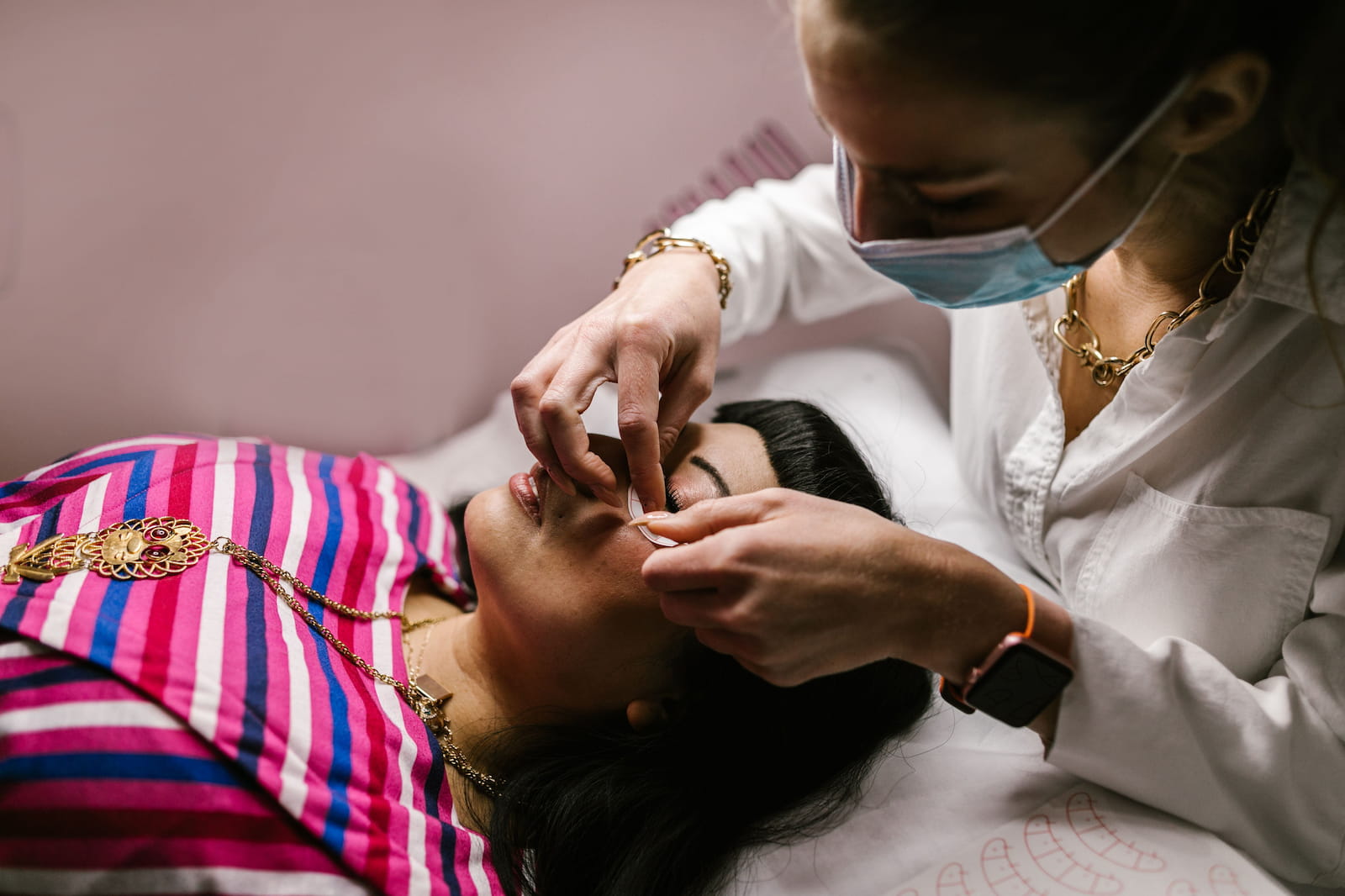
While the findings do not mean you have to give up eyelash extensions altogether, they do highlight the importance of paying attention to changes around your eyes.
A little discomfort immediately after an appointment may not necessarily mean something is wrong, but persistent or worsening itching around the eyelids and lashes is worth paying attention to.
Red, swollen or irritated eyelids can be a sign that your eyes or the skin around them are reacting to the extensions, adhesive or another source of irritation.
If your eyes are suddenly watering more than usual after getting extensions, don’t simply assume you need to get used to them. Excessive tearing can be a sign of eye irritation.
Crusting, lashes sticking together or flaky, scaly skin around the base of the lashes may signal irritation or inflammation and should not be ignored.
Dryness, burning, a gritty sensation or general discomfort can also be signs that your eyes are not tolerating the extensions well. If symptoms persist, consider taking a break from extensions and speaking with an eye-care professional.
If you have persistent symptoms, an optometrist or ophthalmologist can determine what’s causing them.
An eye-care professional can examine your eyelids and lashes using a slit lamp, a specialized microscope that allows them to look closely at the base of your eyelashes and the edges of your eyelids.
One of the things they may look for is the presence of collarettes—the waxy, sleeve-like buildup around the base of the eyelashes associated with Demodex mite overgrowth.
Because symptoms such as redness, itching and dry eyes can have many possible causes, it’s important not to diagnose yourself based on symptoms alone.
If you are diagnosed with Demodex blepharitis, treatment focuses on reducing the excess mites and relieving inflammation and other symptoms.
Lotilaner ophthalmic solution (Xdemvy) is an FDA-approved prescription eye drop specifically designed to treat Demodex blepharitis. It is used twice a day for six weeks, according to Cleveland Clinic.
Depending on your symptoms, an eye-care professional may also recommend other treatments, such as eyelid cleaning, warm compresses, lubricating eye drops or an in-office procedure to remove lash debris.
It’s important to follow your eye-care professional’s recommendations rather than trying to treat a suspected mite infestation on your own. Some older treatments, including certain products containing tea tree oil, can irritate the eyes or skin.
“Our findings do not suggest that people should completely avoid eyelash extensions,” Zhmud said.
She recommends cleaning extensions twice a day with a preservative-free, hypoallergenic eyelid hygiene gel and an eyelash cleansing brush.
If a mite infestation is confirmed, an anti-parasitic treatment may be considered under the guidance of a healthcare professional.
It is also important to remember that symptoms such as redness, itching and swelling can have several possible causes. They don’t necessarily mean you have a mite infestation. If you develop persistent eye or eyelid symptoms, an eye-care professional can help determine what’s causing them and whether treatment is needed.
Because the research was presented at a medical meeting, the findings are considered preliminary until they are published in a peer-reviewed medical journal. The study’s relatively small groups of women who used eyelash extensions also mean the findings should be interpreted with caution.
For now, the takeaway isn’t necessarily to swear off lash extensions. Instead, be mindful of how your eyes and eyelids respond, maintain good eyelid hygiene and don’t ignore symptoms that persist or worsen. Your beauty routine shouldn’t come at the expense of your eye health.


By subscribing, you consent to receive emails from BlackDoctor.com. You may unsubscribe at any time. Privacy Policy & Terms of Service.