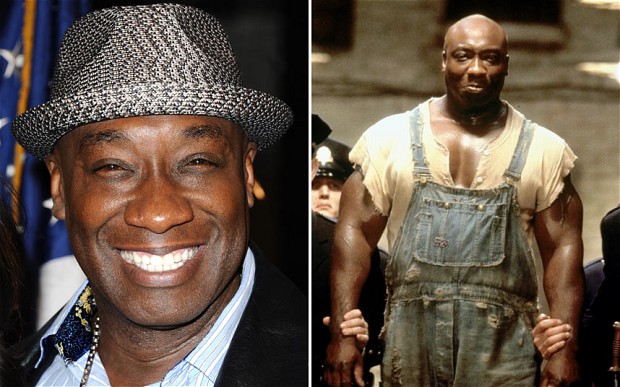
Michael Clarke Duncan, the actor best known for his Oscar-nominated role alongside Tom Hanks in The Green Mile, died in September 2012 due to heart complications.
The Chicago native was raised by his single mother, Jean, a house cleaner, on Chicago’s South Side. Duncan wanted to play football in high school, but his mother wouldn’t let him, afraid that he would get hurt. He then turned to acting, dreaming of becoming a famous actor.
READ: Michael Clarke Duncan Dies Following Heart Complications
Featured on BlackDoctor
After graduating from high school and attending community college and Alcorn State University, he worked digging ditches for the gas company. When he quit his job and headed to Hollywood. Duncan took security jobs while in Los Angeles while trying to get some acting work in commercials. During this time, he worked as a bodyguard for celebrities Will Smith, Martin Lawrence, Jamie Foxx, LL Cool J, and The Notorious B.I.G., all the while doing bit parts in television and films. When rapper Notorious B.I.G. was killed in 1997, Duncan quit the personal-protection business.
Duncan’s role in the movie Armageddon (1998) led to his breakthrough performance in The Green Mile (1999), when his Armageddon co-star Bruce Willis called director Frank Darabont, suggesting Duncan for the part of convict John Coffey. He landed the role, getting critical acclaim as well as many other Awards and Nominations, including an Academy Award Nomination for Best Actor in a Supporting Role.
While he was always in mainly muscle-bound roles, many assumed Duncan to be healthy. So what heart health lessons can we learn from him?
Most people are all too familiar with the concept that ignorance is bliss, but there are instances when ignorance can pose itself as a risk. Most young adults, in particular, don’t seem to know much about cardiac risk factors, but they rise steadily and sharply with age. In fact, heart disease can happen as early as 30.
The latest findings on heart disease are nothing unexpected: According to Dr. Icilma Fergus, it’s still the leading cause of death in the United States, and the number one killer of American men, claiming a life about every 34 seconds.
“The key to understanding why cardio disease is so devasting in the black community is understanding some of the risk factors in that community,” says Dr. Fergus. “Over 58% of black men are overweight, and 52% of blacks have an inactive lifestyle, in addition to practicing other unsafe habits, such as a poor diet and smoking.”
But no matter how old (or young) you are, the only way to stay on top of your game is to know your risk factors and take the right steps to avoid problems down the road.
Here’s how black men in their 20s, 30s, 40s and beyond can keep their hearts healthy:
“There’s a common problem among men in their twenties,” says Dr. Eric Topol, M.D., a practicing cardiologist at Scripps Clinic in La Jolla, California. “They don’t know they’re vulnerable [to heart disease].” Your twenties are the perfect time to establish heart-healthy diet and exercise habits that’ll extend your expiration date. That means 30 minutes of exercise five times a week and maintaining a healthy weight and cholesterol level—LDL below 130 mg/dL, HDL of at least 40 mg/dL, according to Dr. Topol.
Every 20-something average Joe needs an annual physical to evaluate HDL and LDL cholesterol, triglycerides, fasting lipid profile, blood pressure, and family history. If the checkup goes well, one appointment is enough to clear your conscious. But if you’re an athlete or you hit the weight room more than five times a week, ask your doctor for an echocardiogram to ensure you don’t have a heart abnormality,” says Dr. John Elefteriades, M.D., the chief of cardiac surgery at Yale University.
“If you have a silent aneurism (one that doesn’t cause you to feel symptoms), you’re susceptible to internal splitting of the aorta,” Dr. Elefteriades says. An echocardiogram is the only way to detect this problem. The test also spots dilated cardiomyopathy (a condition of heart failure in which the heart gets stretched too big and too thin) and hypertrophic cardiomyopathy (an inherited condition where the heart muscle is overgrown).
Your 20s Checklist:
• At least 30 minutes of exercise five times a week
• Annual physicals
• Echocardiogram
• Cholesterol: LDL less than 130 mg/dL and HDL greater than 40 mg/dL
• Blood pressure: 119/79 mm HG or lower
• Lipid profile: Triglycerides less than 150 mg/dL
Although most heart conditions are strongly hereditary, they don’t always manifest as early as your twenties, Dr. Elefteriades said. So along with your standard health check, schedule another echocardiogram 10 years after the first one—especially if you’re regularly weight lifting, wrestling, playing football, or participating in any sport with short bursts of activity.
Men older than 35 should also have an electrocardiogram (EKG), which traces the electrical waves of the heart, every 5 years. This test may show evidence of hardening of the heart’s arteries (arthrosclerosis)—a preventable and treatable condition that restricts blood flow and may cause a blood clot.
Your 30s Checklist:
• 30 minutes of exercise five times a week
• Annual physicals
• Echocardiogram, 10 years after the first
• Electrocardiogram (EKG), if older than 35
• Cholesterol: LDL less than 130 mg/dL and HDL greater than 40 mg/dL
• Blood pressure: 119/79 mm HG or lower
• Lipid profile: Triglycerides less than 150 mg/dL
When you hit 40, your doctor should start monitoring the overall degree of inflammation within your body with C-reactive protein (CRP) testing. The higher your CRP level, the higher your risk of cardiovascular disease. But there’s no need to make an extra appointment for this one—the same simple blood test that checks your cholesterol levels measures CRP levels. The best way to keep CRP levels in check? Regular exercise and being at the right body weight.
“People need to be aware of the connection between chronic health problems and heart disease,” says Dr. Fergus. “Making sure that you get tested and stay healthy some of the best ways to overcome this, especially as you approach the ages where many more health problems start occurring.”
Your 40s Checklist:
• 30 minutes of exercise five times a week
• Annual physicals
• Echocardiogram, 10 years after your last one
• EKG, 5 years after your last one
• Cholesterol: LDL less than 130 mg/dL and HDL greater than 40 mg/dL
• Blood pressure: 119/79 mm HG or lower
• Lipid profile: Triglycerides less than 150 mg/dL
• C-reactive protein: Less than 1 mg per liter
READ: Cardiac Arrest Vs. Heart Attack: What’s The Difference?
Fifty is the typical age when some men can develop coronary heart disease, according to Dr. Topol. The prevention prescription? An exercise stress test. This test, sometimes called a treadmill test, monitors how well your heart handles work. As you walk or pedal on an exercise machine, the electrical activity of your heart and your blood pressure are measured. As your body works harder during the test, it requires more oxygen, so the heart must pump more blood.
The test will help pick up subtle arteriosclerosis (blockage of the coronary arteries), and determine the cause of any chest pain and the exercise capacity of your heart. A stress test isn’t a necessary for men younger than fifty unless you have a strong family history of heart disease, according to Dr. Elefteriades.
Your 50s Checklist:
• 30 minutes of exercise five times a week
• Annual physicals
• Echocardiogram, 10 years after your last one
• EKG, 5 years after your last one
• Exercise stress test
• Cholesterol: LDL less than 130 mg/dL and HDL greater than 40 mg/dL
• Blood pressure: 119/79 mm HG or lowe
• Lipid profile: Triglycerides less than 150 mg/dL
• C-reactive protein: Less than 1 mg per liter
At Every Age
If you experience chest pain or shortness of breath due to exertion, get to the hospital right away. These are the two primary symptoms of heart disease and should never go unchecked. “Men are deniers,” Dr. Elefteriades says. “It’s usually someone else in their lives—wife, girlfriend, mom—that forces them to confront symptoms.” Other warning signs to speak up about are heart palpitations and feeling light-headed.

By subscribing, you consent to receive emails from BlackDoctor.com. You may unsubscribe at any time. Privacy Policy & Terms of Service.