Your doctor may require an MRI to diagnose multiple sclerosis (MS). Like most individuals, you may be nervous about undergoing an MRI. Maybe you’re receiving the procedure frequently to check your condition and treatment response.
According to Beverly Hills, California-based board-certified neurologist and MS expert Achillefs Ntranos, MD, MRIs can be difficult since you must lie motionless for a long time in a tiny environment. However, there are methods to improve the experience.
These tips for are perfect for getting through an MRI.
MRI is the best tool for diagnosing and treating MS. MRI results corroborate clinical findings in over 90 percent of MS patients.
Unlike a CT scan, an MRI is a safe and efficient approach to gathering comprehensive body pictures without radiation. Ntranos says an MRI is a noninvasive medical examination that employs strong magnets and radio waves to generate detailed pictures of the body. Doctors can diagnose and monitor MS using these photos.
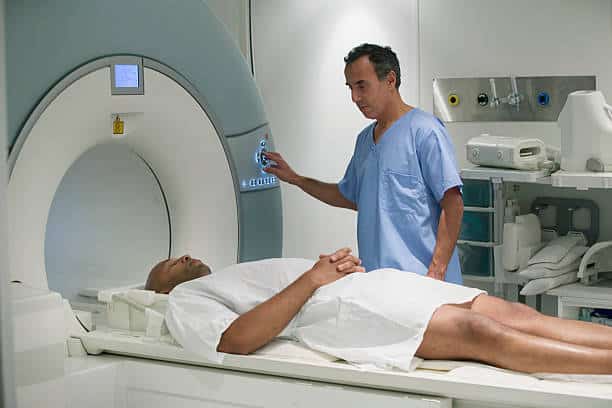
MRI machines are enormous, tube-shaped machines that you lay in. Open and closed MRIs exist. Closed MRIs have one entrance. Many apprehensive individuals prefer the four-sided open MRI. The National Multiple Sclerosis Society notes that open MRIs are better for claustrophobia than for MS detection.
Ntranos adds the open MRI’s lesser resolution may make it unsuitable for assessing MS activity, particularly in the spinal cord. Wide-bore MRI devices open wider.
RELATED: What You Should Know Before Having An MRI
What to anticipate from an MS MRI.
Metals may harm MRI scans due to magnets. Daniel Matterson, a former MRI radiographer and MS patient in Middlesbrough, England, advises patients to remove any metal before entering the scan room. Before your MRI, remove any jewelry, piercings, and hair clips. Pacemakers may prevent MRIs.
Next, you’ll lie down on a sliding bed within the machine, and the technician will wrap a crucial scanner portion around your head. Ntranos claims a rod-and-bar coil will be positioned above your head to boost the MRI’s magnetic fields. This coil is your antenna to the machine.
Some MRIs need contrast dye injected into your veins to help physicians see details. Before the MRI, your doctor will insert an IV catheter to administer contrast.
The sliding bed will take you inside the MRI machine. The scanner won’t confine you but don’t move. MRIs are noisy, which is typical. Noise may alter throughout the research.
Ntranos says the exam takes 20–45 minutes. 90-minute exams are possible. To get diagnostic pictures, Daniel advises lying motionless throughout the scan.
Your MRI technician may be reached during the process. Remember that imaging personnel is always available. Daniel claims you’ll get an emergency buzzer. Calling the technician lets them know you want to leave the MRI machine.
Discuss the emergency buzzer with your technician before entering the equipment. That includes if pressing it would mean you would need a restart.

There are methods to prepare for an MRI mentally and physically. Ask questions and wear comfy clothes.
Check whether your imaging facility provides noise-reducing MRI-safe headphones or earplugs. Music distracts in several centers. “If you’re fortunate, your facility will provide music,” Daniel explains.
Some imaging facilities utilize mirrors to reduce claustrophobia. To look outside the scanner, they are carefully positioned. “This may reduce the feeling of being suspended in a tiny tube,” Daniel says.
MS advocate Vickie Hadge, 56, of Tolland, Connecticut, has had the condition since 2006. She gets MRIs annually. Her comfort method is meditation. She also visualizes and visits open mental spaces. Meditation and square breathing in MRIs are great.
“When you lay in one position for a long period, you might experience restless legs or spasms,” Vickie says of MS MRIs. You can use a muscle relaxer and stretch on high-symptom days.
Ask your doctor whether muscle relaxants are okay before your MRI. Stretches may assist.
Ntranos said some patients take a doctor-prescribed anti-anxiety medicine before the scan. “If you are particularly frightened or claustrophobic, your doctor may give an anti-anxiety drug, like Valium, to help you relax during the test,” he says. Valium helps Vickie manage claustrophobia and anxiousness.
Talk to your doctor about medication to help you relax throughout the MRI.
RELATED: New MRI Test May Predict Severity of MS
Comfort comes from answering all your questions. Chat with the technician before the operation to set expectations and ask questions.
Dress comfortably. Wear heavy socks, sweatpants, and a sweatshirt to the MRI since it’s rigid. The facilities might become excessively chilly. Bring or request a blanket.
Getting an MRI isn’t always easy, but it’s crucial to your treatment. Before the technician starts, ensure your comfort. Ask your technician for assistance before settling in. Try these suggestions for an easier time.


By subscribing, you consent to receive emails from BlackDoctor.com. You may unsubscribe at any time. Privacy Policy & Terms of Service.